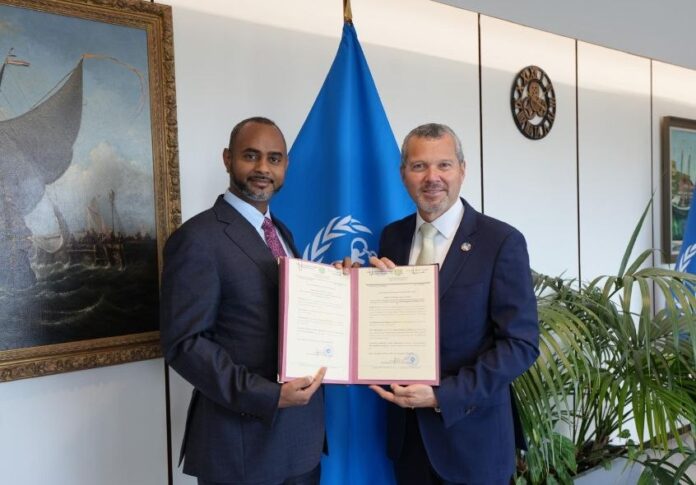
In a historic move that marks the largest modernization of its maritime legal framework since gaining independence in 1960, the Federal Republic of Somalia has officially acceded to fifteen international maritime conventions and legal instruments. The Ministry of Ports and Marine Transport announced the landmark decision, signaling a profound shift in how the nation intends to govern its territorial waters and leverage its massive maritime potential. Despite possessing the longest coastline on the African mainland and occupying a highly strategic position along one of the world’s most vital international shipping lanes, Somalia had previously only been a party to three international maritime conventions.
This limited participation historically isolated the country from the global maritime transport system, restricted its capacity to attract major foreign direct investments, and hindered domestic efforts to properly enforce maritime safety and security.
The massive legal overhaul spans three critical pillars of global shipping governance: maritime safety and navigation, marine environmental protection, and maritime security and liability. Among the fifteen newly adopted instruments are foundational frameworks such as the International Convention on Maritime Search and Rescue (SAR), the Standards of Training, Certification and Watchkeeping for Seafarers (STCW), and crucial protocols relating to the Safety of Life at Sea (SOLAS).
By committing to these international standards, the Somali government is laying down a rigorous compliance roadmap. This legislative integration is designed to protect the rights of seafarers, enforce strict safety compliance for all international vessels operating within Somali waters, and establish solid legal mechanisms to claim financial compensation in the event of major oil pollution or devastating maritime accidents.
This sweeping legal modernization directly coincides with aggressive infrastructure developments and substantial upgrades across Somalia’s primary trade gateways. The Port of Mogadishu has recently transitioned to 24-hour operations, vastly improving cargo turnaround times and logistics efficiency.
These ongoing efforts have already yielded measurable success, with the World Bank’s Container Port Performance Index (CPPI) now rating both the Port of Mogadishu and the Port of Berbera among the most efficient maritime hubs in the East African region. Building on this momentum, the federal government is actively advancing ambitious plans to construct a state-of-the-art international seaport near the capital, which will feature an integrated Special Economic Zone (SEZ), with major construction officially scheduled to commence during 2026.
According to government officials, this comprehensive initiative is fully aligned with the Federal Government’s DanQaran national agenda and the broader National Transformation Plan (NTP). The Ministry of Ports and Marine Transport has formally called upon domestic stakeholders, international partners, and the global shipping community to support this historic structural transition.
By transitioning into a responsible, legally compliant, and active maritime nation, Somalia aims to fully unlock its unique geographical endowments. The government envisions that this combined approach of rigorous regulatory compliance and aggressive infrastructure expansion will ultimately drive long-term, sustainable economic development while significantly contributing to the overall safety, security, and stability of international navigation.