
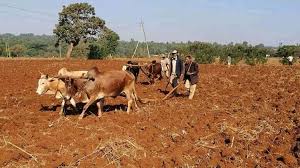
As early rainfall gains give way to deepening anxiety, a new seasonal outlook has warned that Ethiopia’s key grain-producing regions are entering a period of heightened uncertainty that could trigger potential output shocks during the main harvest season.
A fresh assessment from the East Africa Seasonal Monitor by the Famine Early Warning Systems Network (FEWS NET) points to a sharply uneven rainfall pattern across the country. While highly productive western and central zones have benefited from strong early rains, parts of the south and southeast continue to experience significant moisture stress. This stark climate divergence is raising serious concerns about agricultural output stability in the months ahead.
During the March to May Belg season, rainfall arrived earlier than usual in several western areas and remained above average for much of the period. This supported early crop development and helped sustain soil moisture through short dry interruptions in April. In major Belg-growing zones, conditions have remained broadly favorable, offering a temporary lift to local food supply expectations.
In addition, this early moisture extended into parts of the western Kiremt (summer) growing belt, where soils are already more saturated than typical for this stage of the agricultural calendar. While this has supported early land preparation, it also reflects an increasingly uneven distribution of seasonal rainfall across the country.
The contrast is most visible in southern and southeastern Ethiopia, where severe rainfall deficits have persisted. In some areas, seasonal totals have dropped to nearly half of historical averages, weakening pasture conditions and limiting water availability for livestock. Although brief showers in early May provided short-lived relief, rangeland recovery has remained highly limited.
Meteorological outlooks indicate that seasonal rains are likely to taper off on schedule, while above-normal temperatures could accelerate moisture loss in already stressed areas. This raises direct risks for livestock-dependent households, particularly in pastoral and agro-pastoral zones where vegetation recovery is tightly linked to seasonal rainfall cycles.
Attention is now shifting critically to the June to September Kiremt season, which accounts for the bulk of Ethiopia’s national cereal production. The early development of El Niño conditions is typically associated with reduced or highly uneven rainfall across parts of the Horn of Africa. Current projections suggest a strong possibility of below-average rains in key producing regions, including eastern Amhara, Tigray, and northeastern Oromia.
Such an outcome would directly affect maize and sorghum production—two of Ethiopia’s most widely consumed staple crops—potentially tightening domestic supply and increasing market sensitivity later in the year. Analysts and food security monitors warn that even moderate shortfalls could have amplified effects on prices and food availability if they coincide with already weak regional harvests.
Looking further ahead, climate patterns indicate that if El Niño conditions persist into late 2026, they may align with a positive Indian Ocean Dipole. Historically, this specific combination is linked with unusually strong October to December short rains (Hagaya) in parts of Ethiopia.
While this shift could bring much-needed relief to drought-affected southern areas, it conversely raises the risk of severe flooding and critical transport disruptions in vulnerable lowlands. Experts advise that relevant authorities must begin necessary mitigation and preparedness efforts immediately.