
In nearly a quarter of a century, the African Film Festival (FCAT) has established itself as a premier showcase and meeting point for African and African diaspora film productions in Spain, Europe, and Latin America. At the same time, keeping pace with the evolution of Spanish-speaking audiences, recent editions of FCAT have broadened their scope. The festival now prioritizes the promotion of Andalusian, Spanish, and European cinema about or filmed in Africa, Europe-Africa co-productions, and South-South co-productions between Ibero-America and Africa, understanding cinema as a powerful tool for knowledge, development, and cultural diplomacy.
The “Hipermetropía” competitive section, which features fiction and documentary feature films, comprises fourteen movies by six female and eight male directors from a dozen African countries. Together, they map out the continent’s cinematic avant-garde, charting a geographical and emotional journey from the Maghreb to Cape Town, through the heart of the Congo and the Horn of Africa. This selection of recent releases reflects an interconnected, fluid, and deeply contemporary Africa.
Once again, the competition steers away from victimization narratives to focus on the sovereignty of the individual gaze. Hipermetropía offers a collection of works that replace the mourning narrative with an aesthetic of resistance, in which urban rebellion, breaking away from exile, and the resilience of women shape an ecosystem of voices demanding their place on the global stage.
The selected films competing under the theme of ancestral memory include Ancestral Visions of the Future by Lemohang Jeremiah Mosese (Lesotho); Ceux qui veillent (Those Who Watch) by Karima Saïdi (Belgium-Morocco); and Memory of Princess Mumbi by Damien Hauser (Switzerland-Kenya). Works highlighting female resistance in Hipermetropía include The Women Who Poked a Leopard by Patience Nitumwesiga (Uganda); Cotton Queen by Suzannah Mirghani (Sudan); One Woman, One Bra by Vincho Nchogu (Kenya); and Promis le ciel (The Promised Sky) by Erige Sehiri (Tunisia).
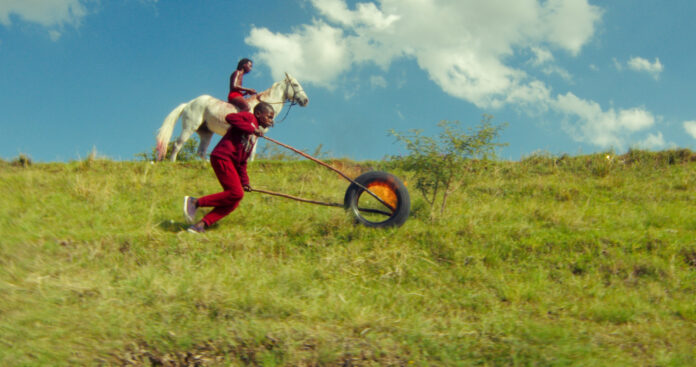
Films tackling urban realities include Trop c’est trop (Too Much is Too Much) by Elisé Sawasawa (Democratic Republic of the Congo) and Bouchra by Meriem Bennani & Orian Bakri (Morocco). Exploring family and power dynamics are the feature films La Vie après Siham (Life After Siham) by Namir Abdel Messeeh (Egypt) and My Father’s Shadow by Akinola Davis (United Kingdom, Nigeria). Finally, feature films pushing the boundaries of formal experimentation and observational cinema include O Profeta (The Prophet), the debut film by Ique Langa (Mozambique); Variations on a Theme by Devon Demar & Jason Jacobs (South Africa); and On the Hill by Belhassen Handous (Tunisia).
The 23rd edition of the Tarifa and Tanger African Film Festival will offer a journey through the African meta-archipelago with an analysis on how cinema shapes the narratives of its sovereign states and diasporas. Under the title ‘Orillas Compartidas: las imágenes de las Islas Africanas’ (Shared Shores: Images of the African Islands), the festival will create a dialogue between continental perspectives from the outside and islanders’ internal voices, balancing vulnerability with strategic potential.
This year’s central theme will explore the realities of nations such as Cape Verde, Madagascar, the Comoros, Equatorial Guinea, Mauritius, the Dominican Republic, Haiti, and Cuba, among many other islands. Their cinemas reflect hybrid identities forged between geographic isolation and the cultural resistance of territories that serve as strategic bridges between the Indian and Atlantic Oceans.
In parallel with this retrospective, the festival will host the 14th edition of “El Árbol de las Palabras” (The Tree of Words), a forum for training and professional networking. The event will take place between May 23 and 30 under the title “The Shared Shore: Images of the African Islands.” These sessions are once again organized under the auspices of the Spanish Agency for International Development Cooperation (AECID) through the ACERCA training program for development in the cultural sector.