
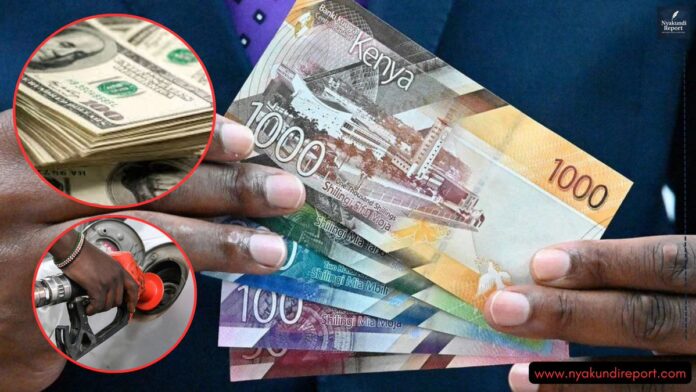
At the close of mid-May 2026, the Kenyan Shilling experienced a slight depreciation against both the US Dollar and the Euro. Financial analysts and the Central Bank of Kenya (CBK) attribute this currency volatility directly to the recent global oil price spikes, which have exerted significant pressure on the country’s foreign exchange market.
According to the latest weekly bulletin released by the Central Bank of Kenya, the local currency dipped from its previous rate of Ksh129.19 per US Dollar on May 7 to Ksh129.33 by the end of the week closing May 15. Although this marginal slide appears minimal on paper, market experts note that it clearly signals mounting external economic pressures on the nation’s currency.
Concurrently, the US Dollar Index strengthened by 0.5% in the global arena as financial markets readjusted to expectations surrounding Federal Reserve rate hikes, enabling the greenback to maintain dominance over emerging market currencies like the shilling.
Beyond the dollar, the shilling also slipped against other major global currencies during this period. It dropped from Ksh151.80 to Ksh151.24 against the Euro and weakened from Ksh175.77 to Ksh174.69 against the Sterling Pound. Despite these global setbacks, the Kenyan Shilling managed to hold its ground firmly against regional currencies in East Africa, maintaining stability against the Ugandan Shilling, Tanzanian Shilling, Rwandan Franc, and Burundian Franc.
The primary catalyst behind this currency depreciation is the historic surge in global fuel prices, triggered by escalating geopolitical tensions in the Middle East, specifically the US-Israel-Iran conflict. This unrest sent shockwaves through the global energy sector, causing the price of Murban crude oil to jump sharply from USD 89.13 to USD 94.84 per barrel within a single week.
For an import-dependent economy like Kenya, this sudden spike significantly inflated the country’s import bill, draining essential foreign currency reserves to cover energy costs. This local pressure was further compounded by broader global inflation worries, with US headline inflation rising to 3.8% in April 2026 due to persistent cost pressures in the service and energy sectors.
Despite these heavy economic headwinds, the Central Bank of Kenya reassured the public that the country’s foreign exchange reserves remain robust and well-buffered. As of mid-May, Kenya’s reserves stood at USD 13,507 million, which translates to roughly 5.7 months of import cover. This remains safely above the statutory requirement of four months, providing a crucial safety net for the economy. On the other hand, diaspora remittances saw an 11.7% monthly decline, dropping from USD 421.1 million in March to USD 397.8 million in April due to economic cooling in key source markets, though the 12-month cumulative inflows still edged up by 1.1% to offer some cushion.
In other major national developments during the same week, the Kenya Revenue Authority (KRA) announced impending temporary ITax system downtimes as a massive rush of citizens attempted to file their tax returns before the deadline. Meanwhile, the Engineers Board of Kenya revealed plans to introduce sweeping structural reforms that will directly affect all engineering learners across the country.
In politics, a new plan championed by Rigathi Gachagua aims to grant Kenyans living in the diaspora dedicated seats in both the Senate and the National Assembly. Finally, consumer frustration mounted as the Energy and Petroleum Regulatory Authority (EPRA) introduced new charges to May electricity bills, even as the regulatory body faces intense legal battles in court over its controversial fuel price hikes.