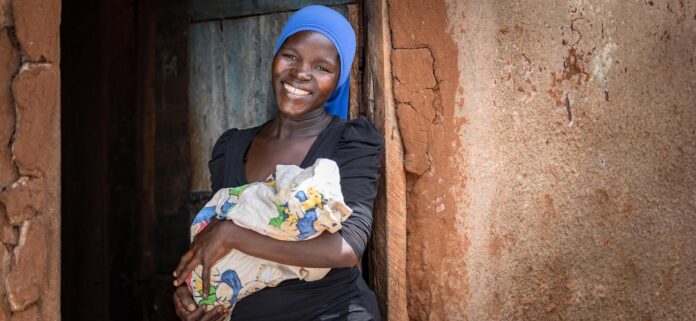
When a sudden flash flood in Northern Uganda’s Lamwo District submerged the road, 28-year-old midwife Alice found her ambulance and life-saving medical supplies stranded on the wrong side of the raging water, cut off from a refugee mother of six who had just gone into premature labour with twins.
Acting on pure instinct, Alice grabbed a waterproof plastic sheet from a UNFPA dignity kit, hurled it across the water to shield the vulnerable newborn from the torrential rain, and waded across the receding waters to manually resuscitate the hemorrhaging mother, saving both her and her surviving baby.
Alice’s story is extraordinary, but the precipice on which that mother’s life hung is becoming alarmingly common.
Uganda is globally recognised as the gold standard for refugee hosting, offering progressive policies that grant land, movement, and integration to nearly 2 million refugees.
But the reality is brutal: international funding is evaporating, and the basic medical infrastructure that allows frontline workers like Alice to keep women alive is collapsing.
The surge in vulnerability
Across Uganda’s refugee settlements, an estimated 60 per cent of health care providers have been laid off because the money has simply run out.
UNFPA recently identified a critical need for 267 midwives to support emergency response teams; today, because of a persistent cash shortfall, only 23 per cent of those midwives are in place. Those who remain are routinely forced to manage caseloads of over 100 patients a day, double the accepted medical standard.
The effects of these cuts are immediate and fatal. Fuel and salary shortages have grounded mobile midwifery teams in major settlements like Bidibidi and Rhino Camp.
When care is restricted to stationary clinics, a woman in a remote zone who cannot afford transport has no choice but to give birth at home. This drastically increases her risk of postpartum hemorrhage, which is already the leading cause of maternal death in these settings.
The crisis extends far beyond the delivery room. Across the settlements, clinics are operating with a 30 per cent shortage of basic supplies, missing everything from the dignity kits Alice used, to contraceptives and oxytocin.
Meanwhile, a 68 per cent reduction in funding to protect women from gender-based violence (GBV) has forced vital safe spaces to shut their doors. Consequently, we are tracking a 32 per cent rise in cases where survivors are left entirely without clinical care or psychological support.
Furthermore, as school fee subsidies dry up and dedicated youth spaces close, teenage pregnancies are spiking. Girls as young as 13 are entering maternity wards instead of classrooms, pushed into early marriage or transactional sex just to survive the sudden loss of basic food and cash assistance.
The Humanitarian Reset
The international community knows the global aid system is financially strained. In response, a Humanitarian Reset is underway to reorganize how aid is delivered, aiming to make emergency responses more efficient and localized. UNFPA supports making aid more effective. We know the system must adapt to do more with less.
However, as we re-organise how we deliver aid, we must sound a clear warning: efficiency cannot come at the cost of women’s lives.
Reforms must not inadvertently create a two-tier humanitarian system where food, water, and shelter are deemed ‘essential,’ while reproductive health and protection from gender-based violence are sidelined as secondary or “optional” extras.
A safe delivery kit, a contraceptive, or the skilled hands of a midwife are not luxuries. As Alice’s story proves, they keep women alive.
As global pushback against reproductive rights grows right alongside tightening aid budgets, we are working closely with our partners to ensure the protection and medical care of women and girls remain central to all humanitarian action, rather than an afterthought.
Uganda’s progressive refugee model cannot survive on the goodwill of the host government and the sheer grit of its frontline workers alone. It requires actual cash and sustained funding from the international community.
We cannot balance the books of the global humanitarian system on the backs of women and girls. Their bodies and futures must not be the shock absorbers for global aid cuts.
If we allow maternal and protection services to be stripped away in the name of efficiency, we are abandoning the very people the humanitarian system was built to protect.
Kristine Blokhus is UNFPA Representative, Uganda