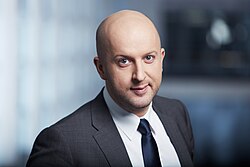
Andrzej Dycha, Chairman of Poland’s Investment and Trade Agency (PAIH), tells HER that Ethiopia’s market size, economic opening and direct flight links make it a prime target for Polish firms—especially in IT, dairy processing and critical minerals—as bilateral trade remains below €50 million annually. Excerpts:
HER: How do you evaluate the current business situation in Poland and Ethiopia?
Andrzej Dycha: There is significant room for improvement, and I believe we are just at the beginning of our journey. Our historical economic relationship provides a solid foundation for new projects. The overall economic outlook in Poland is very positive, with more business makers seeking opportunities outside of Europe. Until now, our focus has primarily been on strengthening business ties within the European Union, especially with neighboring countries. However, there is a growing appetite for exploring new opportunities further abroad.
Our task, at the Polish Trade and Investment Agency, is to harness this emerging interest by facilitating business missions and participation in various fairs and events across different sectors
We are focused on channeling the existing energy in Poland. From this perspective, Ethiopia is well-positioned. The direct flight between Poland and Ethiopia further enhances our connection. Ethiopia is the best-connected country to Poland in sub-Saharan and Eastern Africa. Our experience shows that direct flights significantly benefit business, making it a key advantage. Additionally, Ethiopia’s market size and the recent opening of its economy present promising opportunities. That’s why we are here.
HER: Which sectors are most interested in investing here?
Andrzej Dycha: The IT sector has the greatest potential. Poland boasts the biggest R&D center (The National Centre for Research and Development) within the European Union, with over 600,000 IT specialists and engineers. We are a global hub for IT software production. Our experience and expertise make us well-suited not only to sell software here but also to foster a more comprehensive partnerships between Polish and Ethiopian companies.
We will encourage Polish companies to invest directly in the IT sector in Ethiopia, as it is our strongest area. Additionally, I would highlight agriculture, particularly in milk processing. Poland has a robust processing sector in the European Union and since joining the EU in 2004, over 20 years has developed a highly competitive agricultural industry. We are eager to share our expertise with Ethiopia, as Poland currently ranks second in agricultural product trade surplus within the EU, demonstrating the competitiveness of our sector.
The third area I want to mention is collaboration in accessing critical minerals. Poland is a leading producer of batteries within the European Union and a key player in the automotive and electric vehicle sectors. We are actively seeking opportunities in this field as well.
HER: What is the current trade balance between the two countries?
Andrzej Dycha: It’s quite low, with turnover at less than 50 million euros.
HER: Do you expect the forum to generate business deals or long-term partnerships?
Andrzej Dycha: I believe EU business forums are beneficial because they attract the attention of the business community from all member states, fostering collaboration among European businesses. This not only showcases our strengths collectively but also provides a comprehensive understanding of how European businesses are represented here. It’s an excellent opportunity to connect with Ethiopian businesses and counterparts from other European countries. At the UE-Ethiopia business forum, we will assess our current situation and explore future collaborative opportunities between EU countries and Ethiopian businesses.
HER: Are these companies adequately informed about the business climate in Ethiopia?
Andrzej Dycha: We are closely collaborating with Ethiopian governmental institutions. During Forum, officials provide information not only about the current status quo but also about future plans and their vision for the development of various sectors. Our European and Polish companies are eager to participate in implementing the government’s strategy here.
HER: How can PAIH help reduce risks for Polish investors considering Ethiopia?
Andrzej Dycha: For all businesses, predictability within the legal ecosystem is crucial. Additionally, investment safety is essential. Investors want long-term visibility regarding market performance in the coming years. We share a mutual interest with Ethiopians in ensuring that investments from Poland and Europe are successful. It requires a joint effort from the government and leadership in Ethiopia, as well as from investors, to work hand in hand for the long term. Our people are genuinely interested in fostering business partnerships and real collaboration with local partners on equal footing, which is very important.
HER: What is Poland’s biggest investment in Africa?
Andrzej Dycha: Due to its proximity, Northern Africa is more prominent on our radar so far; it’s simply closer, and the connections are easier. One of the current investments that we would love to replicate here in Ethiopia is in the dairy sector, specifically milk processing. One of Poland’s leading milk production companies has invested in Morocco and is now looking for new opportunities—why not in Ethiopia?
HER: What is the biggest misconception Polish businesses have about operating in Sub-Saharan Africa?
Andrzej Dycha: The biggest misconception is that you can conduct business without a physical presence. Many believe that, but those who have experience in Africa know that to establish a truly sustainable business, you need to be physically on the ground. This is how business is done in Europe; you can operate from your home country by sending emails and having a legal company facilitate contracts online.
However, in Africa—and really anywhere outside of Europe—you need to be physically present to understand and care for your business. That, I believe, is the biggest obstacle. Many people are not prepared to move away from their home country and stay in a new country for years, which often means relocating their family and children. This makes the decision much more difficult, based on my experience.
HER: Do you have anything else to add?
Andrzej Dycha: According to various surveys over the last 30 years, Poland has been one of the most successful countries globally in terms of economic growth. We achieved this largely due to the quality of our people. We were the poorest country in Europe in 1989, this year we have become the 20th largest economy in the world.
We aspire to be a leading country in many high-tech industries.
The key message here is that we achieved success by being welcoming to foreign capital and technologies. All companies that came to us—from Europe, America, Asia, and other continents—were treated as part of our own economy, and they contributed significantly to our success.
This is how we succeeded in Poland, and if this story can inspire the people of Ethiopia, let’s collaborate. We are ready to come.