On 20 April 2026, Rosatom Director General Alexey Likhachev presented technological solutions in the fields of nuclear energy and electromobility to the Uzbek leader at the 6th International Industrial Exhibition “Innoprom. Central Asia” in Tashkent. The event was attended by a high‑level delegation, including Deputy Prime Minister of the Republic of Uzbekistan Jamshid Khodjaev, Deputy Prime Minister of the Republic of Belarus Viktor Karankevich, and First Deputy Prime Minister of the Russian Federation Denis Manturov.
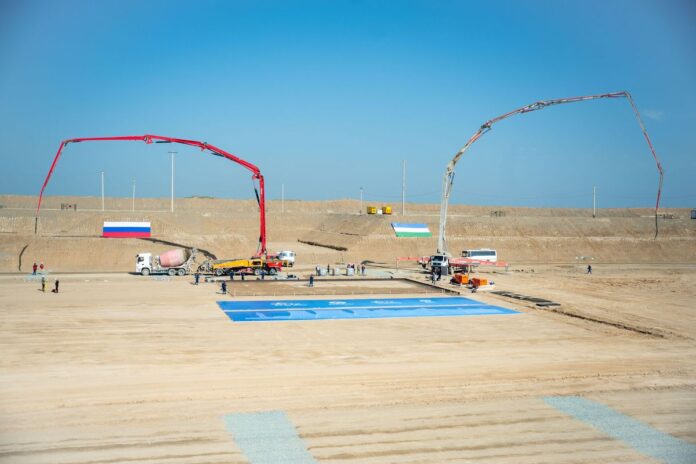
One of the key technology offerings is the new Nuclear Power Plant (NPP). The project envisages the construction of both an SMR-based nuclear power plant with two smaller RITM-200N units and a large nuclear power plant on the same site. Once completed, this new-format NPP will cover approximately 14% of Uzbekistan’s electricity needs.
During the construction phase of both small and large units, about 13,000 people are expected to be employed, while the operation of the integrated NPP will require approximately 2,000 employees. A main element of the project is the concept of an integrated residential and research cluster in the NPP area – the atomgrad, designed to house scientists, support nuclear medicine, materials science, and other advanced applications.
“Nuclear energy in Uzbekistan is to become a major driver of economic development, impacting a wide range of sectors from industry and science to education and social infrastructure. The atomgrad, a purpose-built integrated residential and research cluster, will be a hub for not only nuclear energy development but also for other promising areas such as nuclear medicine, materials science, and sterilisation of food, agricultural and medical products. In this city, a new community of scientists, technologists and researchers would emerge. They will acquire advanced knowledge while being able to significantly contribute to Uzbekistan’s technological sovereignty and to create new development opportunities for decades to come,” noted Alexey Likhachev.
Earlier this year, Uzatom Agency and Rosatom signed an additional agreement to the contract for the construction of an integrated NPP in Uzbekistan. The project involves the construction of two high-capacity units with Gen 3+ VVER-1000 reactors and two units with RITM-200N reactors, each with a capacity of 55MW.
For countries just entering the nuclear energy sector, this experience is particularly valuable. Ethiopia is actively developing its nuclear programme and taking steps to build its first nuclear power plant. Uzbekistan’s practice of combining different reactor types with a research and residential cluster shows how to effectively build local expertise. For Ethiopia, this means an opportunity to form its own pool of specialists more quickly and avoid typical organisational challenges when launching peaceful nuclear energy.