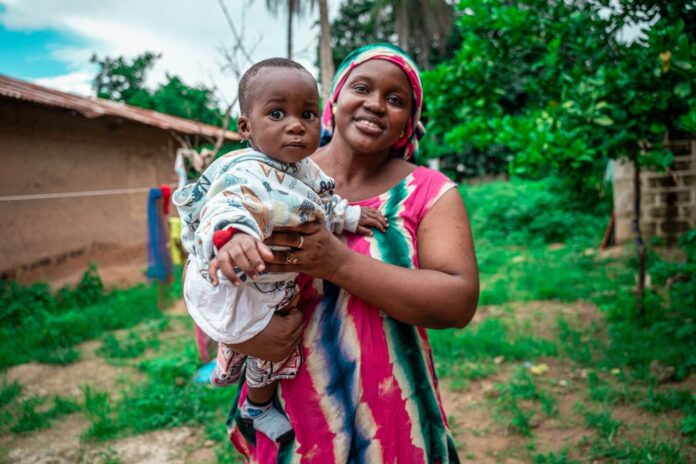
The Global Financing Facility for Women, Children and Adolescents (GFF) announced today – on the sidelines of the World Bank Group-IMF Spring Meetings – new funding commitments from governments and philanthropic partners totaling USD 806 million in support of its TRANSFORM 2030 strategy, a five-year plan to accelerate progress towards ending preventable maternal and child deaths in countries with the highest burden.
These pledges mark the beginning of the GFF’s new investment round, and come at a decisive moment with the tools, evidence and partnerships in place to accelerate progress, even as hard-won gains face increasing risks from multiple shocks.
Hosted by the World Bank Group (WBG), the GFF is a country-led partnership that helps scale proven health and nutrition solutions through national health systems to reach hundreds of millions of women, children, and adolescents with lifesaving care.
Through 2026-30, the GFF intends to expand its operations from 36 to 50 countries with the highest maternal and child mortality, and is projected to leverage USD 12.5 billion in WBG financing, USD 17.8 billion in partner resources, and USD 21.4 billion in domestic resources to scale high-impact health interventions[i]. These efforts will contribute to the WBG’s goal of reaching 1.5 billion people with quality, affordable health services by 2030.
Mamta Murthi, Vice President, People, World Bank Group, and Chair, GFF Trust Fund Committee: “The case is clear: investing in women, children and adolescents builds human capital, reduces poverty, and creates jobs and lasting prosperity. With its new strategy, a fully funded GFF will help partner countries to deliver lifesaving care to hundreds of millions of people twice as fast. We are grateful to our partners who have already committed over USD 800 million to kickstart this investment round, and we look forward to more partners joining us.”
The announcements represent over 80 percent of the GFF’s fundraising goal of USD 1 billion by the end of 2026 – with additional pledges expected in the coming months.
As part of these commitments, philanthropies and the private sector have committed funding to scale up access to innovations and key commodities. These include USD 250 million for Sustainable Commodities Access Program – launching today – which will incentivize countries to invest more to expand access to high-quality commodities and fix supply chain system bottlenecks; and a first investment of USD 15 million for a new innovations challenge program, which will catalyze further funding for the scale-up of the Safer Births Bundle of Care in 10 countries.