
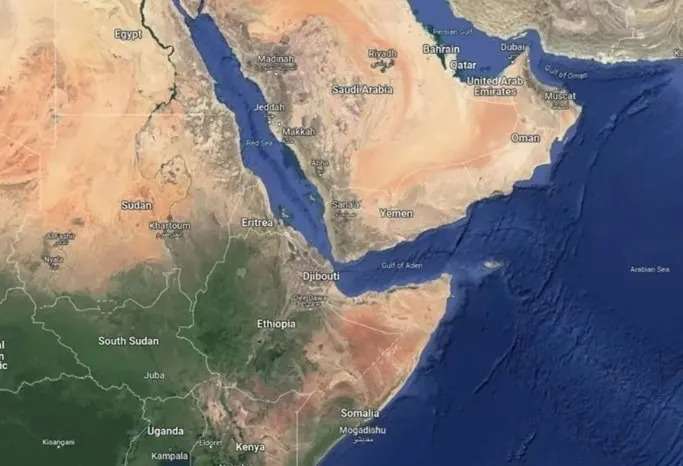
At the fourth annual Red Sea and Gulf of Aden (RESGA) Dialogue, Ethiopia has once again positioned its quest for sovereign maritime access not as a source of friction, but as a “win-win” engine for the Horn of Africa’s stability and economic transformation.
Addressing a high-level assembly of policymakers, diplomats, and maritime experts, Vice Admiral Kindu Gezu, Commander-in-Chief of the Ethiopian Navy, argued that Ethiopia’s return to the sea is a strategic necessity aligned with the African Union’s Agenda 2063. The forum, themed *“Maritime Governance in the Red Sea and Gulf of Aden Region: Inclusivity and Connectivity for Shared Interests,” served as a platform for Ethiopia to challenge the traditional exclusion of landlocked states from maritime governance.
Vice Admiral Kindu emphasized that the Red Sea and the Gulf of Aden are no longer just national assets for littoral states; they are vital global corridors for energy and commerce. However, he warned that these waters are increasingly besieged by “overlapping challenges,” ranging from insurgent networks and arms trafficking to intensifying geopolitical competition. “No single country can address these challenges alone,” Kindu asserted.
He proposed that Ethiopia’s inclusion in maritime affairs would provide the “missing link” in regional security. By strengthening Ethiopia’s maritime capacity, the region gains a powerful partner in the fight against piracy, terrorism, and irregular migration.
The Vice Admiral was candid about the economic toll of Ethiopia’s current status, noting that being landlocked has significantly diminished the nation’s regional influence and stunted its economic potential.
By restoring sovereign access, Ethiopia aims to reduce the exorbitant costs associated with third-party port reliance, create a more predictable environment for international capital to attract investment, and align Ethiopia’s massive industrial output with neighboring economies to foster a unified regional market.
Addressing regional anxieties regarding sovereignty, Jafar Bedru, Executive Director of the Institute of Foreign Affairs, clarified that Ethiopia’s stance is additive rather than subtractive. “We seek to add to regional capacity—more patrols, more trade, and more predictable rules of engagement,” Bedru stated. He reinforced the idea that shared waters require “shared stewardship,” urging stakeholders to view Ethiopia’s involvement as a boost to collective security rather than a threat to territorial integrity.