
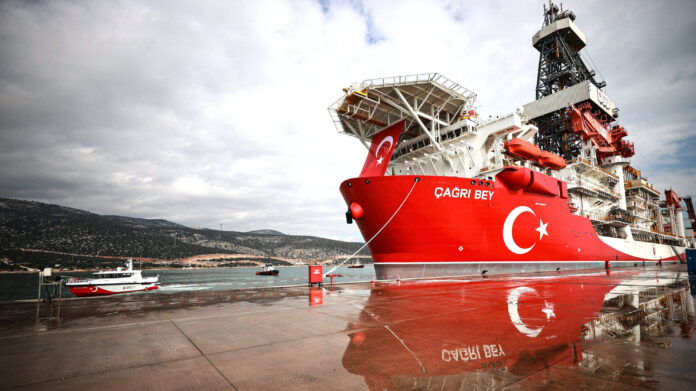
In a move that signals a seismic shift in the Horn of Africa’s economic landscape and cements Ankara’s status as a rising global energy player, the Turkish ultra-deepwater drilling vessel Çağrı Bey is scheduled to arrive in Somali waters this Friday.
The vessel’s arrival marks the official commencement of Somalia’s first-ever offshore oil drilling campaign, a project high-level officials describe as a “frontier-breaking” moment for both nations.
The mission targets the Curad-1 offshore well, located approximately 370 kilometers off the coast of Mogadishu. The Çağrı Bey, a state-of-the-art seventh-generation drillship, recently completed a 45-day journey from the Port of Mersin in Türkiye, navigating through the Cape of Good Hope.
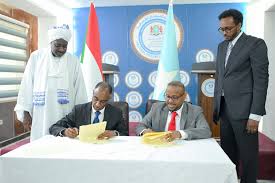
Its arrival is the culmination of years of diplomatic and technical preparation, following a landmark hydrocarbon agreement signed between Ankara and Mogadishu in 2024.
For Türkiye, the deployment of the Çağrı Bey is more than a commercial venture; it is a historic first. “For the first time, our deep-sea drilling vessel is embarking on a mission outside of Turkish territorial waters,” stated Alparslan Bayraktar, Türkiye’s Minister of Energy and Natural Resources. By operating in Somalia, Türkiye is showcasing its self-sufficiency in energy technology.
The Turkish Petroleum Corporation (TPAO) is utilizing its own fleet—now the world’s fourth-largest offshore exploration fleet—to execute the project. This move aligns with President Recep Tayyip Erdoğan’s “Energy Independence” strategy, which aims to transform Türkiye from an energy importer into a global hub and producer.
For Somalia, a nation that has spent decades navigating internal conflict and economic hardship, the Curad-1 project represents a potential “game-changer.” Preliminary seismic data collected by the Turkish research vessel Oruç Reis in late 2024 and 2025 suggested the presence of significant hydrocarbon reserves.
The offshore campaign is expected to generate independent revenue; under the production-sharing agreement, Somalia stands to retain a significant portion of future oil revenues, providing the federal government with much-needed capital for infrastructure and security.
Furthermore, the drilling operations are being supported and secured by the Turkish Naval Forces, indirectly strengthening Somalia’s control over its Exclusive Economic Zone (EEZ) and fostering local employment by training Somali engineers.
The presence of the Çağrı Bey also underscores the deepening “Blue Homeland” (Mavi Vatan) doctrine of Türkiye, extending its maritime influence far into the Indian Ocean. While the mission is primarily economic, the security partnership accompanying the drilling has drawn eyes across the region. Ankara’s growing presence is viewed as a stabilizing counterweight in the Horn of Africa, particularly as Somalia seeks to protect its territorial integrity amid regional maritime disputes.
As the Çağrı Bey prepares to lower its drill bits into the seabed this weekend, the world watches to see if Somalia will join the ranks of Africa’s oil-producing nations. If successful, the Curad-1 well will not only fuel Somalia’s recovery but will also validate Türkiye’s ambitious bid to become a titan of international energy exploration.