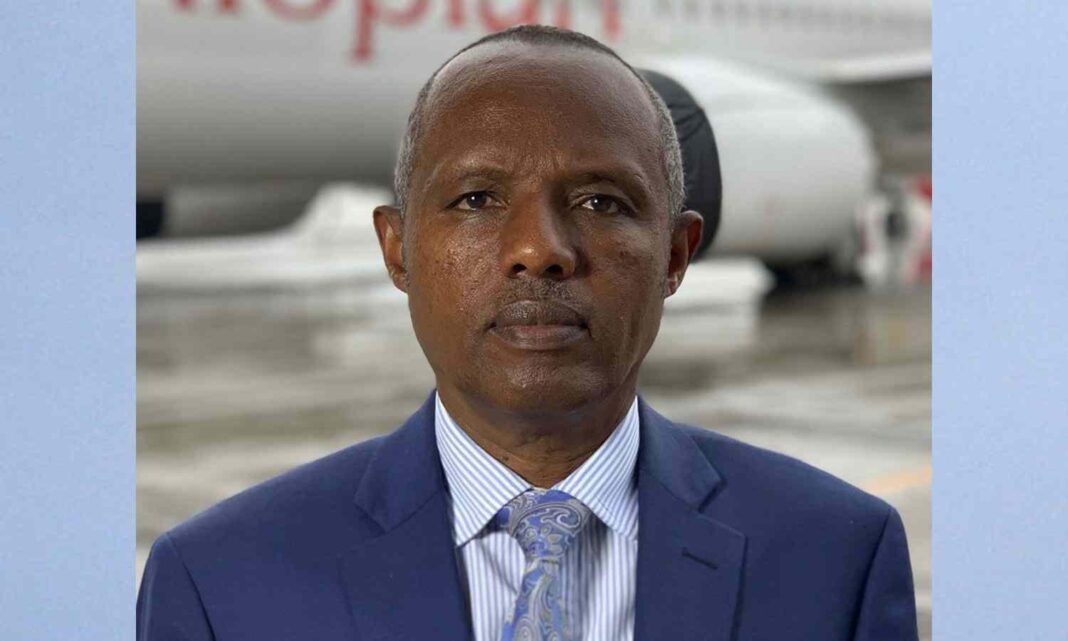

Henoké Wolde-Medhin Courte is an Ethiopian-born Luxembourgish educator, local politician, and humanitarian whose life and work bridge cultures, communities, and causes. A History and Geography teacher at the European School of Luxembourg and a municipal councilor in Walferdange, she has spent more than two decades in public service while also leading the NGO Regards d’Enfants d’Éthiopie and serving as Ethiopia’s honorary consul in Luxembourg.
In this wide-ranging interview with Horn Economic Review, she speaks candidly about migration, identity, politics, education, and the enduring pull of Ethiopia, as well as the values of solidarity and service that have guided her remarkable journey. Excerpts
HER: You arrived in France as a teenager; can you share what that experience of migration and adaptation was like for you?
Henoké Wolde-Medhin Courte: Innocence quickly interrupted, a brief adolescence—those words sum up that period of my life. The last Emperor of Ethiopia was overthrown in 1974 during the Ethiopian revolution. I left my country just after completing the Zemecha, a form of national service I carried out in Addis Ababa, thanks to my mother’s many efforts to keep me—the youngest of the family—close to her, only to finally give in and let me go into exile. She used to say, “Only the living are right.”
My journey began in Nigeria, where my sister’s husband was about to be posted as Ambassador. My fate was sealed by my mother’s memorable response to her son-in-law, who apologized for having to take his wife so far away: “No, my son, not just my daughter—my two daughters, that’s how it is, and there’s no other way.” I boarded the plane without even hugging my mother.
After a few months in Lagos, we moved to the south of France. From afar, my mother made the decisions. “There is no French school there,” she said, “she must be sent to her elder brother in France.” My brother, Dr. Deredje Wolde Medhin—under thirty at the time—pursued a second doctorate just to obtain a scholarship and be able to support my sister and me.
After graduating from high school, I moved to the capital, Paris, and attended the Sorbonne, where I studied history and geography for six years. The hardest part was the brutal and painful separation from my mother, who, in many ways, represented my homeland. Isn’t it called the motherland? I was forced to leave. I wanted to stay home, with my loved ones.
What right did I have to leave, while others were sacrificing themselves for a better world? Some were returning from Europe to build a dream future for all the poor people in the country. “Idealism,” the future would scoff—“fortunately,” I would reply. Despite the deaths, despite the painful failure, we tried. For a moment, we dreamed of justice and equality.
For a long time, I felt like I wouldn’t belong anywhere. It was hard going to high school, being the only Black person—and already an adult. The war had matured me beyond my age. I decided to take and pass my baccalaureate a year early. University was also difficult: studying while working small jobs, wearing the same clothes all year, eating only once a day—if that.
I did babysitting and brought the children I cared for to my lectures, where they would sit at my feet in the amphitheatre. Always alone. At that time, communication with Ethiopia was nearly impossible—because of the war, the cost, and the absence of smartphones.
My remarkable mother asked only for one letter a week, which she would faithfully collect from her famous post office box number 5145. (Her grandson has just inherited it.)
“That’s my pension,” she used to say.
HER: How did your upbringing in Ethiopia and your academic formation at the Sorbonne shape your values and worldview today?
Henoké Wolde-Medhin Courte: My family upbringing saved me from the worst—that is, from choosing the easy way out. And the easy way was especially tempting for a young girl, a bit exotic, and above all, hungry. No one was demanding, on a daily basis, that I continue my studies. But the groundwork had already been laid. The path was clearly traced by a family that understood knowledge to be the key to freedom and human dignity.
There was my demanding brother, before whom one couldn’t even mix two languages when speaking; who wouldn’t tolerate ignorance; who made us listen to the 8 p.m. news; who, with examples, explained that even here—in a land where access to knowledge seems limitless—you can die uneducated if you’re not diligent and disciplined.
The bar was set high in our family, just like in our country, where academic success is part of our DNA (degree wey mot). Thousands of kilometres away, my mother was counting our diplomas. She had sold even her last pieces of jewellery to save our lives and allow us to study.
Studying history in Paris brought me back to my country in turmoil, to the dreams and struggles of its activists. The French Revolution, the freedom movements of 1968, human rights—it all started in France.
Studying history reminded me of our country’s uniqueness: the Middle Ages, antiquity, prehistory—it all began in Ethiopia. That history gave us a strong backbone. (We spend our time focusing on what divides us, yet this shared heritage is what makes us stand tall.)
These two countries shaped me like open books.
At that time in Paris, other Ethiopians were living there—older than me, all children of the emperor’s elite who had just fallen. I spent time with them, dreamed with them of a better, fairer, more prosperous Ethiopia… But the books I devoured were telling me otherwise.
I remember exactly the day I decided to turn the page. I was preparing my master’s degree. If there was a future to build, a battle to fight—it would be here. We couldn’t pay the price twice: being in exile and being at the bottom of the social ladder. I refused to bury myself, like some fifty fellow Ethiopians—brilliant though they were—in a world of nostalgia and illusion.
I wasn’t afraid of the challenge.
I never turned back again.
HER: How do you navigate your dual identity as both Ethiopian and Luxembourgish in your personal and professional life?
Henoké Wolde-Medhin Courte: I remember my arrival in Luxembourg, the warm welcome and the kindness of my future husband’s family, whom I had met at the Sorbonne—we were both historians. I couldn’t have been welcomed any other way, I, a child of the mountains, of my incomparable mother, of my brother’s efforts. I came well prepared, highly educated academically and above all, deeply educated by the hardships of life. During the long years of war when I couldn’t hope to return to see my mother, his country became mine—perhaps even more than his. While he considered staying longer in France or moving elsewhere, I was looking to grow roots with his family. So we settled near them, and from that moment on, all my efforts focused on putting down roots. I had to know every square centimeter, to chart it all. The fruit of that effort is that today, my husband—born and raised here—now introduces himself as Henoké’s husband. I reversed the dynamic, and now our children can be proud of both parents. I couldn’t deprive them of what I received from my warrior mother—no matter the place, no matter the country, or the people who may not look like me.
To be honest, I don’t see my difference—it’s others who remind me of it, especially when community service, for which I’ve been elected for over 20 years, slips into political games.
Alongside my work as a history teacher, which is my real passion, I also serve my country as the honorary consul of Ethiopia for more than 20 years, and as president of the NGO Regards d’Enfants d’Éthiopie for over 30 years. I have finally found a balance between Ethiopia and my host country Luxembourg. My heart doesn’t waver—I love both, I serve both, and both are now vital to me.
HER: What inspired you to enter politics, and why did you choose to join the Luxembourg Socialist Workers’ Party (LSAP)? Serving as a municipal councillor in Walferdange for nearly two decades, what have been your most rewarding experiences? What challenges have you faced?
Henoké Wolde-Medhin Courte: If being politically engaged means feeling pain at the sight of suffering and injustice, and choosing to reject, denounce, and fight it—then I believe I’ve always been politically engaged, for as long as I can remember.
By entering municipal politics in Luxembourg, I wanted not only to serve the community out of gratitude for the welcome I received, but also to be an example for all those who are newcomers to the country. What I want , is that other follows, that we are no more exceptions. I am always happy to realise that yes it did work that way, It is never easy but still it works
If for me, who can speak up, write , act easily now, the battle of exile seems to have been honourably fought. When people treat me unfairly, I am barely shaken. To speak out, to debate, to raise my voice when needed feels natural to me—but I know that is not the case for all migrants, who often arrive even more vulnerable and without the tools to defend themselves. It’s essential to be their voice, to help them open doors. Who better than a sister to understand that?
Here is the lament of a migrant mother that sums up my feelings:
For me who walks the winding roads
Sing my tears,
my soot-colored sorrow.
Cry out my storms within,
my wandering nostalgia,
my nights of drifting.
Tell of my pleading smiles,
my begging eyes,
my spine that bends.
Count every please, every thank you, every yes.
From the heights of your front-row throne,
Sing my life on its knees.
See my trampled hopes—again, again.
The different one, the limping, the flayed, the torn.
They call me the other, the intruder.
From your lofty seat,
Say you see me.
Say it, please.
You see me—do you?
Standing.
— Henoké Courte
As one of the first Black women elected, I had to be flawless, impeccable, irreproachable—to be a role model, however small. This visibility also benefited the Luxembourgers, who don’t have a colonial past; they now know that we are more than capable collaborators. I like being seen as added value.
And of course, my children are fully Luxembourgish. It is only right to work every day to maintain, protect, and even improve what the elders have passed down. That’s truly what I devote myself to. Nothing comes for free—everything is the result of sacrifice and hard work. I’m proud of my journey and give a silent nod to my mother every time I sit in the communal council or participate in various committees.
At the last election, I was the lead candidate. Very few believed in me—a Black woman as lead candidate was a first. Many saw me, and some also wanted me to lose. But not me. In my very small adopted country, so far away from my own people, I carried my vast country of origin on my back, along with my giant mother and my giant brother. I did not allow room for failure.
HER: You have led the NGO Regards d’Enfants d’Éthiopie for over 30 years. What motivated you to found this organization, and what is its core mission?
Henoké Wolde-Medhin Courte: Regards d’Enfants d’Éthiopie was born after I returned to Ethiopia—over a decade later—to reunite with my mother. Instead of the dreamland my memories and nostalgia had preserved, I found a devastated country, full of people without shelter… I swore then to do everything in my power to ease the pain of the children left to the streets, whose eyes still haunt me to this day. With a few close friends, I created the association in 1995. Its activities focus on education, health, hygiene, and the environment—key pillars of sustainable development.
HER: How do you balance your roles as an educator, politician, and NGO president?
Henoké Wolde-Medhin Courte: Every day in my commune of Walferdange, where I have been an elected for over two decades, I advocate for civic responsibility and solidarity. I try to be, like my mother, a model of strength and self-confidence.
As president of Regards d’Enfants d’Éthiopie, founded in Luxembourg in 1995 and supported by friends, I manage, organize, and tirelessly mobilize the country’s resources to help children, teenagers, and young mothers in Ethiopia take control of their futures.
With my students, I talk about war, revolutions, treaties and alliances. I teach them rigorous research methods. We travel through time to explore civilizations. I bring to life periods of history with examples not found in textbooks—the civilization of Axum, King Solomon and the Queen of Sheba. I tell them about one of the world’s oldest Christian lands, about Black Jews (the Falashas), and about the Christian and Ethiopian refuge offered to the family of Prophet Muhammad. I speak of slavery, colonization and decolonization.
They learn about Pan-Africanism, we talk about Lumumba and Nkrumah, about the shattered dreams of African Marxists, the massacres, the famines, and the continent’s cursed mineral wealth. As my colleagues say with a smile: I turn little Europeans into real Africans—into Ethiopians. After all, Africa is the mother of the world.
I also serve my country of origin as honorary consul for more than 20 years. I have found a balance between my birth country and my host country, Luxembourg. My heart doesn’t waver—I love both, I serve both, and both are vital to me.
How could I not love Luxembourg, when it is here that I’ve been allowed to grow in peace—and peace has no price!
Above all, my greatest priority remains my children—Axoum Mariam (Myra, a lawyer) and Stephanos-Ras (a physiotherapist)—the most beautiful and complex adventure of all. They fully embrace their dual culture.
“Mama,” they used to say, “stop giving us the Jewish people as an example of excellence.” But I always told them: when you’re a minority, and not always the most liked, you have to work twice as hard and aim for excellence. That’s the only path to survival and dignity.
Fatigue, after all, is not African.
HER: Can you share a story or moment from your humanitarian work in Ethiopia that deeply impacted you?
Henoké Wolde-Medhin Courte: Here it is.
Summer 2003 in Addis: Those Children
January 28, 2009, 11:10 p.m. ‘Le jeudi’, Luxemburgesh news paper
I had been back in my hometown for about a month and was enjoying the incomparable warmth of my family, something I can never get enough of.
I must say, I was deprived very early and suddenly of that family warmth, of the smell of incense, the aroma of coffee and its comforting ceremony, the morning chants of the churches that fill my city, of festive days and their rituals—of everything that, in fact, had been mine until adolescence.
I know that there will always be a great void to fill, because there was hardly any adolescence either. Thanks to the socialist revolution and its military regime, young people of my generation had leapt over that stage to become adults overnight, juggling with death.
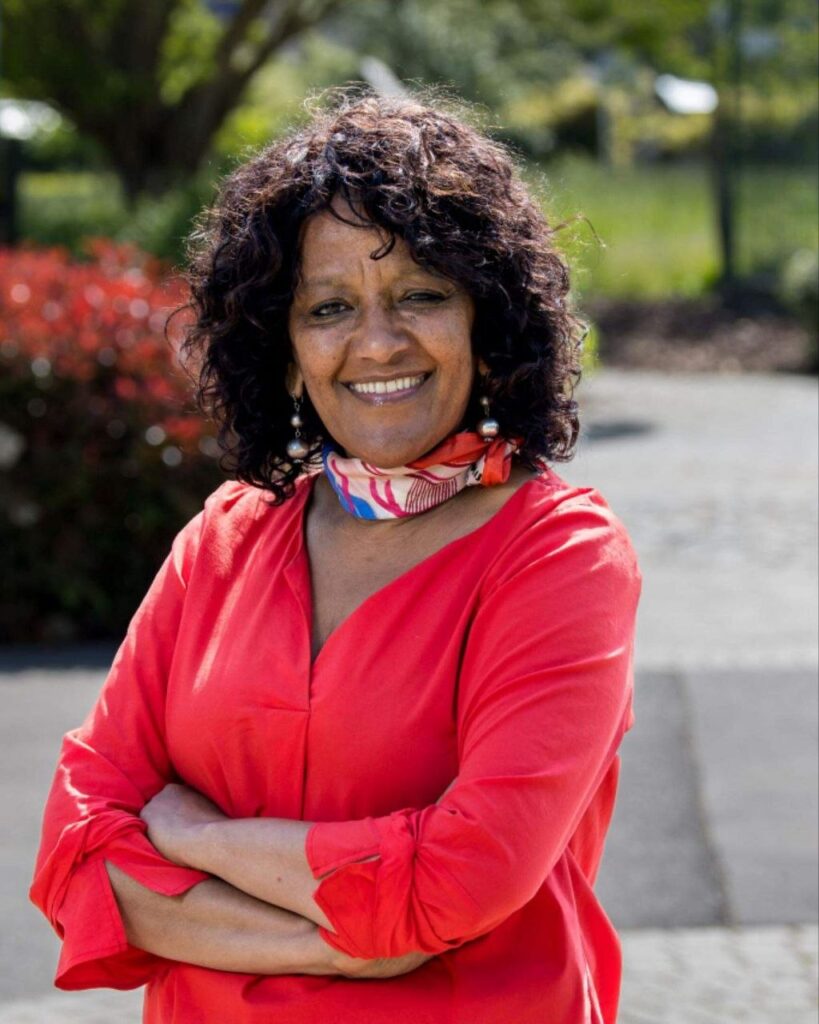
I savoured my return all the more intensely. I would get up early to walk the alleys of my youth, gazing again and again at every corner, every building, every passerby. I looked the way one eats or drinks when hungry or thirsty—until satisfied.
I looked at the grass under my feet, at the colours of the birds—those incredible colours! Bright red, blue, turquoise, luminous green… There is so much generosity in the colors that dress the birds of my country that for a moment I suspected the pigeons and crows from my place of exile of having sacrificed their feathers to make them more beautiful. Do they believe this is how they contribute to the balance of the world, to ease the suffering here?
I also listened to the melodies of voices, those of radios echoing from window to window—Telahun, Haileyé, Gigi and the others—singing the pain of lost love, by which we feel so alive. I smiled at the richness of the words, the turns of phrases, those cushions on which one can fall without ever getting hurt. I amused myself by guessing the different accents that revealed ethnic origins, I inhaled the scents, the jokes—I tried to grasp the memories, catch up on lost time, to merge with the former me, fill the gap, complete the puzzle—above all, not to be the missing piece anymore.
There was no bitterness or sadness in me, but fullness scented with eucalyptus, rancid butter, and Dama Kesse. I managed to leap over the years. It felt as though I had never left, never spent thirty years elsewhere in such a different world. This return, like all my returns, was truly a potion—a potion that heals the pain of exile.
In fact, to feel like I belonged here and nowhere else, all I had to do was throw a Netela (traditional Ethiopian shawl) over my shoulders, wrap a scarf around my head, place a smooth sentence on my lips, and with eyes politely lowered, softly murmur an ancient poem about roots, identity, and how death is gentler when it comes to you in your homeland—a poem I dare not translate for fear of damaging it.
‘Sew be hageru
Bibela sar
Bibela mekmeko,
Yekeber yelem wey
sewenetu tawko’
So, as I was saying, I was indulging—almost indecently—in the pleasures of this return, when an unmatched experience struck me head-on.
That summer, I had planned to conduct field research for a university study on the social organization of beggars in Addis Ababa. I was preparing myself to face the pain and cries for help of this beloved city. I felt confident, because when it came to misery, I believed—since a long time ago—that I had seen and known it all. Wasn’t I the daughter of one of the poorest countries in the world? Poverty, makeshift shelters of plastic and cardboard, disease, decay, despair—I had been familiar with them for a long time.
Yet it’s true that every year, every new experience brings its own share of unprecedented misery. And each time, we say to ourselves: “I thought I had seen the worst—how far can misery go? When will we finally see the end of it?”
There are no words, no tears, no rage strong enough to express the pain hidden in parts of the capital. In fact, to reveal what modesty, politeness, and the pride of victims try to conceal behind a smile, behind the semblance of a roof, behind absence—that would be betrayal. Many no longer go out, or speak, to avoid displaying their misery.
Still, no one can help crying out this pain to the world, nor can we stop ourselves from instinctively seeking out those responsible—to shout in innocence: “Death to the tyrants!” In the moment, you even feel like tearing them down (and why “down”—where exactly are they being torn from?) and using your claws and teeth to rip them to pieces.
Yet unlike many others, I’ve never known whom to point to, whom to accuse or fight. I simply find myself, every time, looking upward—toward power, palaces, the sky—asking the same and only question: “What pleasure can one possibly take in ruling over a ragged people, over this bottomless misery?”
I was thus preparing to begin my research among the beggars of Addis Ababa, particularly in the neighbourhoods of Guiorguis and Tekur Anbessa. It had been arranged that twelve young boys living on the streets, who were involved in a social and educational reintegration project, would assist me with this fieldwork.
When I arrived at our meeting place, the boys had already piled into the minibus of one of their benefactors, the director of the NGO Godanaw, who had agreed, for the occasion, to be our driver. They were having an animated conversation with him and only vaguely paid attention to what I was trying to explain about the project.
Eventually, I asked for an explanation. Mr. Mulatu, the director, informed me that the boys wanted first to go help a suffering woman who lay near their shelter.
They kept repeating insistently:
“Gash Mulé (an affectionate nickname for Mulatu), please—she’s going to die. She was fine when she arrived, but now she’s skeletal. She doesn’t respond when we talk to her. Gash Mulé, please. Rain, sun—she’s exposed to everything. Let’s take her to Mother Teresa’s clinic. Please, Gash Mule…”
I was astonished by how much these young people cared about the case of this woman—who, even if we don’t want to admit it, is not an uncommon sight in the capital. Their eagerness to convince the director surprised me. Taken in by an NGO that supports them, there was now no trace of hardship on their faces. They looked like teenagers anywhere in the world, with the beauty of their age and the bright, healthy teeth so typical of people here—always inviting a smile. You would expect from them nothing but joy, lightness, maybe even a hint of indifference or insolence.
Gash Mulé finally agreed to go along, and we went to gather some soap, second-hand clothes, plastic sheets, and then headed to see the woman.
There she was, lying in a foetal position. She seemed tall, her dishevelled hair sticking out from under the piece of plastic thrown over her body to protect her from the rain. Near her, a few small coins and a rotting banana. We walked toward her with purpose—the children especially. Gash Mulé tried to wake her up. He spoke to her, louder and louder, first in Amharic and then in Oromo (maybe because of her tall frame). She barely responded. She just wanted to be left to die. Gash Mulé took charge, and the children followed. He tried to lift her. He couldn’t. She didn’t help. A foul, indescribable odor came from her. Gash Mulé cried out an insult—he called her Hateraw!, a word that isn’t really an insult, but rather means I’m scared, I’m sad, help me—what misery! or maybe all those things at once.
We asked the neighbours for a bucket and a jug. They hesitated, but then gave them. Now that someone had finally come to deal with the burden they had been stepping around for weeks, they weren’t going to make things harder.
Already, the people of the neighborhood were surrounding us. Keeping their noses covered with their netela and standing at a distance that allowed them to satisfy their curiosity without fully exposing themselves to the horror of the scene, they began to bless these unexpected benefactors:
“Egziabher yestachehu! Egziabher yebarkachehu!”
Moved by a genuine sense of solidarity, I rolled up my sleeves and stepped forward to help—but at the sight of that body, falling apart, and at the smell that came with it, I recoiled sharply and joined the spectators. And there I stood, frozen like stone, watching the children—who, without disgust or any protective gear, began to wash the woman. They washed her with their bare hands. People exclaimed: “With all the diseases going around—those poor children!” They washed her legs, her belly, even her private parts—this woman who was not their mother, nor any relative of theirs.
Perhaps all the women in the world are our mothers. Don’t we say motherland?
Perhaps what they were caring for was the misery of their motherland.
They scrubbed her, drove away the parasites with torrents of water.
They purified her to save this earth—because even for the poorest among us, having no mother, or no motherland, is perhaps the most unbearable thing of all.
“Enat, abat bimot be hager yelekesal
Wondem, ehat bimot be hager yilekesal
Hager ye mote endhu wodet yederesal”
If a mother or a father dies
We mourn in our country
If a sister or brother dies
We mourn in our country
But if the land itself dies—
Then everything is truly over
I was no longer looking at the woman whom misery had abandoned to death by the side of the road.
I was watching only the long fingers of Zelalem, Goje, Henok, and the others—those fingers scrubbing, soaping, bending and straightening the body that was hardly even a body anymore, while Gash Mulé struggled to keep her upright. He shouted, “Lord! She’s covered in vermin!”
That’s when I understood the distance I had created, by stepping back, between the children and myself.
I thought: So this is how far I still have to go to come closer to You!
Why them and not me?
I was heartbroken, and my tears wouldn’t stop. I felt a knot in my stomach, the same one I used to feel as a little girl when the older kids on the playground didn’t want me in their games.
I’ll wait. I’ll grow. You will guide me.
Once they had dried her, dressed her, wrapped her in a large plastic sheet so as not to soil the minibus, and settled her at the back, Gash Mulé and the young people came back to us—simply, as if nothing had happened.
I anxiously searched the young people’s faces.
In their eyes, I found none of the things I was used to: not sadness, not anger, not compassion, not even the satisfaction of a job well done. No emotion. Nothing.
I then remembered a biography I had once read of a journalist born to an African-American father and a white American mother, who struggled with issues of race and identity. As a child, he once asked his mother:
“Mom, what color is God?”
She paused for a moment, then gave one of those completely unexpected answers:
“My son, I believe God is the color of water.”
The eyes of those children—expressing nothing I recognized—their hands, with long agile fingers giving without counting, giving without receiving, in that moment had, for me, the color of no color. The color of water. The color of God—whom I was meeting for the first time.
And I was struck by His beauty.
From that moment, nothing would ever be the same.
Then the most ordinary conversation resumed—about the rest of the day’s schedule.
I joined in too, as if nothing had happened.
Henoké Wolde-Medhin Courte
Luxembourg
HER: You often pick up the pen and write with poetry.
Henoké Wolde-Medhin Courte: Words are my friends. As an amateur, I only write when I witness an extraordinary act of generosity, of solidarity—when I am struck, moved… My family is as much scientific as it is literary, poetic, even artistic. One of my mother’s sisters was the first female journalist, and my grandfather wrote several books. I still remember my mother’s laughter and her response when I told her I had written my first poem in Amharic: “My poor daughter,” she said, “I do poetry even when I breathe.”
Today, I love to write about the municipality I serve, about the women and men who make it up. I love to speak of the discreet ones who do the essential work. I want to show that happiness, too, has a story. I write about love that builds. I avoid writing when I’m angry. When I’m angry, I clean, I tidy, I organize, and I prepare for the fight.
I’ve also written storybooks for each of my two countries, challenging old legends and revisiting childhood tales through the lens of their historical heritage. I also write in Amharic—my mother tongue, although I became literate in French. It is a beautiful, melodious, flowery, poetic language. For many Ethiopians, the verb is a way of life. I fall into the category of the “Alkache”, the weepers—my tears express themselves naturally in Amharic.
HER: What role does faith or spirituality play in your approach to service and justice? You’ve said that “serving is a way of saying thank you.” Can you elaborate on what this means to you personally?
Henoké Wolde-Medhin Courte: To serve is to pray—it’s a way of saying thank you, above all, to the Creator and to the angels placed in my path (Ye Enatey, Ye Golaw, Mickael, Ye Atlu Medhnialem, Ye Ayatey Giorgis, Ye Abatey Yohanes, Ye Meshereshaw Abo… hulum alu Zuriaye.
Ejeh aytr, lebeh ayzega.)
– Seeking beauty is a form of prayer, a way of thanking God who gave me eyes to read the gaze of a child, of a loved one, of the other—to admire the mountains, the valleys, the forests, the vastness of the sea, the morning breeze, a book just begun, words that fall into place, and phrases that capture the world.
– To love unconditionally is to pray, it is to say thank you for the love received and the gift of being able to share it.
– Walking is also a prayer, a way of saying thank you because in walking, one is finally with oneself. One mourns the dead, one reflects, reconciles with others, and with the Lord—who is forgiveness. It is said that Ethiopians are born walking born believers.
I have lived and travelled in many countries, but the journey of my life—the most complete prayer I’ve known—was a spiritual pilgrimage I undertook with my two sisters, following in our grandfather’s footsteps, from monastery to monastery, church to church, through the Simien Mountains, the gorges of the Axum Abbey to Debiet-Mariam, accompanied by sacred chants, prayer, and joy.
– To love the one created in His image—the one for whom a mother trembled and still trembles for, the brother, the sister, o love to the point of forgiving even the worst monstrosities—is to pray, is to say thank you.
HER: Football is a special passion in your family. Can you tell us how it connects you to your heritage and your present life?
Henoké Wolde-Medhin Courte: Daughter of a footballer, aunt of footballers, great-aunt of a footballer, and mother of a footballer—what more can I say? The newspaper Addis Zemen once told the story of how people had to go looking for my father at the stadium on the day of his daughter’s wedding—a wedding he himself had organized with grandeur.
Football brings happiness, it is love, fraternity. To stay humble I will say, Giorgis flows in our veins, as does the club of my municipality, to which I devoted much time and passion.
HER: What are your hopes for Luxembourg’s social fabric as it becomes increasingly multicultural?
Henoké Wolde-Medhin Courte: I am confident about the future of my second country and the coexistence of people from diverse backgrounds in Luxembourg. For me, as long as a country welcomes foreigners—whether out of necessity or duty—it’s in its own interest to do it well. When one welcomes the “other” poorly, when one makes them second-class citizens, one creates ticking time bombs—and that’s fuel for populism.
Living together is a two-way story, a mutual tale between the host population and the expatriates—one that, in the best cases, should evolve into a love story, a shared hope for both sides.
In truth, just as in the days of slavery—if not worse—today’s labour force reaches the West through its own effort, at its own cost, often having crossed the Sinai desert or the Mediterranean Sea. Only the most resilient, the most fit for work, make it. If they are here, it’s because they were called—by work. So it’s more the West that receives the migrant than the migrant who chooses the host land.
And when things are done properly, in peace and with a minimum of justice, no one is more devoted than the immigrant. That’s what gave birth to this:
My love letter to my commune, which won first prize during Book Days.
I say yes.
Yes to a walk along the Alzette, stepped over by ballerinas in azure shoes.
Yes to the forest that rings it round, in spring’s bright green, then blushing, then gold.
Yes to the many Tintins of Monsieur Lutgen, and to the laughter shining in his eyes.
Yes to the daintiest of stadiums, to its “Allez Walfer!”, and to Muni, too.
Yes to the castle trimmed for Christmas, its fountain raining drops of silver light.
Yes to the lovely church, my shelter, my calm.
Yes to the old bridge at the heart of town, heavy with history untold.
Yes to Maison Dufaing, reborn in the hands of Gilles.
Yes to Bichel’s sculpture, welcoming all at the edge of the way.
Yes to the triangle of Helsem, the Kulturschapp, the café by the station, and the blooming Rose Garden.
Yes to Sabine, the Raven, her curls, her dreams, her dancing brush.
Yes to the joy of crossing paths with two timeless souls, Sister Suzanne and Marianne.
Yes to the stands of those who love people, before the first of all Cactus stores.
Yes to their Thuringer, their Bofferding, their Mettwurtz — and my little glass of Schampes.
Yes to the café of true friends, where one meets the Harley, the Karier, Fons, Paul, Lady Alice and Lucky too.
Yes to the fragrant dishes of the Regent, the Osier, and Tony’s unforgettable pizza.
Yes to our gardener-artists, and to balconies, terraces, and alleys in bloom all summer long.
Yes to the Thill family, their bows, their arrows, their vivid targets set in the fields.
Yes to the people of Bechelen — parrot or not — chatting, bowling, laughing younger and freer than ever.
Yes to Walfer Musek winding through the streets, sowing joy note by note.
Yes to Frédérique’s voice soaring at Som on a Saturday.
Yes to Brisbois’ spelt bread, and the coffee sipped on the church square.
Yes to every “Moein” and every “Bis geschwen!”
Sun Street. Future Street. Peace Street.
Yes to Walfer —
My place of life,
My beloved.
Henoke Courte Wolde Medhin
HER: What message would you like to share with younger generations, especially those from migrant or multicultural backgrounds?
Henoké Wolde-Medhin Courte: If my life can be an example, it can only be through my stubborn, fierce refusal to accept the place that was predestined for me by others. In order to build my own.