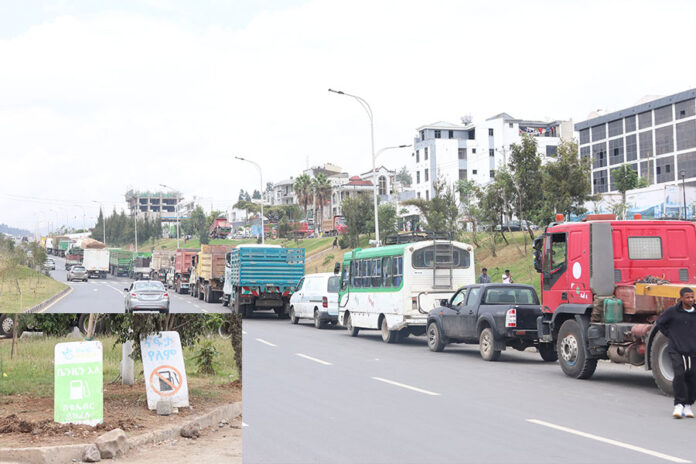
The Ethiopian government has announced a significant reduction in the national daily supply of white diesel, cutting it from 9.2 million liters to 4.5 million liters. This drastic measure follows the escalating war and instability in the Middle East, which has severely disrupted international energy transport and procurement contracts.
According to the Minister of Trade and Regional Integration, Kassahun Gofe, the ongoing global geopolitical crisis has forced the country to restructure its fuel distribution and utilization system. The Minister revealed that Ethiopia’s long-term fuel purchase agreements with Middle Eastern suppliers have been unexpectedly interrupted.
Suppliers officially notified the government that they are unable to provide the product due to the conflict, resulting in over 180,000 metric tons of fuel—which was already in the procurement process—failing to enter the country.
This massive supply gap has placed immense pressure on national reserves, making the 51% reduction in daily diesel distribution mandatory. “Beyond disrupting the flow of fuel, the conflict has created a major shock in international pricing,” Kassahun noted.
The economic strain is further evidenced by the dramatic price hikes in the global market; before the conflict, a barrel of diesel cost approximately $80, whereas it has now surged to $230. Similarly, the price of gasoline has jumped from $70 to $150 per barrel.
Despite global prices tripling, the Ethiopian government continues to provide heavy subsidies to shield citizens from inflation. Currently, the government subsidizes 95 Birr per liter of diesel and 42 Birr per liter of gasoline.
To date, the government has spent approximately 262 billion Birr on fuel subsidies, with an additional 15 to 20 billion Birr being allocated monthly for this purpose.
To manage the limited supply effectively, the Ministry has launched a “priority-based” distribution system effective today on March 31,2026.
To ensure that essential services remain uninterrupted, the government has decided to prioritize seven key sectors: fuel tankers, to keep the logistics chain moving; export-oriented industries, to protect the country’s foreign exchange earnings; strategic national projects and critical infrastructure developments; vehicles transporting essential goods such as food and medicine; modernized agriculture, specifically tractors and machinery essential for food security; mass transit, including urban and national bus services; and public service institutions that rely on diesel power.
In response to this shortage, a national monitoring unit has been established to operate 24 hours a day to prevent fuel hoarding and illegal trading.
This unit, which includes federal and regional authorities, is tasked with tracking the movement of fuel from the port all the way to the gas stations.
The Minister stated that through measures taken so far, 658 individuals, including some officials involved in the illegal fuel trade, have been arrested. Additionally, more than 720,000 liters of fuel have been seized and returned to the legal distribution system.