The World Health Organization (WHO) issued an urgent warning on Tuesday, stating that South Sudan is currently recording the highest maternal mortality rate in the world. This crisis is driven by a spreading cholera outbreak and intensifying conflict, which are pushing the country’s fragile health system toward a total collapse.
Dr. Humphrey Karamagi, the WHO Representative in South Sudan, described the humanitarian situation as having reached a “catastrophic” level. Recent data indicates that the maternal mortality rate has reached 2,000 deaths per 100,000 live births.
This staggering figure serves as a shocking indicator of the total lack of basic maternity care in a country where conflict and flooding have decimated essential health infrastructure.
The emergency has been further exacerbated by what the WHO describes as “deliberate attacks.” Since late December 2025, at least 11 health facilities in Jonglei State alone have been bombed, looted, or forced to close.
Karamagi noted during a UN press briefing in Geneva that these challenges are unfolding while the health system is already overstretched. He warned that when vaccination, disease surveillance, and referral pathways are disrupted, illness and death rates can rise rapidly.
The ongoing conflict has displaced hundreds of thousands of people from their homes, increasing the demand for clean water and sanitation. As South Sudan fights its most severe cholera outbreak since September 2024, access to clean water has become a rare luxury.
To date, nearly 100,000 people have been infected, and more than 1,600 have died, with children under the age of five accounting for one-quarter of the fatalities.
The crisis in South Sudan is not isolated from the rest of the world. At the same briefing, the World Food Programme (WFP) warned that the escalating conflict in the Middle East is creating economic “shockwaves” globally.
WFP Chief Operating Officer Carl Skau explained that sub-Saharan African countries are particularly vulnerable due to their high dependency on food and fuel imports.
Due to rising fuel prices and supply chain disruptions, the number of people facing severe food insecurity in East and Southern Africa is expected to increase by 17% this year. In South Sudan, where 10 million people (nearly 80% of the population) already require humanitarian assistance, this inflation could be the final “death blow” for many families.
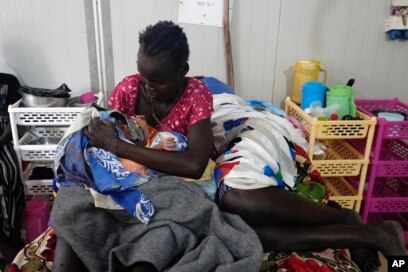
For the mothers of South Sudan, these statistics represent a harrowing reality. With only 40% of health facilities currently operational and a severe shortage of trained health professionals, the act of giving birth has become a life-threatening danger.
Karamagi is requesting $12.4 million in urgent funding to sustain WHO operations, warning that “needs are rising while funding is decreasing.”