
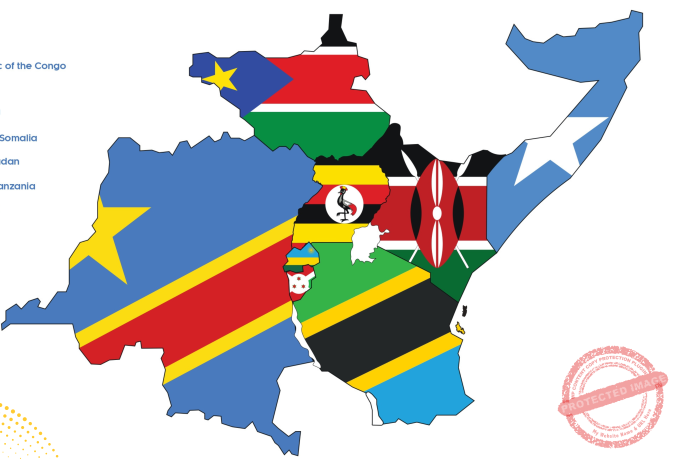
East African leaders have approved sweeping financial and governance reforms, including a 50% debt waiver for South Sudan and a new “pay-to-play” rule tying leadership posts to timely contributions, at the 25th Ordinary Summit of the East African Community (EAC) Heads of State in Arusha.
Summit chair and Kenyan President William Ruto announced that South Sudan will receive a 50% waiver — equivalent to 21 million dollars — on its accumulated membership arrears to the bloc. The remaining balance must be cleared within two years, under a tightened framework that also applies to other member states in arrears.
The leaders endorsed a major overhaul of the EAC’s long‑standing “equal contribution” funding model, which has been criticized for placing a disproportionate burden on smaller economies. From July 2026, a new “50/50” formula will be introduced, combining a fixed base contribution with an additional share calculated according to each country’s economic capacity, as measured by GDP.
To reinforce financial discipline, the Summit adopted a stringent “Pay‑to‑Play” directive. Under the new rule, countries that fall behind on their contributions or fail to ratify key regional agreements will lose the right to nominate candidates for top EAC offices, including Secretary General and Speaker of the East African Legislative Assembly (EALA).
In another landmark move, leaders agreed to relax the long‑standing unanimity requirement that has often stalled regional decisions. Instead of consensus by all members, EAC decisions will now be adopted by a 65% majority vote, preventing a single partner state from blocking regional infrastructure, trade, or integration initiatives.
The Summit also endorsed changes to the remuneration structure of EALA members in a bid to ease pressure on the Community’s budget. Beginning with the next parliamentary term, basic salaries for EALA legislators will be paid by their home governments, while the EAC will cover only work‑related allowances. President Ruto noted that parliamentary expenses currently account for about 30% of the bloc’s budget and argued that the reform will free up funds for more productive regional programs.
Ruto stressed that the financial and institutional reforms agreed in Arusha are “final and non‑negotiable,” describing them as essential to restoring fiscal sustainability and operational efficiency within the bloc. He added that the EAC will undertake its first comprehensive staff salary review in January 2027, the first such exercise in two decades.