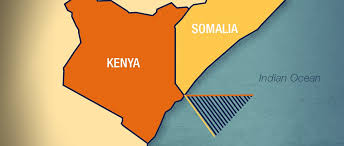
The long-standing maritime boundary dispute between Kenya and Somalia has entered a new and critical phase. Both nations are struggling to secure control over the immense economic potential and complex security landscape of the Lamu Basin in the Indian Ocean. Although the International Court of Justice (ICJ) ruled largely in favor of Somalia in 2021, tensions persist in an area estimated to hold energy resources worth up to $500 billion.
The primary driver of the conflict is a 92,389-square-kilometer maritime zone believed to be rich in oil and natural gas deposits. Geological surveys of the Lamu Basin indicate that the area could contain up to 3.7 billion barrels of crude oil and over 10 trillion cubic feet of natural gas. While some exploratory drilling has faced challenges in proving commercial viability, analysts suggest the region’s total resource value could range from $200 billion to $500 billion, depending on global energy prices.
Policy analyst Siyad Madey noted that the issue has transcended a mere technical disagreement, representing a “generational opportunity” for economic transformation for both countries.
The legal deadlock traces back to the 2021 ICJ ruling, which utilized an “equidistance line” to award Somalia most of the contested waters. However, Kenya, which argues the boundary should run parallel to its coastline, rejected the decision, questioning the court’s jurisdiction and citing national security concerns.
Researchers point out that the ruling has impacted the Kenyan Navy’s operational reach. Meanwhile, Somalia has used the verdict to launch new oil and gas bidding rounds, partnering with external actors like Qatar and Ethiopia to expand its influence in the northwestern Indian Ocean.
Beyond energy wealth, the disputed area is a focal point for maritime crime. The International Shipowners’ Association classifies the region as a “high-risk zone” due to piracy, arms smuggling, and human trafficking.
Kenyan authorities remain concerned that weak security infrastructure on the Somali side allows groups like al-Shabaab to exploit the border for trafficking weapons. These security challenges have historically complicated diplomatic efforts and hampered regional stability.
Despite the maritime impasse, there are recent signs of diplomatic improvement. In February, Kenyan President William Ruto announced plans to reopen the land borders between the two countries by April 2026, ending a 15-year closure.
This initiative aims to stimulate trade, particularly the export of khat (miraa). By focusing on shared economic interests on land, leaders hope to build the political trust necessary to eventually resolve the maritime dispute. As of late March 2026, the world continues to watch whether this $500 billion resource will foster future cooperation or remain a catalyst for conflict.