
A new Knowledge to Action Accelerator Programme (KAAP) will equip Ethiopia’s agricultural insurance sector with local expertise, bridging the gap between strategy and real-world implementation for smallholder farmers facing climate and market risks.
Managed by UNDP, the one-year KAAP targets technical teams from the Ministry of Agriculture (MoA), Association of Ethiopian Insurers (AEI) members and partners. Participants will gain hands-on skills in product design, risk modeling, pricing, data management and claims processing, with practical work on Area Yield Index Insurance and Weather Index Insurance prototypes linked to woredas in Amhara, Oromia and Tigray.
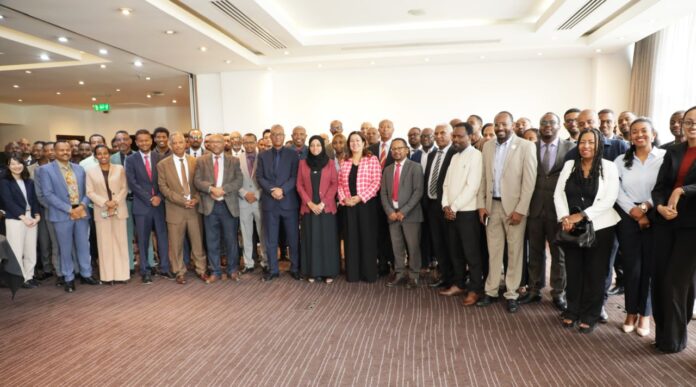
The initiative launched at a CEO Forum convened by MoA, UNDP and AEI, drawing industry leaders to map a coordinated scale-up of agri-insurance within Ethiopia’s food security and financial inclusion goals.
The forum unveiled two complementary breakthroughs: an AEI-hosted risk-sharing platform to unify data analytics, market coordination and reinsurance access, streamlining product innovation, harmonizing standards and strengthening ties with global reinsurers; and a two-year Actuarial Capacity Fund seeded with $50,000 from BMZ and UNDP partners via the Milliman Global Actuarial Initiative (GAIN), tackling Ethiopia’s acute shortage of local actuaries to build sustainable expertise for accurate pricing, regulatory compliance and market growth.
These steps respond to chronic barriers like weak local capacity, fragmented data and external expertise dependence. KAAP’s applied focus promises faster iteration than traditional pilots.
Participants stressed executive buy-in as critical, with the gathering establishing ongoing policy dialogue to dismantle regulatory and infrastructural hurdles, positioning agri-insurance as a cornerstone of Ethiopia’s resilience agenda.
For 15 million smallholders vulnerable to drought, pests and price shocks, success could unlock risk financing at scale, stabilizing incomes, boosting credit access and reinforcing food security amid climate pressures.