Amidst current global energy market instability and regional geopolitical tensions, South Sudan’s Ministry of Petroleum has officially launched a strategic campaign to boost domestic crude oil production. This move comes as global oil prices have exceeded $100 per barrel, providing a vital economic lifeline for the country, where oil serves as the primary pillar of the economy.
During a high-level press conference held in the capital on Wednesday, Petroleum Ministry Undersecretary Chol Deng Thon stated that the government is moving decisively to increase national revenue. The strategy focuses on working in coordination with international oil partners to scale up production despite ongoing disruptions in global maritime transport.
This announcement comes at a time when international trade is under high risk. Conflicts in the Middle East, particularly the impact of the “U.S.-Israel-Iran” war, have caused significant disruptions to traditional shipping routes.
However, Undersecretary Thon remained undeterred by these developments. “We understand the logistical challenges facing global maritime routes due to the ongoing conflicts in the Middle East; nevertheless, we are pushing forward to increase production,” he told reporters.
Mr. Thon specifically noted that South Sudan’s primary export route, which travels through the Bab al-Mandab Strait to Asian markets, is expected to remain stable.
While the Strait of Hormuz is a source of international tension, he reassured that because China remains South Sudan’s primary customer, exports are expected to be shielded from the regional instability.
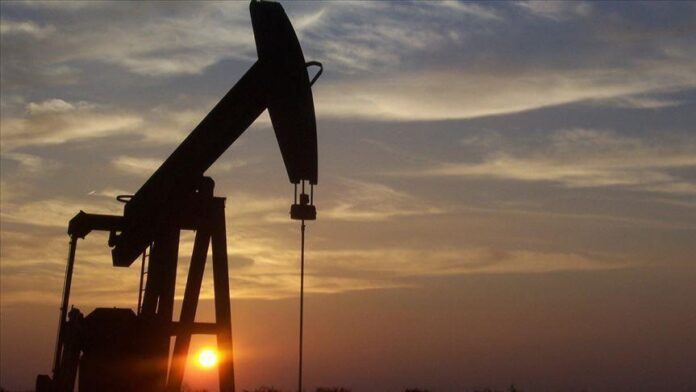
The primary source for this production increase is the Al Nahal oil field, located in Blocks 3 and 7 within Upper Nile State. Recent drilling activities have yielded what Mr. Thon described as a “significant success.” Specifically, the new well named Al Nahal W8 has begun producing an average of 5,440 barrels per day.
This well is highly valued by the ministry due to its very low water content and its superior output compared to other wells in the region.
This new output has raised the country’s total export volume from 95,000 barrels to 100,000 barrels per day.
“This demonstrates the potential inherent in the field. With continued investment and labor, production is expected to increase even further,” Mr. Thon explained. While the Undersecretary expressed optimism, he also provided an explanation regarding how the revenue from the “black gold” (oil) is distributed.
The ministry extended its gratitude to its primary partners—China’s CNPC, India’s ONGC, and the national carrier Nilepet—for their technical and financial support. Providing technical details, Dr. Ling Zongfa, President of the Dar Petroleum Operating Company (DPOC), added that the company has drilled 16 new wells since resuming operations last October, 12 of which have already started production. He noted that “due to improved management methods and new technology, production has exceeded previous estimates.”