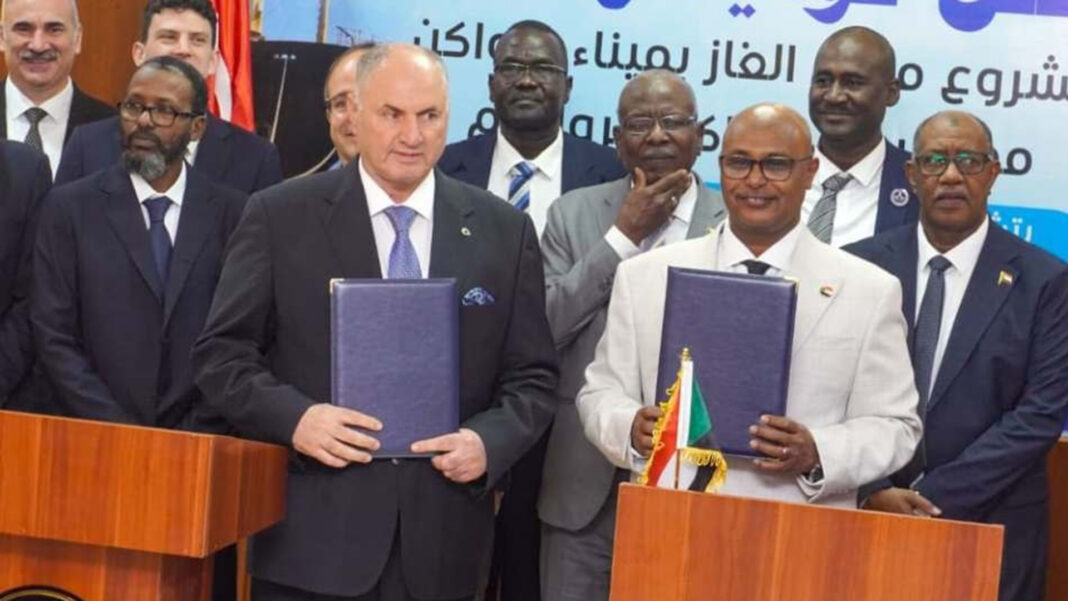

Senior diplomats from Egypt, Somalia, and Djibouti gathered on the sidelines of a major regional summit in Libya to address mounting geopolitical friction in the Horn of Africa and coordinate strategies on Red Sea maritime security, trade infrastructure, and regional stability.
The high-level discussions took place during the 22nd session of the Executive Council of the Community of Sahel-Saharan States (CEN-SAD) in Tripoli. According to statements released by Egypt’s State Information Service, Egyptian Foreign Minister Badr Abdelatty met separately with Somali Foreign Minister Abdisalam Abdi Ali and Djibouti’s Foreign Minister Abdoulkader Houssein Omar to align diplomatic positions during a period of shifting alliances and heighten diplomatic sensitivity across the strategic waterway.
During his bilateral meeting with Somali Foreign Minister Abdisalam Abdi Ali, Abdelatty focused on strengthening economic and development cooperation while addressing security shifts across the Horn of Africa. The Egyptian Foreign Minister reiterated Cairo’s firm commitment to Somalia’s national unity, international borders, and territorial sovereignty, explicitly rejecting unilateral measures that threaten to alter the geopolitical balance in the region.
Parallel discussions with Djiboutian Foreign Minister Abdoulkader Houssein Omar centered on expanding bilateral initiatives across commercial and industrial sectors. The two ministers outlined plans to deepen cooperation in international trade, cross-border investment, energy projects, port administration, logistics networks, and regional infrastructure development. Furthermore, both diplomats reviewed ongoing peace initiatives in Sudan and Somalia, emphasizing that sustained economic integration remains vital to securing long-term stability across eastern Africa.
A central theme of the Tripoli talks was the governance and protection of the Red Sea, one of the world’s most critical commercial shipping lanes. Abdelatty stated that primary responsibility for managing the security, navigation rights, and operational oversight of the waterway must rest strictly with the sovereign states directly bordering the sea.
This stance reinforces a joint declaration issued on October 4 in El Alamein, Egypt, by the leaders of Egypt, Somalia, Eritrea, and Sudan. The four nations asserted that Red Sea littoral states are uniquely positioned to lead maritime security efforts, protect international navigation rights, and counter maritime threats without uncoordinated external interventions.
The diplomatic consultations unfold against a backdrop of complex regional dynamics, driven largely by Ethiopia’s continued pursuit of direct maritime access. As a landlocked nation with a rapidly growing population and economy, Addis Ababa has consistently argued that its economic survival and heavy dependence on Red Sea trade routes justify a direct role in regional maritime and security arrangements.
Ethiopia’s effort to secure dedicated port facilities and establish a permanent naval presence along the coast has emerged as a major point of friction with neighboring states, particularly Somalia and Djibouti. Neighboring nations contend that existing international commercial arrangements already provide fair access to shipping channels, while uncoordinated coastal footprint agreements risk destabilizing established territorial boundaries.
Despite the firm diplomatic declarations issued in Tripoli, no new military pacts or targeted defense measures against Ethiopia were announced following the bilateral sessions. The foreign ministers concluded their meetings by agreeing to maintain regular diplomatic channels, enhance multilateral consultation, and pursue political resolution to regional disputes.