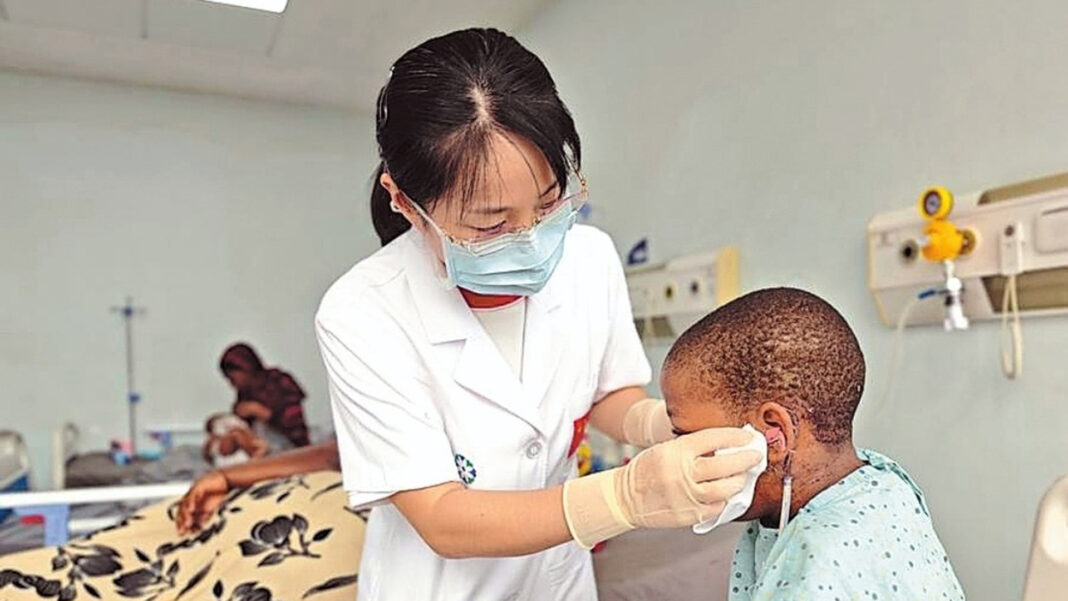

Ethiopia has launched a $2 million national healthcare initiative aimed at extending essential eye health services to at least 41 million citizens by 2030, marking one of the country’s most ambitious vision care commitments to date.
The pledge was announced at the inaugural Global Eye Health Summit in St. John’s, Antigua and Barbuda, and aligns with the United Nations’ 2030 roadmap for universal eye care and the global effort to address preventable vision loss worldwide.
Representing the Ethiopian Ministry of Health, Dr. Lelisa Amanuel, National Medical Campaigns Coordinator, outlined that the investment will upgrade eye care capabilities across more than 3,200 primary healthcare facilities nationwide. The strategy focuses on strengthening early screening and referral mechanisms, expanding access to prescription corrective eyewear, and improving surgical outcomes for cataract patients.
A central pillar of the plan is a national goal to bring 50 percent of school-age children under routine eye health coverage before 2030, ensuring that vision problems are identified and addressed early in life.
“Ethiopia is committed to ensuring equitable access to high-quality, affordable eye care for all citizens, regardless of age, income, or geographic location,” Dr. Lelisa reaffirmed during the summit.
In recognition of its efforts, Ethiopia received the Global Vision Impact Award at the summit for its integration of primary eye care and community-based vision screening into its universal health coverage system. The award highlights the country’s progress in embedding eye health within broader public health structures rather than treating it as a standalone service.
The summit—co-hosted by Antigua and Barbuda, Bangladesh, Guyana, Ireland, and Nigeria alongside the World Health Organization (WHO) and the International Agency for the Prevention of Blindness (IAPB)—catalyzed more than 200 global commitments to advance eye health.
Among the major announcements, the Vision Action Fund allocated $10 million across 24 countries, including Ethiopia, Kenya, Nigeria, Uganda, and Sudan. Orbis International also pledged $32 million in financial and technical assistance from 2027 to 2030 to combat the global burden of vision impairment, which affects more than 2 billion people worldwide.
Ethiopia’s initiative comes amid growing international momentum to close gaps in eye care access, particularly in low- and middle-income countries where preventable vision loss remains widespread. By investing in primary healthcare facilities and community-based screening, Ethiopian health officials hope to reach underserved populations in rural and remote areas who currently lack access to basic eye services.
The $2 million commitment, while modest in absolute terms, is expected to leverage existing healthcare infrastructure and partnerships to maximize impact. Health officials say the focus on early detection and referral will reduce the burden on specialized facilities and ensure that common vision problems are treated before they escalate.
With its combination of facility upgrades, school-based screening targets, and integration into universal health coverage, Ethiopia’s strategy is being viewed as a model for other nations seeking to expand eye care access.