The Tanzanian government has announced its commitment to integrating youth-led recommendations into official local government plans and budgets. The decision aims to significantly improve access to reproductive health services and tackle the lingering crisis of teenage pregnancies across the country.
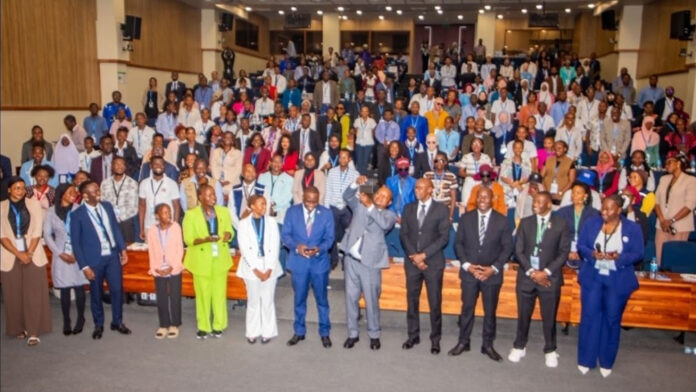
The pledge was delivered by the Minister of State in the Prime Minister’s Office for Regional Administration and Local Government (PMO-RALG), Prof. Riziki Shemdoe, during the opening of a two-day regional healthcare conference held in Arusha. Organized by the East, Central and Southern Africa Health Community (ECSA-HC), the event focused specifically on adolescent reproductive and mental health issues.
Addressing delegates and youth leaders, Prof. Shemdoe affirmed the government’s readiness to evaluate and act on practical solutions submitted by young people. He highlighted that these recommendations can be directly integrated into official local council planning through the Opportunities and Obstacles to Development (O&OD) participatory planning framework—a structure designed to ensure community-driven priorities receive state funding and administrative backing.
The decision comes at a pivotal moment for Tanzania’s demographic landscape. According to official data, young people aged 10 to 24 make up roughly 31 percent of the nation’s estimated 61 million residents. Despite representing nearly a third of the total population, adolescents consistently encounter severe barriers when attempting to access essential medical care—most notably youth-friendly reproductive health services, guidance on preventing early marriage, and support to reduce adolescent pregnancy rates.
Prof. Shemdoe pointed out that primary healthcare facilities serve as the first line of defense for the vast majority of young Tanzanians. Approximately 90 percent of youth seek medical assistance through local dispensaries, health centers, and district hospitals. Consequently, tailoring these primary care environments to better meet adolescent needs remains a top public health imperative.
“I urge young people to use these two days effectively and develop practical recommendations with clear implementation timelines so they can be evaluated and incorporated into official plans and budgets,” Prof. Shemdoe stated during his opening address, urging participants to leverage the platform to directly influence policy decisions.
In addition to encouraging active policy participation, the minister called on youth to take ownership of public infrastructure. He praised the substantial investments made under the administration of President Samia Suluhu Hassan to build and expand primary health facilities nationwide, calling on the younger generation to protect these assets and act as community champions for maternal and child health education.
The challenges highlighted at the Arusha conference extend beyond Tanzania’s borders. ECSA-HC Director General Dr. Ntuli Kapologwe noted that individuals under the age of 24 account for roughly 65 percent of the overall population across the regional health bloc’s member states. He emphasized that expanding comprehensive reproductive and mental health education is vital for reducing maternal mortality rates and encouraging safer, facility-based deliveries throughout East and Southern Africa.
Reinforcing the urgency of the issue, ECSA network youth representative Dr. Kuduishe Kisowile observed that a disproportionately high share of maternal deaths in the region stems from adolescent pregnancies. Young mothers face heightened physiological and socioeconomic risks, making targeted intervention critical. Dr. Kisowile noted that direct collaboration between youth advocates and government ministries offers the most promising path forward to avert preventable deaths and build more resilient healthcare systems.