Ethiopia has recorded 11 cases of circulating variant poliovirus type 1 (cVDPV1) so far in 2026, even as the country prepares to launch one of its largest outbreak response vaccination campaigns, targeting more than 11.3 million children under five across five regions, the Global Polio Eradication Initiative (GPEI) and its partners announced on World Polio Day.
According to the joint statement issued to mark the occasion, the majority of the confirmed cases—five—were reported from the Gambella Region. Four cases were detected in the West Shoa zone of Oromia Region, while the remaining two cases came from the Gofa and Gardule zones of South Ethiopia Region. The cases highlight the continued threat posed by circulating variant poliovirus, which can emerge in communities where vaccination coverage remains persistently low, allowing the weakened virus contained in oral polio vaccine to circulate for prolonged periods and change genetically.
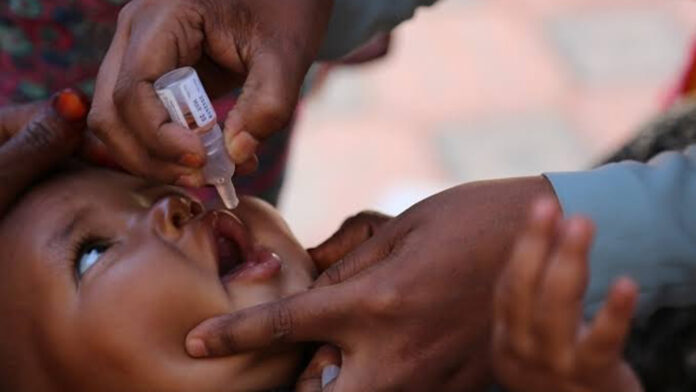
In response to the Gambella outbreak, the Ethiopian Public Health Institute and the Ministry of Health, in collaboration with WHO, UNICEF, the CDC, and with generous funding from GPEI, conducted two rounds of subnational vaccination campaigns using bivalent Oral Polio Vaccine (bOPV). The sequential campaigns were carried out in Gambella Region, neighboring Benishangul Gumuz Region, and two zones of Oromia Region—West Wollega and Kelem Wollega. More than one million children under five were reached, with almost 100 percent administrative coverage. The campaigns were integrated with other lifesaving services, including catch-up vaccinations for zero-dose and under-vaccinated children, and were synchronized with a parallel polio vaccination campaign in the Republic of South Sudan.
Looking ahead, the country is preparing an outbreak response vaccination campaign using both bOPV and the novel Oral Polio Vaccine type 2 (nOPV2) to address the recent cases in South Ethiopia and Oromia Regions, as well as in high-risk neighboring zones and regions. The campaign will target 11,348,548 children under five—and under ten years of age in West Shewa of Oromia Region—living in 629 woredas across 68 zones in five regions: Addis Ababa, Central Ethiopia, Oromia, South Ethiopia, and Southwest Ethiopia. The first round is scheduled for 20–23 November 2026, with the second round set for 18–21 December 2026. The campaign will also provide opportunities to identify zero-dose and under-vaccinated children and refer them for missed routine vaccines.
The statement noted that Ethiopia has successfully stopped type 2 polio transmission, with the last case reported on 7 October 2025. The country has also maintained its wild polio-free status since interrupting indigenous wild poliovirus transmission in 2001, reporting its last imported case in 2014 and achieving wild polio-free certification in 2017. The WHO African Region was officially declared free of indigenous wild poliovirus on 25 August 2020.
However, partners cautioned that the fight is not yet over. To sustain hard-won gains, they stressed the need to strengthen polio surveillance, particularly at border and cross-border areas, given Ethiopia’s proximity to areas where transmission persists. Enhanced acute flaccid paralysis (AFP) and environmental surveillance, coordinated cross-border actions, and rapid information-sharing were identified as crucial measures.
As Ethiopia marks its ninth anniversary of certification as wild polio-free, GPEI partners reaffirmed their commitment to supporting the country in sustaining high immunity levels and reinforcing community-based systems that ensure no child is left unprotected. They commended the Government of Ethiopia, regional health bureaus, and community leaders for their decisive action, while recognizing the contributions of partners including WHO, UNICEF, CDC, Gavi, Rotary, and the Gates Foundation, as well as stakeholders such as CORE Group, JSI, PATH, and CHAI.
The partners called on all stakeholders to redouble efforts, strengthen vaccine-preventable disease surveillance, and ensure high vaccination coverage. “Every child must be reached, and no child should be left behind,” the statement concluded. “Together, we can eradicate all forms of polio from Ethiopia and contribute to a polio-free world.”