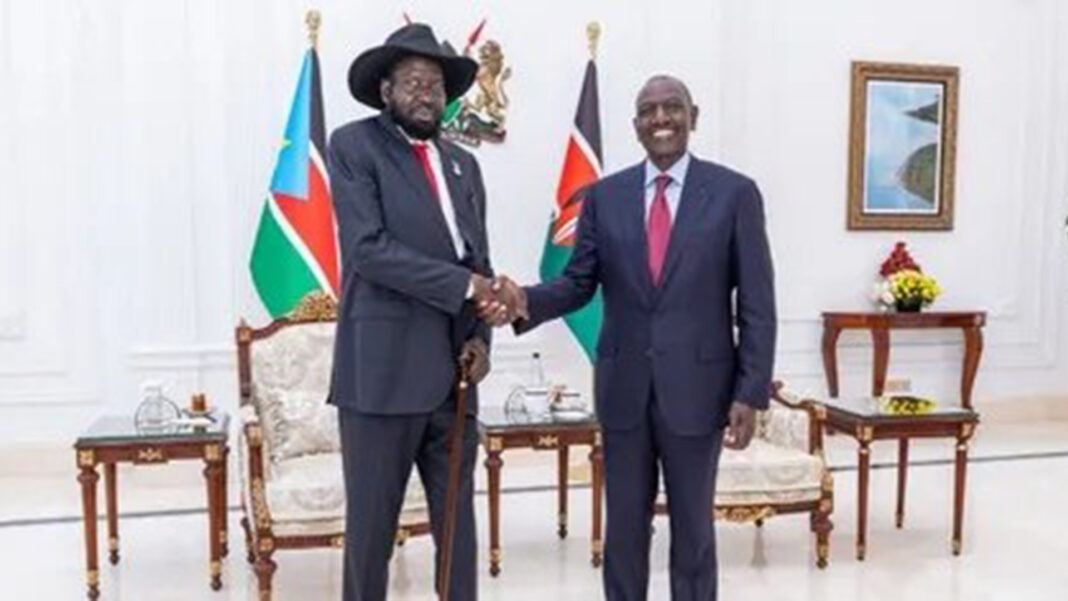
Kenya and Uganda have reaffirmed their commitment to resolving persistent tariff and non-tariff barriers in a renewed effort to unlock the full economic potential of cross-border trade between the two East African neighbors.
Speaking at a high-level bilateral meeting with Ugandan trade officials in Kampala, Kenya’s Trade Principal Secretary, Regina Ombam, highlighted progress in streamlining trade procedures and removing administrative bottlenecks that have hindered the movement of goods between the two countries.
Leading the Kenyan delegation, Ombam pointed to key achievements, including the operationalization of One-Stop Border Posts at Malaba and Busia, as well as joint efforts to eliminate discriminatory levies and duties that have historically impeded cross-border commerce.
“I wish to state Kenya’s commitment to the implementation of these issues because cross-border trade represents the new frontier that will drive economic growth across our continent,” Ombam said.
She emphasized that sustained cooperation, continuous engagement and mutual trust are essential to translating diplomatic commitments into tangible benefits for traders, businesses and communities on both sides of the border.
The renewed diplomatic efforts follow recent high-level engagements between Kenyan President William Ruto and Uganda’s Minister of Trade, Wilson Mbasu Mbadi. During the discussions, both countries agreed to address specific concerns raised by regional traders over barriers affecting the movement of goods.
The negotiations come amid expanding economic ties between the two East African Community (EAC) member states.
According to data from the Kenya National Bureau of Statistics, Kenya’s exports to Uganda increased to Ksh 162.2 billion, up from Ksh 125.9 billion in 2024. Meanwhile, Kenya’s imports from Uganda rose to Ksh 46.9 billion from Ksh 37.7 billion over the same period.
The growth highlights the importance of bilateral trade to both economies and underscores the potential benefits of removing regulatory and administrative obstacles that increase costs and delay the delivery of goods.
Despite the positive trade performance, business associations in both countries have continued to raise concerns about persistent non-tariff barriers. These include sudden restrictions on agricultural imports, delays in customs clearance and overlapping regulatory documentation requirements.
Such obstacles can increase transaction costs, disrupt supply chains and undermine the competitiveness of businesses, particularly small-scale traders who depend on the efficient movement of goods across borders.
Addressing these challenges is therefore a key priority for both governments as they seek to strengthen regional integration and improve the business environment.
Separately, Kenya’s Ministry of Trade has concluded broad consultations aimed at advancing institutional and legal reforms to strengthen the country’s trade competitiveness.
The consultations focused on modernization measures designed to improve the ease of doing business, streamline trade-related procedures and align national policies with regional and continental integration objectives.
The reforms are intended to support Kenya’s commitments under the East African Community and the African Continental Free Trade Area, both of which seek to expand market access and facilitate the movement of goods and services across participating countries.
For Kenya and Uganda, reducing trade barriers could help businesses access wider markets, improve supply-chain efficiency and strengthen the role of cross-border commerce in regional economic growth.
However, sustained implementation, effective coordination among government agencies and regular engagement with the private sector will be critical to ensuring that commitments translate into practical improvements for traders.