Preparations have entered their final stages for the official groundbreaking ceremony of the mega East Africa Refinery project in Lamu, with Deputy President Kithure Kindiki announcing that construction is officially set to commence next Wednesday.
Speaking following a high-level final preparations meeting at his official residence in Karen, Deputy President Kindiki confirmed that President William Ruto will lead the landmark groundbreaking ceremony. The high-profile event is expected to draw invited heads of state and government leaders from across the East African Community (EAC), alongside senior regional officials, private sector executives, and members of the local community.
“I held the final meeting to prepare for the groundbreaking of the East Africa Refinery in Lamu,” Kindiki stated. “The refinery will position Kenya and East Africa as a key petrochemical industrial hub and a competitive energy logistics centre.”
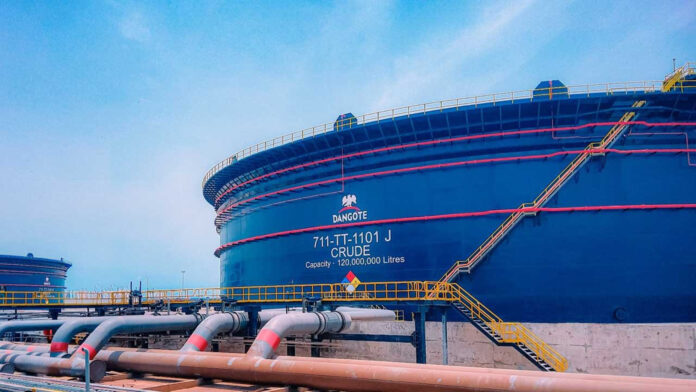
Estimated at a massive Sh2.2 trillion ($17 billion), the monumental project is backed by Nigerian billionaire industrialist Aliko Dangote and is designed to fundamentally alter the downstream petroleum landscape of the region. Once operational, the refinery will boast a processing capacity of 700,000 barrels of crude oil per day, making it by far the largest facility of its kind in East Africa and one of the largest on the entire African continent.
The facility is strategically engineered to supply refined petroleum products—including petrol, diesel, and jet fuel—not only to Kenya but to neighbouring landlocked and coastal markets, significantly reducing the region’s vulnerability to global fuel price shocks and shipping route disruptions.
Kindiki emphasized that the core strategic advantage for Kenya extends far beyond merely offsetting local fuel imports. Instead, the project is designed to act as a massive catalyst for economic structural change. “The strategic prize for Kenya is not simply replacing imported petrol and diesel,” Kindiki explained. “It is shifting the country from being predominantly a fuel importer to becoming a regional processing and distribution hub.”
The multi-billion-shilling investment is expected to serve as an anchor for broader industrialization along Kenya’s northern coast, tying directly into the strategic framework of the Lamu Port-South Sudan-Ethiopia Transport (Lapsset) corridor. Government projections indicate that the massive infrastructure undertaking will create tens of thousands of jobs—estimated at upwards of 50,000 to 60,000 opportunities for young people and skilled professionals across construction, auxiliary services, and downstream petrochemical sectors.
Furthermore, the project will stimulate regional economic activity, generate ancillary business ecosystems in Lamu and the wider Coast region, and provide a stable, localized source of refined fuel for heavy industries and manufacturers.
With the framework agreements, stakeholder alignments, and logistical protocols now completely finalized, state authorities and project developers are locking in the final security and protocol arrangements ahead of next week’s historic launch. The construction phase of the mega-refinery is projected to span approximately three years, marking a defining milestone in East Africa’s journey toward energy independence and industrial self-reliance.