
The Djibouti-Ethiopia trade corridor continues to serve as the critical lifeline for landlocked Ethiopia’s international commerce, handling the vast majority of the nation’s import and export cargo. However, a combination of infrastructure deficits, regulatory hurdles, and supply chain bottlenecks threatens to constrain the country’s broader economic potential—particularly in the agricultural export sector.
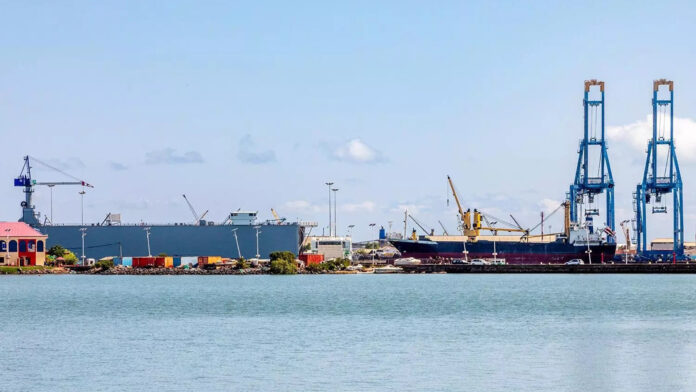
According to recent data from Ethiopia’s Ministry of Transport and Logistics, the country moved over 17.57 million metric tonnes of import and export cargo during the 2025/26 fiscal year. Of this total, imports accounted for 15.93 million metric tonnes, while exports stood at a modest 1.64 million metric tonnes. The Port of Djibouti remains the undisputed focal point of this trade, handling 15.34 million tonnes, which translates to a staggering 97% of all maritime cargo serving Ethiopia.
Pramod Bagalwadi, CEO for East Africa at DHL Global Forwarding, emphasized the corridor’s irreplaceable role. “At present, the Port of Djibouti handles all goods entering Ethiopia, making the corridor critical and, for now, the country’s primary gateway to global trade,” Bagalwadi noted. He added that cargo volumes from the Middle East and North Africa (MENA) region into Ethiopia have increased steadily following the liberalisation of the economy, a trend expected to persist.
Despite this heavy reliance, severe structural limitations hamper the corridor’s efficiency. One of the most pronounced areas of struggle is Ethiopia’s agricultural export sector, particularly fresh produce like bananas and avocados. Despite a booming domestic production—yielding over 1 million tonnes of bananas in 2019 and nearly 1.6 million tonnes in just five months in some regions—Ethiopia earned a mere $38 million from banana and avocado exports over a five-year span. This pales in comparison to the massive $16.7 billion global banana trade recorded in 2025.
Sjoerd H. Visser, an expert in Africa trade and transport corridors, pointed out that production quality and inadequate cold-chain infrastructure are the primary culprits behind this disparity. To combat the persistent cold-transport issue, Visser suggested leveraging the Ethiopian-Djibouti Railway (EDR) by utilizing rail reefer wagons to swiftly move fresh produce toward the Port of Djibouti.
Beyond the ports and railways, domestic infrastructure poses another major obstacle. Dawit Woubishet, Chairperson of the Airfreight Institute (AFI) under FIATA, highlighted that Ethiopia’s road network suffers from significant wear and tear. This deteriorates the condition of commercial trucks, drives up operating costs, and occasionally leads to severe accidents. While the Ethiopian government has initiated crucial road maintenance and rehabilitation projects to improve safety and cargo movement, other systemic challenges persist.
Chief among these are customs inefficiencies. Because cargo transiting the corridor must navigate two separate customs systems—those of Ethiopia and Djibouti—delays are frequent. However, a positive step was taken earlier this year when Ethiopia and Djibouti agreed on a joint roadmap to operationalize the Galafi One-Stop Border Post (OSBP). Located along Djibouti’s National Road 1, Galafi is designed to eliminate duplication, slash border clearance times, and inject predictability into cargo flows. According to the Overseas Development Institute, similar One-Stop Border Posts across East Africa have successfully reduced border crossing times by 62% to 87%.
Container availability and maritime feeder services also create bottlenecks. Woubishet explained that because larger mainline vessels do not always call directly at the port, shippers must rely on feeder vessels with limited capacity, resulting in capacity shortages and export delays when demand spikes.
To complement surface transport, air cargo plays an essential role for high-value and perishable items. Fitsum Abadi Gebrehawaria, Managing Director of Cargo for Kenya Airways, noted that the UAE and Saudi Arabia have transformed into critical trading partners and transhipment hubs. Air freight supports time-sensitive sectors like pharmaceuticals, e-commerce, and electronics, while regional carriers like Kenya Airways leverage hubs in Nairobi to link the Horn of Africa to over 40 destinations.
Ultimately, while the Djibouti-Ethiopia corridor successfully underpins Ethiopia’s access to global markets, supply chains continue to grapple with customs coordination, cargo visibility, multimodal integration, and cold-chain consistency. Industry leaders agree that strengthening road, rail, maritime, and air connections will be non-negotiable if Ethiopia is to unlock its true trade and agricultural export potential.