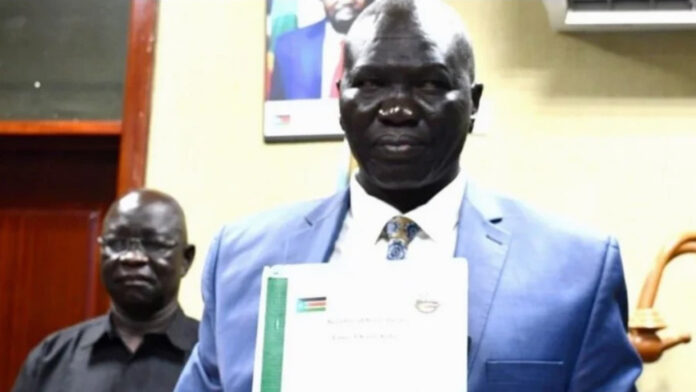
South Sudan is taking decisive steps to revive and develop the long-planned Fula hydropower project on the White Nile, located near Nimule in Eastern Equatoria State, close to the Ugandan border. Energy and Dams Minister Agok Makur Kur announced that the government is pushing forward with its energy agenda, firmly stating that Juba has no fear of potential opposition from downstream nations like Egypt.
Speaking to local media, Makur emphasized that the Fula project was officially approved as part of a package of 34 projects by the Nile Basin Council of Ministers—a collaborative body that includes Egypt. According to the minister, this multilateral endorsement provides a solid legal and diplomatic basis for South Sudan to move forward with its infrastructure aspirations.
“There is no fear,” Makur declared, adding that the Ministry of Energy and Dams is fully prepared to embark on dam construction to meet the nation’s soaring electricity demands. He confirmed that he has already briefed President Salva Kiir Mayardit on the latest preparations, noting that international investors and diplomatic representatives have begun expressing keen interest by approaching the ministry. Further specifics regarding financing, implementation strategies, and construction timelines are expected to be unveiled as the government finalizes its plans.
The proposed Grand Fula hydropower project has a long history, having been initially identified by South Sudan in 2021. It forms a cornerstone of the country’s long-term strategy to expand electricity generation, foster industrial development, and drastically improve domestic power access. Despite its inclusion in successive national energy plans—alongside solar initiatives and regional power interconnection schemes—the project has experienced years of delays and has yet to enter full-scale construction.
Accelerating domestic power generation is an urgent national priority for South Sudan, which currently suffers from severe electricity shortages and maintains one of the lowest electricity-access rates in the world. Bringing the Fula project online is seen as a vital step toward bridging this energy deficit and powering local economies.
Geographically and legally, the project occupies a distinct position within the Nile basin. Fula is situated on the White Nile system rather than the Blue Nile. While the Blue Nile originates in Ethiopia—serving as the site of the contentious Grand Ethiopian Renaissance Dam (GERD)—the White Nile follows a different hydrological path, eventually merging with the Blue Nile in Khartoum, Sudan. South Sudan participates actively in the Nile Basin Initiative, serving as a platform where riparian states cooperate on the equitable management and development of shared water resources.
Makur’s remarks arrive against a backdrop of heightened regional sensitivities concerning Nile water infrastructure. Tensions have remained high following Ethiopia’s unilateral filling and operation of the GERD, which has sparked ongoing diplomatic disputes with downstream historical users Egypt and Sudan. Despite these regional anxieties, South Sudan has consistently maintained that developing its sovereign water and energy resources is an absolute national imperative, even as it acknowledges the necessity of regional cooperation.
While an official start date for construction has not yet been announced, the government’s renewed momentum signals a clear intent to tackle the country’s power crisis head-on. As investors circle and diplomatic engagements ramp up, the Fula hydropower project stands poised to become a defining test of South Sudan’s ability to harness its natural resources for national development while navigating complex regional geopolitics.