

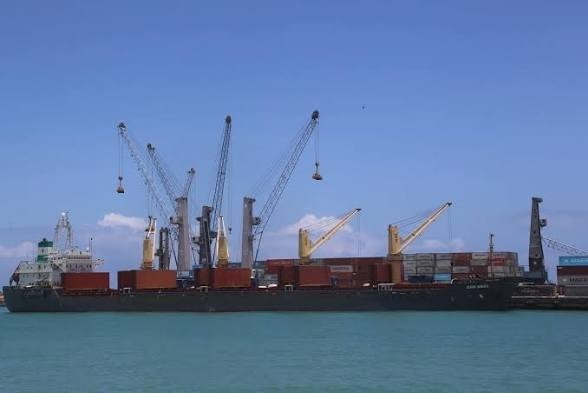
Regional supply chains across East Africa and the Gulf are undergoing a structural realignment as escalating security threats and maritime disruptions in the Bab al-Mandab Strait force Somali commercial entities to pivot toward alternative shipping corridors.
The security crisis, catalyzed by intensifying conflict in Yemen and aggressive geopolitical maneuvers in vital Red Sea chokepoints, has severely impacted conventional import channels. For generations, the Somali business community has relied heavily on intermediate trade hubs in the United Arab Emirates, Oman, and Saudi Arabia to source manufactured goods, foodstuffs, and raw materials from Asian markets. However, recent disruptions—highlighted by Houthi rebel advances, the capture of strategic ports and islands along the Yemeni coastline, and resulting maritime incidents—have radically escalated freight insurance premiums, extended transit timelines, and injected acute volatility into regional trade.
Mohamed Ali Nur, the director of Mogadishu Seaport, underscored the profound toll these maritime bottlenecks are taking on local commerce.
“The latest tensions in the Bab al-Mandab Strait, as well as those in the Strait of Hormuz, have negatively impacted us,” Nur stated, noting that commercial vulnerability along these critical shipping lanes has forced authorities and merchants to proactively re-engineer their logistics networks. “But we have also taken measures to avoid that disruption.”
Rather than depending on traditional transshipment ports in the Arabian Peninsula that now face mounting security threats, major importers are increasingly establishing direct maritime corridors linking East African ports directly with primary manufacturing nations in South and Southeast Asia. Signaling this strategic shift, Nur pointed to a historic operational milestone at the country’s primary maritime gateway.
“For the first time, we brought a ship carrying sugar directly from Sri Lanka,” Nur explained. “This could be a strategy we developed because of these tensions.”
This tactical adaptation by Mogadishu port authorities and local trading conglomerates highlights a broader economic survival mechanism taking shape across the Horn of Africa. The Bab al-Mandab Strait—a vital artery connecting the Indian Ocean to the Red Sea and the Suez Canal—handles a vast percentage of global maritime traffic, particularly energy shipments and consumer goods moving between Asia, the Middle East, and Europe. Any obstruction or threat of conflict in this narrow corridor ripples outward, directly penalizing developing economies reliant on stable import-export flows.
The ripple effects of the crisis extend far beyond Somali waters, threatening regional energy security and broader geopolitical stability. Analysts note that neighboring economies, including Saudi Arabia, face mounting pressure as militant actions and pipeline vulnerabilities jeopardize vital oil transit routes and regional infrastructure. The squeeze on energy corridors, combined with escalating shipping costs, threatens to fuel inflationary pressures across import-dependent nations in East Africa and the Middle East.
For Somalia, which has spent years working to stabilize its national economy and re-integrate into global trade networks, the current maritime crisis presents both a severe vulnerability and an unexpected catalyst for logistical self-reliance.