Kenya has called upon African nations to forge a united front and negotiate as a single bloc to combat what it termed an exorbitant “trust tax” imposed by international financial markets.
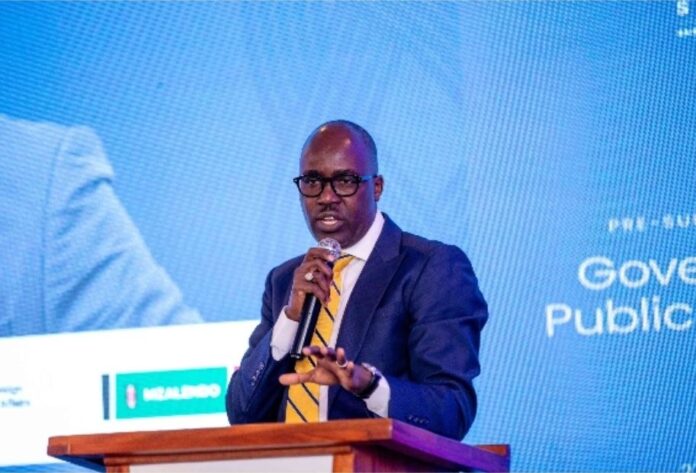
Speaking at the conclusion of the sixth African Conference on Debt and Development in Nairobi, Foreign Affairs Principal Secretary Korir Sing’oei laid bare the staggering financial toll that external debt service takes on the continent. The high-level gathering, organized by the African Forum and Network on Debt and Development to mark its 30th anniversary, centered on the theme “From Fragmentation to Influence.” It brought together government officials, civil society groups, and researchers dedicated to translating the African Common Position on Debt—adopted by African Union heads of state in February—from a political declaration into actionable policy.
According to Sing’oei, Africa currently shells out a staggering $90 billion annually in debt service alone, dwarfing the combined totals of international aid and climate finance received by the continent. Within that massive figure, he noted that Africa pays roughly $75 billion—or nearly Sh9.7 trillion—each year strictly in inflated interest rates driven by what he categorized as an unjust trust tax.
The Principal Secretary argued that the continent’s deepening fiscal vulnerability stems less from actual default risk and more from an artificial risk premium slapped onto African nations by international creditors. Consequently, 22 African countries find themselves mired in severe debt distress. He contextualized this ongoing crisis as a historic evolution in the continent’s foreign policy priorities, tracing a trajectory from the fierce pursuit of political independence in the 1960s, to the desperate search for aid in the 1990s, and now to the crippling cost of capital today.
Addressing the wider economic landscape, Sing’oei pointed out that Africa requires an estimated $1.3 trillion annually to adequately meet the United Nations’ Sustainable Development Goals. To bridge this monumental financing gap, he set a concrete regional target: cutting Africa’s borrowing premium by 200 basis points over the next three to four years. Achieving this milestone would free up approximately $20 billion annually—funds that could directly finance the African Union’s ambitious Agenda 2063 infrastructure program.
To reclaim autonomy over its economic destiny, the continent is rolling out new institutional frameworks. Sing’oei highlighted the upcoming launch of an African Credit Rating Agency in Mauritius, scheduled for October, designed to let the continent price its own risk accurately rather than relying on external, often biased assessments. He also pointed to the Alliance of African Multilateral Financial Institutions—which unites key lenders like the African Development Bank and Afreximbank—as a vital stepping stone toward reducing Africa’s reliance on external borrowing.
The structural makeup of Africa’s creditor base has transformed radically since the 1990s, when roughly 70 percent of the continent’s debt was held by Western-led Paris Club lenders. Today, private bondholders located in financial hubs like London, Hong Kong, and Gulf states control about 40 percent of Africa’s debt. Sing’oei warned that this shift has severely complicated and prolonged debt restructuring efforts, citing Zambia’s protracted four-year ordeal as a prime example of the gridlock private creditors can cause.
“If we do not fix from whom we borrow, how we borrow and at what price, we will not have a social contract,” Sing’oei cautioned the assembly. “We will have a debt contract.”
The momentum generated in Nairobi is expected to carry forward to the upcoming Global Trust Summit, also slated to be held in Nairobi in October, where the African Common Position on debt will take center stage as the continent fights for fairer financial architecture.