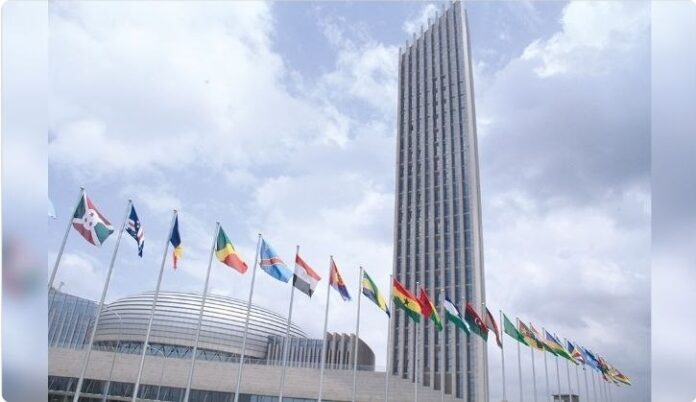
Ethiopia has taken a major leadership step within the continental governance structure by voluntarily agreeing to nearly double its annual financial contribution to the African Union (AU). Announced during the 49th AU Ordinary Session of the Executive Council in Addis Ababa, the move upgrades Ethiopia from a tier-two member state to the elite Tier-One financing category.
Under the previous framework, Ethiopia contributed as a tier-two country alongside nations like Kenya, maintaining an annual assessment of under USD 10 million. By the end of 2025, Ethiopia’s regular assessed budget contribution stood at nearly USD 8 million, an obligation it fully met. The recent upgrade elevates its annual commitment to roughly USD 15 million, placing it on equal financial footing with major continental economies such as Algeria, Egypt, Nigeria, South Africa, Morocco, and Angola.
Tier-One member states represent the highest financial bracket in the African Union system, reserved for countries that account for significant portions of the continent’s GDP. Collectively, these top-tier nations account for 45.15 percent of the AU’s total assessed regular budget and Peace Fund, translating to roughly USD 600 million to USD 650 million annually. Ethiopia’s elevated contributions will cover the upcoming 2027–2029 assessment cycle, with payments under the new tier schedule beginning next year. Notably, AU officials clarified that higher financial contributions do not translate to increased voting power within the bloc.
This voluntary upgrade comes at a critical juncture for the African Union, which is grappling with severe financial constraints that threaten its core operations, particularly in peace and security. The continental bloc has long struggled with predictable funding. Nearly two-thirds of its operational budget historically relies on external sources, primarily the European Union and other international development partners.
An official AU statement underscored the structural fragility of the institution’s finances, noting that the organization is not financed in a predictable, sustainable, equitable, or accountable manner. This vulnerability is heavily compounded by the fact that more than 40 percent of member states fail to pay their yearly contributions. Accumulated arrears remain a staggering burden; Sudan alone holds outstanding assessments of USD 74 million, while countries such as Libya, South Sudan, Burkina Faso, Mali, Guinea, and Niger carry combined liabilities exceeding USD 30 million.
Efforts to achieve institutional self-financing have achieved mixed results since member states agreed in Kigali in 2016 to introduce a 0.2 percent levy on imports to fund the organization. While designed to independently cover 100 percent of the AU’s operational budget, 75 percent of its program budget, and 25 percent of its Peace Fund, adoption has been slow. Only about 20 member states have integrated the import tariff into their national customs frameworks, and a mere 17 have fully operationalized it. Major economies like South Africa, Nigeria, Algeria, and Egypt opted out of the import tax due to World Trade Organization (WTO) and regional trade agreements, choosing instead to fulfill their obligations directly from national tax revenues.
The resulting shortfalls have been exacerbated by declining external support. In 2024, the AU received just USD 288.6 million from development partners, falling far short of its expected USD 404 million. Compounding these security and financial pressures, Washington recently notified the AU that it will not fund peace missions in Somalia beyond December 2026, withholding logistical support via the United Nations Support Office in Somalia (UNSOS). The United States cited slow progress by Somali authorities in taking full ownership of national security after decades of international intervention, alongside objections to UN Resolution 2719, which aims to draw 75 percent of AU-led mission budgets from UN-assessed contributions.
Internally, the AU’s spending priorities continue to face scrutiny. Audited financial reports for 2024 revealed that staff salaries and benefits constituted the highest proportion of institutional spending, totaling USD 169 million, followed closely by peace support operations at USD 143 million. With total accounts payable standing at USD 283 million—nearly half of which is owed to troop-contributing countries—Ethiopia’s decision to step up as a Tier-One contributor provides a welcome, albeit partial, boost to an organization navigating an unprecedented fiscal storm.