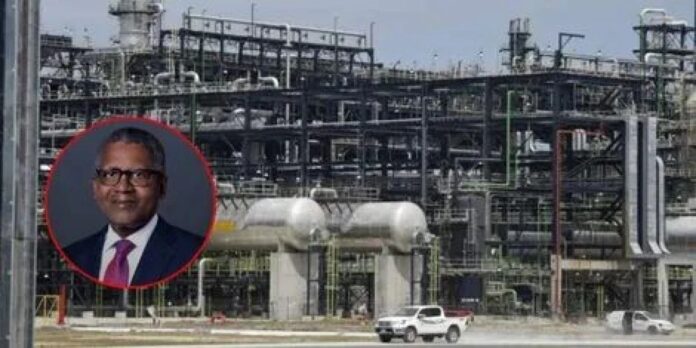
Billionaire industrialist Aliko Dangote has confirmed that physical construction on the multi-billion-dollar Lamu oil refinery in Kenya will officially break ground no later than October of this year. Framed as one of the most monumental private-sector investments in East Africa’s modern economic history, this grand initiative aims to fundamentally revolutionize continental energy autonomy.
Detailing the project’s timeline, Dangote pointed out that preparatory measures and foundational blueprints have advanced significantly. Once the formal groundbreaking ceremony takes place in October, intense engineering and heavy construction phases will kick off straight away, with project completion targeted in under four years.
“The plans for the refinery have gone very far with Kenya because what we are trying to do is to make sure that in most African countries we make them sufficient in their own energy needs,” Dangote explained.
Engineered for massive throughput, the facility is designed to process an impressive 700,000 barrels of crude oil daily. This staggering scale positions the plant among the largest oil-processing installations across the entire continent, vastly strengthening Kenya’s domestic petroleum capabilities and supply security.
Beyond national borders, the refinery’s strategic impact spans a vast geographic market. Dangote underscored that the plant is tailored to fulfill refined petroleum demands across multiple East African countries, while also pushing its commercial reach northward into Egypt. By streamlining supply lines, the refinery aims to minimize heavy dependence on expensive fuel imports sourced from outside the continent.
In a welcome financial development, Dangote announced that the overall budget for the infrastructure undertaking has been trimmed. Initially projected at roughly Ksh2.2 trillion ($17 billion), the anticipated cost has been revised downward to approximately Ksh2 trillion ($16 billion).
The industrialist credited this cost reduction to vital lessons derived from building his massive petroleum refinery in Lekki, Nigeria. Armed with superior operational insights and refined execution strategies, the company expects the Kenyan venture to advance more rapidly, which will naturally lower overall financing costs.
Concerning capital structure, the high-value project will utilize a calculated combination of debt and equity. Dangote Industries intends to supply 30 percent of the funding through equity, leaving the remaining 70 percent to be raised via debt financing instruments.
Aside from shifting regional trade and energy metrics, the complex promises profound socio-economic dividends. State officials and industrial planners estimate that the project will create tens of thousands of jobs across construction, civil engineering, supply chain logistics, manufacturing, and auxiliary energy sectors, marking the dawn of a transformative era for Lamu and broader East Africa.