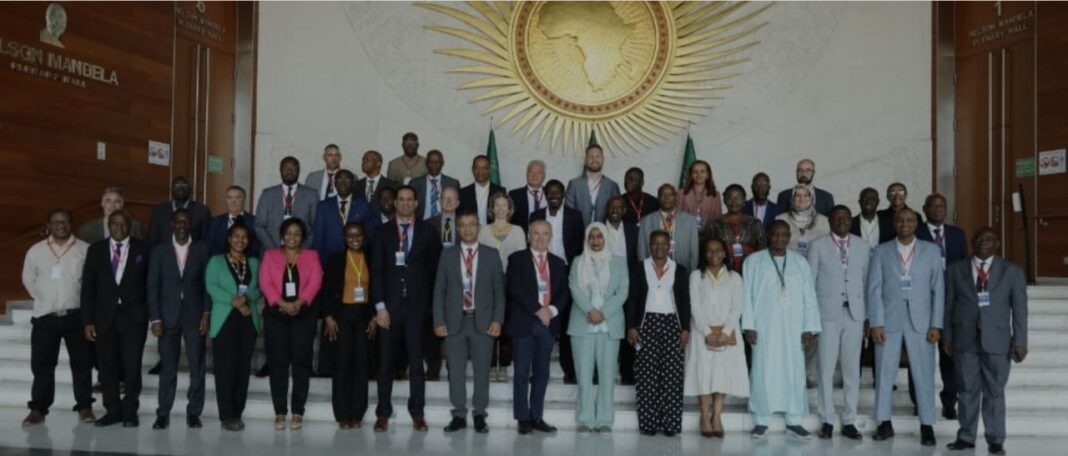
The United Nations Economic Commission for Africa (ECA) has presented the Africa 2035 Digital Implementation Roadmap during the “Africa Regional Consultation on the Implementation of WSIS+20 Outcomes: Operationalizing WSIS+20 and GDC,” held from July 1–2, 2026, in Addis Ababa.
The meeting marked the regional launch of efforts to translate the United Nations General Assembly’s WSIS+20 outcomes into coordinated continental action. Organized in collaboration with the Government of Ethiopia, the consultation brought together policymakers, development partners, and stakeholders to review the roadmap and align on its operationalization through 2035. The initiative aims to establish a unified framework for tracking progress, impact, and delivery of digital transformation efforts across Africa.
Anchored in the WSIS+20 UNGA Resolution A/RES/80/173 and aligned with the Global Digital Compact, the roadmap shifts focus from fragmented initiatives to a more structured and sequenced implementation approach. It integrates existing continental frameworks, including Agenda 2063, the African Union Digital Transformation Strategy, and emerging data governance, artificial intelligence, and digital public infrastructure initiatives into a cohesive delivery architecture.
Deliberations during the two-day consultation focused on translating the roadmap into actionable priorities by examining its phased implementation plan and thematic pillars. Discussions also clarified the roles of member states and stakeholders in strengthening linkages between WSIS Action Lines, Global Digital Compact objectives, and the Internet Governance Forum ecosystem. Participants reviewed a proposed unified reporting framework featuring key indicators on digital inclusion, infrastructure, governance, and connectivity to improve alignment, comparability, and evidence-based monitoring.
Speakers emphasized that Africa’s digital priorities are evolving beyond connectivity to ensuring that digital transformation drives job creation, improves access to education and healthcare, strengthens governance, and fosters innovation. Alidjanatou Saliou Arekpa, speaking on behalf of Benin and the Network of African Parliamentarians for Digital Governance, called for accelerated implementation of commitments under the 2025 Cotonou Declaration.
“We have not come to Addis Ababa to rewrite Cotonou. We have come to take stock and accelerate progress,” she said, highlighting the importance of digital sovereignty, inclusion, cybersecurity, innovation ecosystems, and stronger parliamentary engagement.
Isabelle Lois, Vice-Chair of the United Nations Commission on Science and Technology for Development, commended ECA’s leadership in advancing the regional WSIS process and developing the Africa 2035 roadmap, noting its importance in strengthening inclusive, multi-stakeholder partnerships.
Samuel Kobina Annim, Director of the African Centre for Statistics at ECA, said that while digital infrastructure has expanded across Africa, significant gaps remain in access, usage, and inclusion. He noted that digital transformation is central to achieving the Sustainable Development Goals and Agenda 2063, adding that the roadmap provides a platform to address persistent data gaps through standardized reporting indicators and improved coordination across implementation and monitoring processes.
Seyoum Mengesha of Ethiopia’s Ministry of Innovation and Technology highlighted digital transformation as a cornerstone of national development, citing investments in digital public infrastructure, digital identity systems, e-government services, broadband expansion, digital finance, cybersecurity, and innovation ecosystems.
The consultation is expected to advance the Africa 2035 Digital Implementation Roadmap, including a joint WSIS–GDC implementation and reporting framework to guide monitoring and delivery of digital commitments across the continent.