Kenya has announced that it has secured 3.7 billion Kenyan Shillings (approximately €25 million) in financial commitments from the German government to expand irrigation development, ensure food security, and support modern, climate-resilient agricultural practices.
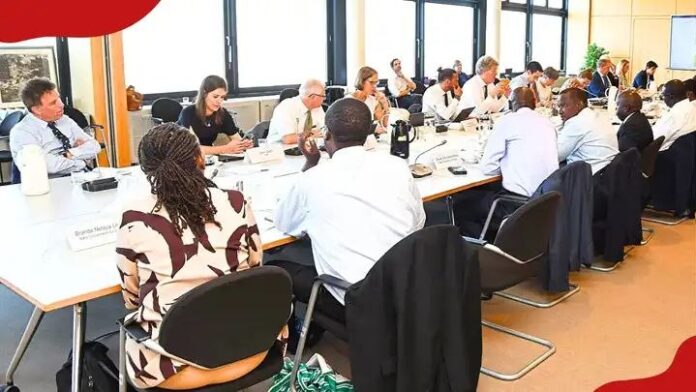
This major development agreement was reached during the ongoing Government-to-Government Development Cooperation negotiations in Berlin, Germany.
The Kenyan delegation at the Berlin development talks was led by National Treasury Principal Secretary Dr. Chris Kiptoo and State Department for Irrigation Principal Secretary Ephantus Kimotho, while Joachim Schmitt, Head of Division at Germany’s Federal Ministry for Economic Cooperation and Development (BMZ), led the discussions for the German side.
During the discussions, Irrigation Principal Secretary Ephantus Kimotho stated that the Kenyan government places a special emphasis on smallholder irrigation projects. He emphasized that these projects play a critical role in boosting agricultural productivity and improving citizens’ livelihoods. In response to Kenya’s proposal, the German government agreed to commit €2 million in grant funding for community engagement and project preparation activities. Additionally, €3 million was pledged to transform food systems and strengthen food security through sustainable agricultural practices.
The two countries also explored ways to jointly expand youth-focused climate protection initiatives and agribusiness programs, particularly within the Lake Region Economic Bloc. Furthermore, extensive discussions focused on increasing private sector participation in the agricultural value chain and developing integrated projects that strengthen the connections between irrigation, agriculture, and trade.
This new agreement follows recent consultations between Kenya’s State Department for Irrigation and governors from Western Kenya. Following the governors’ expression of interest to co-invest in irrigation projects, Kenya successfully secured an additional €20 million commitment from Germany to expand smallholder irrigation schemes across seven different counties.
This fresh support was secured due to the successful implementation and achievements of the Smallholder Irrigation Programme in the Mount Kenya region. Principal Secretary Kimotho noted that five major irrigation projects—Miuka, Kandeki, Gatene, Magatianthi, and Kiramanti—have already been fully completed. Among these, two projects have been fully handed over to farmers and are currently operational, covering a total of approximately 1,300 acres. These projects largely focus on high-value horticultural (fruits and vegetables) farming and currently benefit 1,540 farmers directly.
Government projections show that annual earnings from these projects are expected to rise from 12.4 million Kenyan Shillings to 45.7 million Shillings. This practically demonstrates the significant impact that modern irrigation can have on agricultural productivity, improving household incomes, and ensuring food security.
The Kenyan government stated that this German financial support will also heavily assist in improving market linkages across agricultural value chains. Furthermore, it will foster coordinated investment planning between county governments and private sector players, supporting commercially viable irrigation projects capable of delivering long-term benefits.
Both parties noted that the negotiations in Berlin have further reaffirmed the long-standing partnership between Kenya and Germany. The agreement is seen as a vehicle to achieve their shared goal of advancing irrigation-led agricultural transformation, creating new job opportunities, strengthening food systems, and promoting sustainable economic growth.