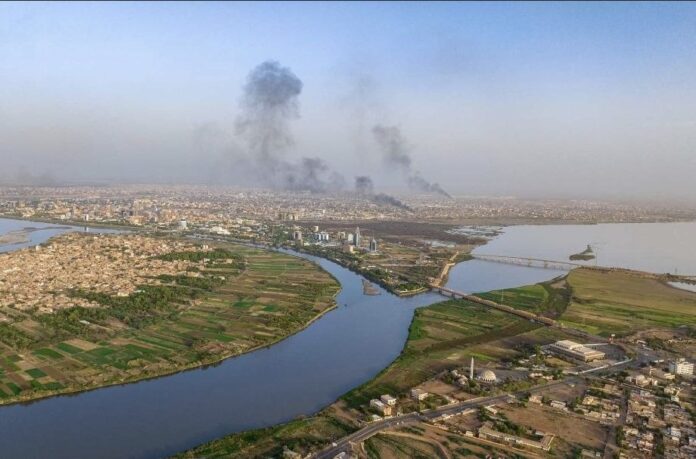
The ongoing civil war, environmental degradation, and climate change in Sudan are exerting immense pressure on natural resources and the livelihoods of its people. The country is facing severe environmental challenges due to a continuous conflict that has destroyed infrastructure, ecosystems, vegetation cover, and soil quality. This crisis is directly damaging natural resources, while the spread of epidemics and serious diseases has placed public health at great risk. The current dire situation clearly highlights the urgent need to treat environmental issues as a strategic national priority.
The University of Notre Dame in the United States publishes an annual global index that measures countries’ vulnerability to climate change, and its latest report ranks Sudan fourth in the world in terms of negative impacts. This alarming figure indicates that the country’s capacity to withstand and adapt to climate change is in a highly critical state.
Journalist and environmental affairs specialist Sari Naqd noted that this ranking is based on highly sensitive indicators, including the degradation of agricultural land as fertile areas rapidly turn into desert. Additionally, climate change has severely affected soil moisture, leading to a shrinking of vegetation cover, which directly threatens food security, causes crop failures, increases dependence on imports, and places a massive burden on the national economy.
The 2003 conflict in Darfur between pastoralists and farmers was rooted in resource scarcity, leading several international institutions to describe it as the first climate war of the 21st century because it was driven by competition over resources depleted by climate change. Compounding the war, Sudan’s annual rainy season routinely causes extensive flood damage, and the resulting standing water from the 2024 and 2025 floods has created breeding grounds for mosquitoes that transmit malaria, dengue fever, and cholera. This public health crisis is unfolding alongside staggering economic losses, which aligns with a 2021 African Development Bank report stating that Sudan required approximately $2.5 billion annually even before the war just to build climate resilience and adaptation capacity.
From the perspective of environmental justice, Sari Naqd argues that while Sudan’s historical contribution to global warming is negligible, its geographical location makes it a primary victim of emissions produced by major industrialized nations like China, the United States, European states, and Japan.
Consequently, Sudan has a legitimate right to seek support from the international Loss and Damage Fund to compensate for these climate injustices. However, the exacerbation of this crisis is driven not only by the war but also by weak environmental governance and a lack of institutional coordination, as agencies like the Meteorological Authority and the ministries of health, environment, and irrigation operate in isolation, a problem worsened by appointing non-specialists to environmental positions through political power-sharing arrangements.
Ultimately, environmental issues can no longer be dismissed as a luxury or science fiction, as they have become matter of national survival and security for Sudan. To safeguard its future, the country must urgently establish joint operations rooms for information sharing among relevant ministries, deploy modern forecasting technologies for early warning systems, and form technical and legal committees to pursue its international rights to climate compensation. Furthermore, expanding the use of renewable and clean energy is vital to help offset the massive infrastructure and environmental losses caused by the ongoing war.