The Government of Sudan has announced that it is actively seeking to officially revive and expand its mutual cooperation with Türkiye in order to rebuild critical energy infrastructure heavily destroyed by the country’s civil conflict and to attract new investments. Senior Sudanese officials have urgently called on Turkish companies that left the country due to the war to return to work.
Speaking in an interview with Anadolu Agency at the Istanbul Natural Resources Summit, Sudan’s Minister of Energy and Petroleum, Moatasem Ibrahim Ahmed, stated that although cooperation in the energy sector between the two countries had been disrupted by the conflict, extensive work is now underway to restore relations to their previous state.
The Minister explained “Before the conflict started in Sudan, there used to be strong cooperation between the Turkish government and equivalent organizations in the government of Sudan. It was affected during the conflict, but now we are actively moving to bring the cooperation back to its original state. Beyond that, we are going to further develop the relationship and move forward.”
This renewed diplomatic engagement comes after a series of recent meetings between Turkish and Sudanese leaders. Last month, Turkish President Recep Tayyip Erdogan met with Sudanese Prime Minister Kamil Idris, while Türkiye’s Minister of Energy and Natural Resources, Alparslan Bayraktar, held detailed consultations with his Sudanese counterparts regarding potential cooperation in the mining, electricity, oil, and natural gas sectors.
Minister Ahmed indicated that the discussions covered all areas of the energy sector, including electricity, mining, oil and gas, as well as renewable energy development. “We have numerous Memorandums of Understanding (MoUs) signed with Türkiye. We have strong agreements both at the company level and at the government level. In the next couple of months, a high-level delegation from the Turkish government and the Ministry of Energy is expected to come down to Sudan, after which we can actually start executing the agreements,” he added.
Sudan has officially invited Turkish companies to invest in oil and gas blocks that are currently producing to increase productivity, as well as to engage in newly explored regions.
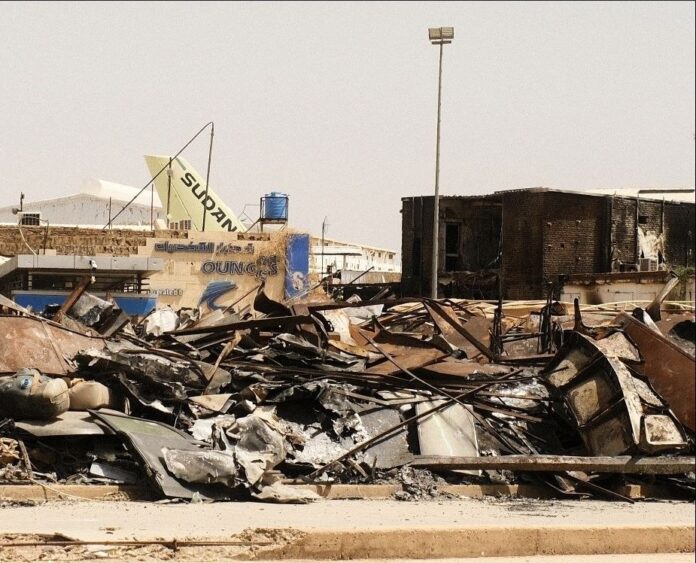
The prolonged civil war has caused devastating damage to Sudan’s power infrastructure, creating a massive demand for reconstruction in the sector. Describing the scale of the destruction, Minister Ahmed said: “Now, we have to rebuild the whole sector from scratch—the energy sector, the infrastructure, the generation, the transmission, and the distribution network must be completely restored.”
Noting that some equipment required for this reconstruction is already being sourced from Türkiye, the Minister mentioned that Sudanese officials recently visited Turkish factories that supply transformers, cables, and other components needed for the country’s electrical grid. He also urged Turkish investors who left during the conflict to return. “There are large opportunities there. We are interested in Turkish investors specifically. Now our country is recovering and rebuilding. We will facilitate whatever the investors need; we will also provide protection and reliable security,” he reassured.
For his part, Hussein Elsiddig Elhafyan, Special Representative to the Sudanese Prime Minister, stated that Sudan’s geographical location makes it a strategic energy corridor linking Africa, the Red Sea, and neighboring markets. “It is a very strategic location; we consider it an energy corridor,” he said.
Elhafyan did not hide the fact that while Sudan and Türkiye have enjoyed strong political relations for years, the main challenge has been the inability to translate agreements into tangible projects. “There is a great political will between the leadership of the two countries that has spanned many decades. However, the missing link so far has been execution.
We have lots of cooperation agreements and memorandums of understanding, but the performance is not up to the mark.”
To bridge this gap, Sudan and Türkiye are working on a new joint mechanism that will bring together representatives from both sides. This mechanism will oversee the proper implementation of agreements and ensure they are translated into action. “Now it is not about words anymore, but about action and great projects that benefit both countries,” the Special Representative emphasized.
According to the message Elhafyan delivered to the Turkish business community, he extended an invitation stating: “Sudan is open to you; our hearts, minds, and arms are wide open to welcome investors to Sudan.” Several Turkish delegations are expected to travel to Khartoum in the coming weeks to launch these cooperative initiatives.