
The United Nations World Food Programme (WFP) has launched a large-scale emergency response in Akobo East, South Sudan, to combat worsening catastrophic hunger and malnutrition. However, deteriorating security, infrastructure damage, and the onset of the monsoon rainy season have severely disrupted ground distribution. This has forced the agency to increasingly rely on highly expensive aviation options, including airlifts and airdrops, to deliver life-saving assistance. To sustain this vital humanitarian pipeline and avert a deeper crisis, the organization has announced an urgent funding requirement of US$266 million.
Mutinta Chimuka, WFP Country Director in South Sudan, emphasized that the situation in Akobo is critical and demands immediate attention to save the lives of people who desperately need assistance. She noted that WFP’s primary hope is to continue reaching all vulnerable populations. To achieve this, she stressed that the sustained safety and security of humanitarian workers and cargo remains paramount, as it allows the agency to effectively scale up its operations without interruptions.
According to the latest Integrated Food Security Phase Classification (IPC) update, parts of Akobo County are currently facing IPC Phase 5 (Catastrophe), making it one of four counties in South Sudan at severe risk of famine if local conditions deteriorate further. Projections show that through July, an estimated 97,000 people will face IPC Phase 3 (Crisis), 85,000 will experience Phase 4 (Emergency), and 12,000 will be trapped in Phase 5 (Catastrophe).
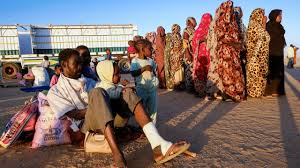
This malnutrition crisis has escalated to an extremely critical phase, driven heavily by mass displacement, the loss of traditional livelihoods, disruptions to health and nutrition services, and rising disease risks from overcrowding. Severe malnutrition among children under five and breastfeeding mothers is rising sharply, fueling fears of widespread famine-like conditions. Furthermore, conflict has displaced approximately 142,000 individuals from Akobo County and surrounding areas, with 100,000 of them crossing the border into neighboring Ethiopia, while the collapse and looting of local markets have completely restricted civilian access to food.
Since launching its emergency response three weeks ago, WFP has successfully reached more than 60,000 vulnerable people in Akobo with food and nutritional assistance. This includes providing emergency food assistance to more than 15,000 people, delivering nutrition commodities to nearly 6,000 pregnant and breastfeeding women, and distributing High Energy Biscuits to over 30,000 people on the move. Additionally, WFP and its partners have conducted nutrition screenings for 15,000 children, admitting 3,000 of them into treatment for moderate acute malnutrition.
To enable this massive scale-up, WFP’s supply chain and logistics teams are working against the clock. WFP Aviation has conducted more than 60 flights—including airdrops and airlifts via the UN Humanitarian Air Service (UNHAS)—transporting 430 metric tons of critical assistance and moving over 200 aid workers into and out of the area, prompting UNHAS to increase its flights to three times per week. Simultaneously, a 33-truck convoy from WFP and the Logistics Cluster is currently en route to deliver over 200 metric tons of food and 100 metric tons of relief items, marking what will likely be the final ground transport connection before heavy rains render key regional roads completely impassable.
While access to Akobo has recently shown some improvement, the destruction of ground infrastructure means that delivering life-saving assistance will continue to rely heavily on costly air operations during the fast-approaching lean season. WFP remains deeply concerned about vulnerable populations trapped in entirely inaccessible regions where hunger is expected to worsen. To ensure uninterrupted food and nutrition assistance across South Sudan throughout 2026, WFP urgently requires US$266 million from international donors and voluntary contributions.