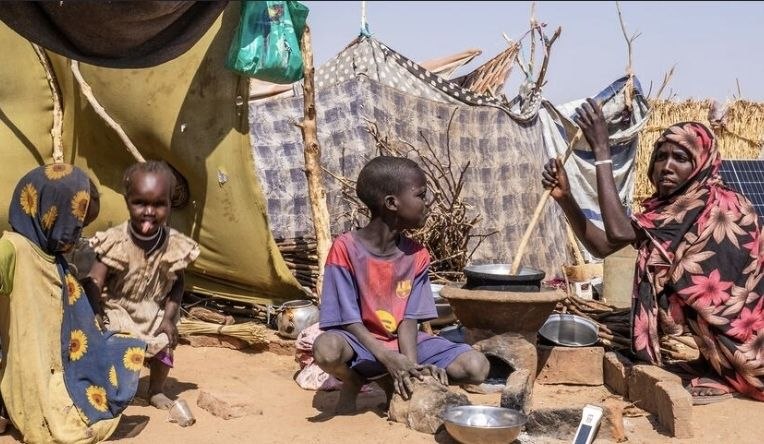

For the past several decades, Africa’s trade relations with its global partners have been confined to a uniform and exhausting narrative: the exploitation of raw materials or a dependence on aid.
Kenya has experienced this inequitable system to a significant degree. Fragmented supply chains, infrastructure deficits, and Foreign Direct Investment (FDI) that rarely reached smallholder farmers or tech-minded youth have long weakened the domestic economy. However, a quiet revolution is now taking place along the Indian Ocean corridor.
This is a new blueprint that enables emerging markets to determine their own destiny, built not on uneven development aid, but on high-efficiency logistics, robust private equity, and deep industrial integration.
While many news outlets view the relationship between the UAE and Kenya solely through the lens of short-term trade growth, the reality runs much deeper. Over the past two decades, this alliance has evolved into an advanced and mutually beneficial strategic relationship. It is driven by shared economic ambitions and a collective belief that South-South cooperation can be both commercially profitable and socially transformative.
At a time when traditional global trade routes are fracturing, Abu Dhabi and Nairobi are demonstrating that developing nations can determine their own economic destiny through mutual capacity building. As Sheikh Shakboot bin Nahyan Al Nahyan, UAE Minister of State in the Ministry of Foreign Affairs, recently stated, this relationship has now transitioned to a phase focused on long-term resilience. By investing in infrastructure, logistics, and innovation, this partnership is actively stabilizing regional supply chains and shielding businesses from global crises.
The foundation of this modern alliance is the Comprehensive Economic Partnership Agreement (CEPA). This agreement is vast in its scope, marking the first time the UAE has signed such a pact with a nation on the African mainland.
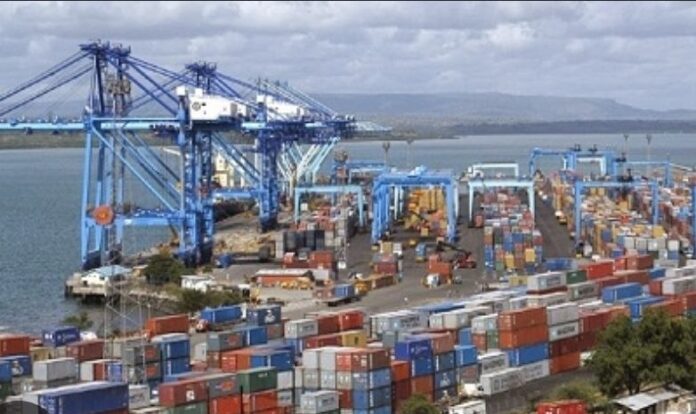
Signed in January 2025, this CEPA agreement positions Kenya as a key maritime gateway into East and Southern Africa. At the same time, it reinforces the Emirates’ role as the premier financial and logistical bridge connecting Asia and the Middle East to the African continent.
This agreement goes far beyond standard diplomatic courtesy. By significantly eliminating tariffs, it opens unprecedented market opportunities for Kenyan service providers in the transport, construction, and logistics sectors. Most importantly, it channels Gulf capital directly into public-private partnerships focused on the agricultural value chain.
In 2026, we are witnessing the tangible fruits of this diplomatic framework. Earlier this year, Al Sharqi Shipping, a logistics giant based in the Emirates, expanded its operations into Kenya and Uganda. This strategic move is designed to fully digitalize the trade corridor between the Gulf and high-growth East African markets. Under this structure, Kenya serves as the primary ocean gateway, while Uganda acts as the inland hub, forwarding goods to landlocked nations such as Rwanda, South Sudan, and the Democratic Republic of Congo.
Simultaneously, the industrial landscape is undergoing a massive transformation. In August, Dubai-based infrastructure developer Arise IIP unveiled a massive $3 billion investment plan earmarked for Kenyan industrial projects over the next five years.
This capital will support three massive export and industrial parks—two situated along Kenya’s strategic coast and one at the Naivasha inland hub—alongside upgrades to the Rivatex textile enterprise.
Backing the Future: Arise IIP (backed by Afreximbank’s FEDA, the Africa Finance Corporation, the Emirates’ Equitane Group, and Saudi Arabia’s Vision Invest) is taking a 30% to 40% equity stake in these projects.To ensure the long-term sustainability of these zones, they have partnered with KCB Group and Afreximbank to establish an $800 million credit facility for incoming tenant investors.
What makes the Emirates-Kenya corridor unique and robust is its pragmatism. Both nations have set aside outdated, purely transactional models of the past. They understand that real economic momentum comes when infrastructure is digitalized, energy supplies are reliable, and private capital is legally protected and incentivized.
By aligning on these economic fundamentals, the UAE and Kenya are achieving something rare: they are building a corridor that does not merely extract wealth, but manufactures value locally, creates sustainable jobs, boosts domestic productivity, and unlocks the true potential of East Africa’s value chain.