
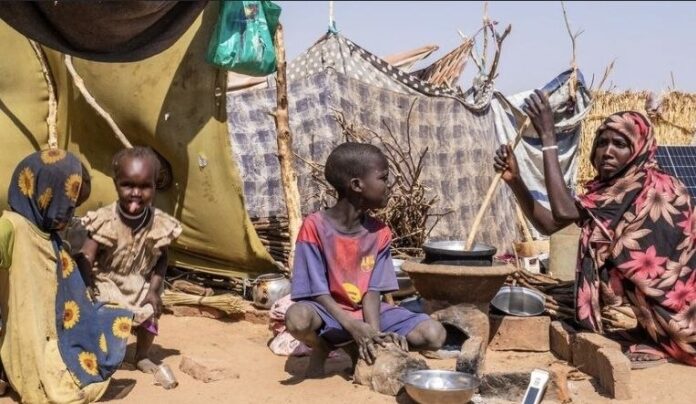
United Nations relief agencies have warned that ongoing civil conflict, displacement, and humanitarian aid restrictions are pushing Sudan into a catastrophic famine risk. According to a joint statement released by the Food and Agriculture Organization (FAO), the World Food Programme (WFP), and the United Nations Children’s Fund (UNICEF), nearly 19.5 million people—amounting to over two-fifths of the country’s population—are currently facing acute food insecurity (IPC Phase 3 or above).
Although the latest phase classification analysis does not officially declare famine in specific zones yet, nearly 135,000 people living in 14 high-priority hotspots across Darfur, South Darfur, and South Kordofan are experiencing catastrophic hunger conditions (IPC Phase 5). The situation is expected to deteriorate further, particularly between June and September, during the period when food shortages peak (the lean season).
As the nation’s civil war enters its fourth year, Sudan’s nutritional crisis has reached an alarming level. In 2026, an estimated 825,000 children under the age of five are expected to suffer from wasting and severe acute malnutrition (SAM). This represents a 7 percent increase compared to last year and is 25 percent higher than the conditions recorded prior to the conflict.
UNICEF Executive Director Catherine Russell stated that children are trapped amid relentless violence, hunger, and disease. “Many families have been displaced multiple times. Children suffering from severe acute malnutrition arrive at health facilities too weak even to cry,” she said, warning that more children will die unless immediate action is taken and humanitarian access is granted.
The destruction of civilian infrastructure has been a primary driver of the worsening crisis. Markets, health facilities, water systems, and agricultural fields have been devastated, halting food production and essential services. Currently, 40 percent of health facilities in Sudan are completely non-functional, while 17 million people lack safe drinking water and 24 million people lack adequate sanitation.
Consequently, outbreaks of cholera, measles, malaria, dengue fever, and diarrheal diseases are further weakening the health of children, as well as pregnant and breastfeeding mothers. By the end of March 2026, nearly 9 million people were internally displaced, with most seeking shelter in remote areas out of reach of humanitarian aid.
Humanitarian aid access constraints continue to be among the worst of any peace crisis in the world. Insecurity, bureaucratic hurdles, attacks along supply routes, and restrictions on the movement of goods have blocked aid organizations from delivering assistance at the required scale. As of 2026, only 20 percent of the humanitarian response fund requested for Sudan has been secured.
FAO Director-General Qu Dongyu stated that to save more lives, urgent provisions of seeds and farming tools must be provided to local farmers. Meanwhile, WFP Executive Director Cindy McCain issued a call to action, stating, “Hunger is claiming millions of lives right now. The international community must act immediately with financial support and political will to halt this tragedy.”
Famine risk looms over Sudan: 19.5 million people face severe food insecurity
Previous article
Next article