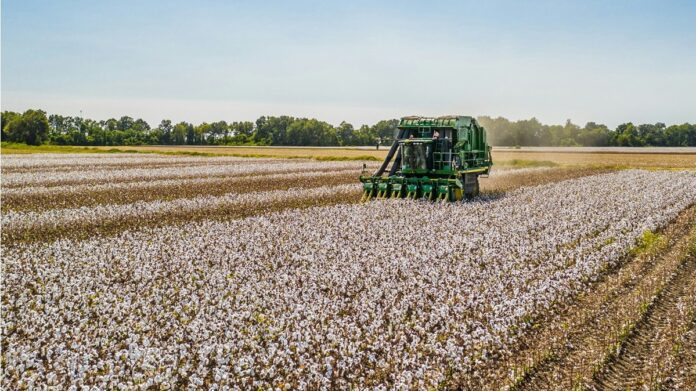
Sudan, a nation that once dominated the global market with its cotton production—famously dubbed “White Gold”—and served as the primary source of raw materials for Great Britain’s massive textile mills, is currently facing an unprecedented decline in the sector. According to recently released data, the country’s cotton export earnings sank to just $64 million last year.
Wajdi Mirghani Mahjoub, head of the Sudan Exporters’ Chamber, stated that the land dedicated to cotton cultivation has decreased drastically.
The cultivated area, which stood at over 1.2 million acres during the 2021-2022 production season, has now fallen to a mere 300,000 acres. This represents a staggering and alarming decline of 70 percent.
This decline in production is clearly visible across the country’s major cotton-producing regions. In Al Qadarif, cultivated land dropped from 500,000 acres to 100,000 acres, while the Blue Nile region saw a decrease from 400,000 acres to 200,000 acres.
The historic Gezira Scheme, once the backbone of the nation’s economy, suffered the most severe collapse, with land usage plummeting from 180,000 acres to a mere 20,000–30,000 acres.
The primary reason cited for the weakening of the sector is a severe lack of financing. The Agricultural Bank of Sudan’s decision to stop providing loans to the sector has left farmers in a dire situation.
Additionally, the rising cost of agricultural inputs has become a significant challenge; for instance, the price of a ton of fertilizer jumped from $400 to $850—a 100% increase—leaving farmers unable to afford production. The surging prices of fuel and pesticides have further exacerbated the crisis.
Another growing concern is the direct involvement of foreign traders from Egypt and Syria, who are buying crops directly from the farmers. By offering better prices than domestic exporters, these traders are securing the supply, making it increasingly difficult for local private companies to remain competitive or even survive in the market.
To revive the sector, Mahjoub emphasized that the government and the Agricultural Bank must immediately resume financial support. Furthermore, he advised that Sudan should focus on expanding its domestic textile industry to add value rather than exporting raw cotton.
He cited Bangladesh as a model, noting that it imports $4 billion worth of cotton to generate $34 billion in finished textile exports for the global market.
According to a 2025 report from the Central Bank of Sudan, the country faced a $3.86 billion trade deficit, making the revitalization of the cotton sector an essential step for economic recovery.