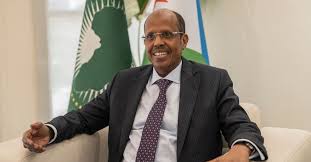
The Governor of the National Bank of Ethiopia, Eyob Tekalign, has called upon African leaders and policymakers to dismantle the psychological and structural barriers preventing intra-continental trade in order to accelerate the continent’s economic transformation.
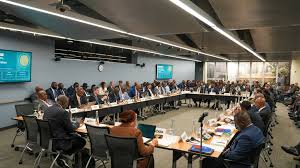
The Governor made these remarks during a high-level economic forum held under the theme “Three Pillars, One Integrated Agenda.” He emphasized that the primary challenge to Africa’s economic integration is not a lack of policy, but rather a “deep-seated fear of trading with one another.”
Eyob noted that most of the technical documents and plans required for a united Africa are already in place; however, the remaining and most significant challenge is bringing about a “paradigm shift.”
For decades, African economies have focused on linking with markets in Europe, Asia, and North America, often at the expense of ignoring trade ties with neighboring countries. The Governor added that overcoming this long-standing hesitation is not merely a diplomatic choice, but a survival strategy for navigating the volatile global economy.
“We have the plans and the vision; what we need now is the courage to trust our own markets, our own producers, and our own systems,” Eyob stated. “Deep continental integration requires us to move past excessive caution and actively embrace Africa’s trading potential.”
The focus of the discussion centered on the synergy between three major cooperative frameworks: the African Continental Free Trade Area (AfCFTA), which establishes a unified market for goods and services; the Single African Air Transport Market (SAATM), aimed at connecting African cities directly; and the Protocol on the Free Movement of Persons, a policy designed to enable the continent’s greatest resource—its people—to work across borders and share innovations without barriers.
The Governor emphasized that these frameworks are not isolated initiatives but are interconnected pillars. He stressed that for trade to flourish, goods must not be stalled at borders, and services cannot expand if professionals are unable to move freely. Strengthening connectivity networks and easing trade barriers were highlighted as the only path to making the African economy self-sufficient and resilient.
While Eyob commended the progress made in ratifying the continental free trade area, he candidly noted that significant gaps remain in terms of implementation. He stated that the success of these agreements rests on three “C”s Confidence (Trust), Coordination, and Commitment. He observed that nations often resort to protectionist policies out of fear that opening their borders will harm domestic industries. However, he reminded stakeholders that an integrated market of 1.4 billion people offers far greater security and opportunity than fragmented, individual markets.