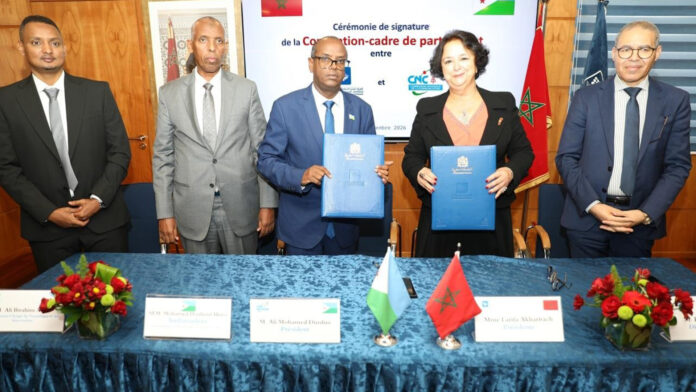
Morocco’s High Authority for Audiovisual Communication (HACA) and Djibouti’s National Communication Commission (CNC) have signed their first-ever bilateral cooperation agreement.
The agreement, formalized this week in Morocco’s capital of Rabat, is designed to significantly enhance the regulatory expertise, technical capacities, and operational frameworks of both institutions through structured knowledge exchange and mutual support.
The official signing ceremony took place following high-level deliberations during a working visit by Ali Mohamed Dimbio, President of the CNC, to Morocco from November 24 to 25. According to an official statement released by HACA, this diplomatic and institutional milestone marks the inaugural partnership between the Moroccan regulatory body and its Djiboutian counterpart.
The comprehensive agreement establishes a formal framework for ongoing collaboration, focusing heavily on modernizing regulatory practices, sharing institutional expertise, and cultivating best practices in audiovisual oversight.
Beyond diplomatic exchange, the partnership includes concrete commitments to technical assistance. Under the terms of the agreement, HACA has pledged to make its advanced audiovisual monitoring solution directly available to the CNC.
To ensure the successful implementation and utilization of these monitoring tools, HACA will also deliver specialized training programs for Djiboutian technical teams, alongside continuous, long-term technical support. This transfer of technology and operational know-how aims to equip Djibouti’s regulatory body with the contemporary digital tools necessary to effectively oversee modern media landscapes.
During their bilateral consultations, the leaders of both institutions emphasized the broader philosophical and societal goals of the partnership. Beyond technical regulation, the agreement seeks to actively contribute to effective media governance that protects citizens’ fundamental rights and consolidates a pluralistic, diverse public sphere.
“Strengthening the capacities of regulatory authorities represents an important means of promoting freedom of expression, content diversity, and the quality of public debate,” HACA’s press release noted. Both authorities underscored that robust independent regulation is critical for safeguarding citizens’ rights to receive free, balanced, and pluralistic information.
The visit served as more than just a ceremonial signing, featuring extensive bilateral consultation sessions that brought together the presidents and senior officials of both institutions. Discussions centered on comparing the operational experiences of HACA and the CNC, evaluating current regulatory challenges, and charting a roadmap for future collaborative initiatives.