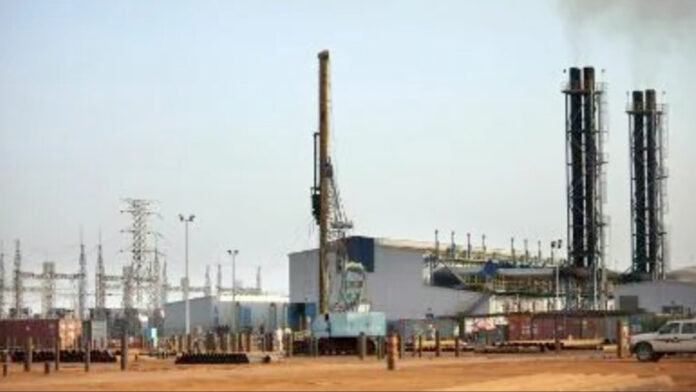
South Sudan is courting international investors and technical partners in a bid to raise crude oil production from approximately 174,000 barrels per day (bpd) to 230,000 bpd in the near term, while simultaneously opening up 14 exploration blocks and upgrading its petroleum infrastructure .
The landlocked East African nation, which holds an estimated 3.5 billion barrels of proven oil reserves—the third-largest in sub-Saharan Africa—is looking for new operators to develop untapped acreage and capital to improve production efficiency at its mature fields . According to industry publication World Oil, the investment drive also targets pipeline construction, refinery development, and expanded fuel storage and distribution capacity .
Regional national oil companies are already positioning themselves for the expansion. The South African National Petroleum Company (SANPC), through its subsidiary Strategic Fuel Fund, currently holds a 90% stake in Block B2 alongside South Sudan’s national oil company, Nile Petroleum Corporation (Nilepet) . SANPC is preparing further exploration activities in the block, including a planned two-dimensional seismic survey. Tender documents for the work reportedly list significant operational challenges, including seasonal flooding, poor roads, the Sudd wetlands, and security risks such as unexploded ordnance, with nearly $20 million already spent on the project .
Nilepet is separately seeking investment for a proposed 350-kilometer crude oil pipeline linking the Tharjiath oil fields in Block 5A with the Paloch fields in Blocks 3 and 7 . The company is also looking for partners to develop refineries and expand fuel storage, distribution, and liquefied petroleum gas (LPG) infrastructure .
The Africa Energy Bank, formally established on October 31 by the African Petroleum Producers’ Organization and the African Export-Import Bank (Afreximbank), could provide a potential financing channel for regional energy projects . The institution has an authorized capital of $5 billion and is expected to begin financing projects in 2027, initially focusing on infrastructure, including pipelines and refineries .
However, no financing commitment has so far been made to South Sudan . Afreximbank also maintains a trade finance partnership with South Sudan’s Kush Bank, which could facilitate equipment imports through letters of credit and bank guarantees .
The country is landlocked and depends heavily on export infrastructure running through neighboring Sudan, where conflict has disrupted pipelines and pumping facilities in recent years . These disruptions have reinforced the importance of developing resilient transportation and midstream systems, including alternative routes and domestic refining capacity .
The push to increase production comes as South Sudan seeks to maximize output from mature fields that have been producing for years. The government has set longer-term ambitions of reaching 450,000 bpd over time, though current output remains well below that target . Enhanced oil recovery, well intervention, and production optimization technologies are seen as critical to unlocking additional barrels from existing assets .
The country’s investment opportunities are expected to feature prominently at the South Sudan Oil & Power (SSOP) conference scheduled for November 24–25 in Juba, where government leaders, international investors, and project developers will convene under the theme “Resource to Renaissance” .