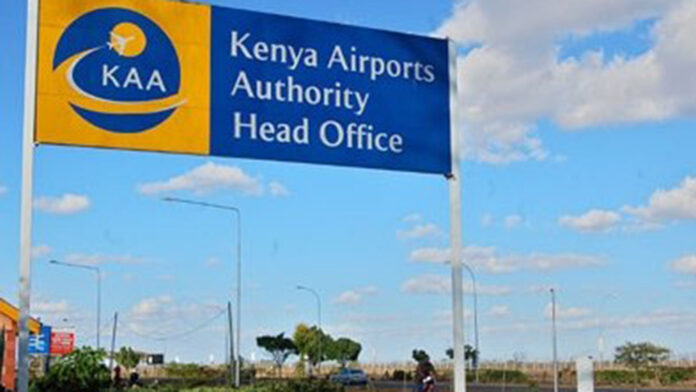
Ten state agencies, led by the Kenya Airports Authority (KAA), Kenya National Highways Authority (KeNHA) and Kenya Railways Corporation (KRC), are managing the largest share of Kenya’s public wealth, with combined assets of Sh6 trillion, a new National Treasury report shows.
According to the Consolidated National Government Investment Report for the 2025/2026 financial year, the 10 institutions control 61.9 per cent of the government’s total investments, valued at Sh9.76 trillion as of June 30, 2026. Total government assets increased from Sh8.93 trillion in June 2025, driven largely by ongoing infrastructure projects in the transport and energy sectors and increased fixed-interest investments held by various funds.
KAA leads the list with assets valued at Sh1.05 trillion, mainly comprising airport infrastructure, followed by KeNHA with Sh935.49 billion and KRC with Sh886.79 billion. The three leading agencies are all in the transport sector, which accounts for more than Sh3.7 trillion in public assets through road and railway infrastructure.
“At the individual entity level, asset holdings are heavily concentrated among a select group of major infrastructure and fund management corporations. KAA held the highest total assets at Sh1.05 trillion, KeNHA followed closely with Sh935.49 billion, and KRC ranked third with Sh886.79 billion,” the report reads.
The National Social Security Fund (NSSF) ranks fourth with Sh760.7 billion, followed by Kenya Electricity Generating Company (KenGen) at Sh501.1 billion, Kenya Rural Roads Authority (KeRRA) at Sh439.2 billion, Kenya Power at Sh420 billion, Kenya Ports Authority (KPA) at Sh389 billion, Public Service Superannuation Fund (PSSF) at Sh348 billion and Kenya Deposit Insurance Corporation (KDIC) at Sh313 billion.
Their position places them at the centre of President William Ruto’s infrastructure agenda, with major projects including the Rironi-Mau Summit highway, the proposed Sh150 billion Jomo Kenyatta International Airport upgrade and the Standard Gauge Railway extension to Kisumu and Malaba. NSSF’s growing asset base follows the introduction of higher pension deductions in 2023, which increased workers’ contributions from a flat Sh200 to six per cent of their salaries.
The report also shows that total liabilities held by state corporations increased from Sh2.92 trillion in June 2025 to Sh3.09 trillion in June 2026. KRC recorded the highest liabilities at Sh1.015 trillion, largely linked to outstanding loans advanced for the construction of the SGR. Kenya Power followed with Sh288.39 billion, Kenya Electricity Transmission Company (KETRACO) with Sh245.9 billion and KenGen with Sh207.5 billion. KRC’s liabilities exceeded its assets, leaving it with negative equity of Sh128.38 billion.
Government loans to state corporations stood at Sh1.03 trillion, while outstanding loan arrears reached Sh568.91 billion. Kenya Railways accounted for Sh473.17 billion, representing approximately 83 per cent of the arrears. The Treasury also reported pending bills of Sh366 billion as of June 2026.
During the year, the government initiated the sale of a 15 per cent stake in Safaricom to Vodacom Group for Sh204.3 billion and listed Kenya Pipeline Company on the Nairobi Securities Exchange, raising approximately Sh112.3 billion. The National Treasury received Sh52.95 billion from state corporations, with Safaricom the largest dividend contributor at Sh21.03 billion.