The State of Qatar has firmly reiterated its steadfast backing for the Federal Republic of Somalia, emphasizing a commitment to the nation’s government institutions, state sovereignty, territorial integrity, and ongoing efforts to secure long-term stability.
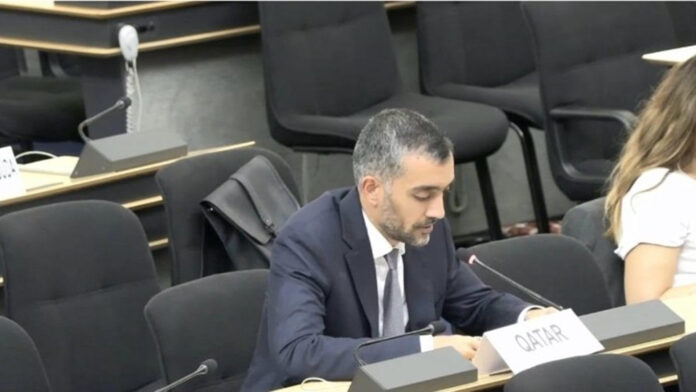
Speaking at the 63rd session of the United Nations Human Rights Council in Geneva, Abdulrahman bin Mohammed Fakhro, Qatar’s Acting Charge d’Affaires to the UN Office, delivered a compelling address during an interactive dialogue focusing on a UN human rights report regarding technical assistance to Somalia. Fakhro stressed that Doha stands shoulder-to-shoulder with Mogadishu as the country navigates a complex matrix of challenges threatening its national security, stability, and broader economic development.
Highlighting the gravity of the situation on the ground, the Qatari diplomat urged the international community to ramp up solidarity and practical backing for Somalia’s domestic initiatives. He pointed out that the East African nation continues to grapple with severe, compounding humanitarian crises that demand a unified, highly coordinated global response.
Fakhro emphasized that short-term emergency interventions alone are insufficient. Instead, he argued that immediate humanitarian assistance must be strategically bridged with longer-term sustainable development plans. Such an integrated approach is vital, he noted, for fortifying the resilience of local Somali communities against recurring shocks.
Beyond immediate aid, Qatar underscored the absolute necessity of comprehensive political, legislative, and executive reforms. Fakhro stressed that these overhauls must be inclusive, actively engaging all segments of Somali society to ensure broad national ownership.
According to Doha, inclusive governance is the bedrock for rebuilding effective state institutions, reinforcing the rule of law, and safeguarding fundamental human rights. The Qatari address highlighted that strengthening these domestic systems is essential for steering Somalia toward lasting peace and self-reliance.
During the session, Qatar welcomed several notable positive developments within Somalia’s governance landscape. Fakhro expressed approval of the recent agreement struck between the Somali government and the UN Office of the High Commissioner for Human Rights (OHCHR) to establish a dedicated human rights office in the country.
This new office is designed to bolster national capacities for the protection and promotion of human rights, while remaining strictly aligned with the specific priorities and needs defined by Mogadishu. Furthermore, Qatar commended the Somali government for proactive steps taken to implement its Transitional Human Rights Plan for 2025–2026, alongside the establishment of an independent national human rights commission.
Fakhro issued a call to action for sustained technical assistance from international partners, asserting that continuous support is critical to empower Somalia’s emerging human rights institutions and help the nation successfully fulfill its domestic and international commitments.