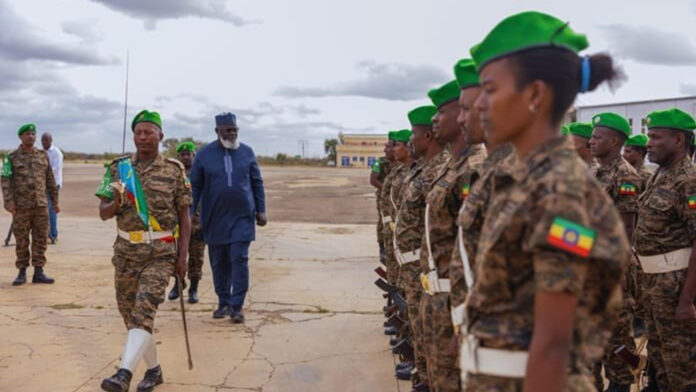
Ethiopia is reportedly preparing to withdraw more than 3,000 troops from neighboring Somalia as escalating military pressures and renewed conflict mount across its own northern regions. According to sources familiar with the matter, the planned military pullout could commence within the coming days or weeks. The returning soldiers are expected to be rapidly redeployed to domestic zones heavily impacted by intense fighting between federal government forces, Tigray forces, and allied Fano insurgents.
Despite the significant security implications of the move, regional communication has remained opaque. A defense ministry official in Mogadishu stated that the Somali government had not been formally notified of any such withdrawal plan. Furthermore, neither the governments of Ethiopia and Somalia nor the African Union have issued public announcements regarding alterations to Ethiopia’s military deployment.
It remains ambiguous whether the drawdown will impact Ethiopian personnel operating under the African Union Support and Stabilization Mission in Somalia (AUSSOM), those stationed via separate bilateral arrangements, or a combination of both. Ethiopia has historically served as one of Somalia’s primary military pillars, particularly in critical counter-insurgency campaigns targeting the al-Qaeda-linked militant group Al-Shabaab. Ethiopian forces have also played an instrumental role in maintaining stability and defending strategic hubs such as the city of Baidoa.
The decision to pull troops back from foreign operations underscores the severe strain facing Ethiopia’s national defense apparatus. Data compiled by the Armed Conflict Location & Event Data Project (ACLED) indicates that active fighting in northern Ethiopia flared up following initial clashes near the Sudan border. Violence has since widened sharply across the region.
This domestic deterioration marks a dangerous breakdown of the fragile stability achieved following the 2022 Pretoria Agreement, which had formally ended the devastating two-year civil war in the Tigray region. Persistent political gridlock and escalating tensions between the Tigray People’s Liberation Front (TPLF) and federal authorities have once again plunged northern Ethiopia into a wide-scale security crisis.
As federal forces attempt to suppress multi-front insurrections—including resurgent hostilities involving Tigrayan forces and Fano militias in the Amhara region—prioritizing domestic defense over regional peacekeeping has emerged as an urgent imperative for Addis Ababa, even if it leaves vulnerable security vacuums along its borders.