Ethiopia’s ambitious US$12.5 billion mega-airport project has thrust the nation straight into the center of an escalating geopolitical tug-of-war between the United States and China. Spearheaded by Ethiopian Airlines—Africa’s largest and most successful carrier—the massive Bishoftu International Airport is being developed roughly 40 kilometers southeast of Addis Ababa. Designed to alleviate mounting capacity constraints at the congested Bole International Airport, the new hub aims to accommodate up to 60 million passengers annually by 2030 during its first phase, eventually scaling up to handle 110 million passengers and nearly 4 million tonnes of cargo per year.
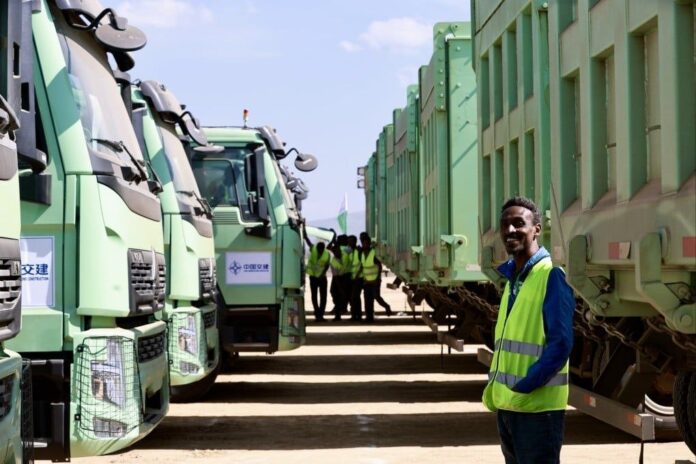
However, the sheer scale of the investment has triggered fierce global competition, with Chinese state-owned enterprises firmly dominating the initial landscape. Roughly half of the shortlisted bidders for the project are Chinese state-backed companies and joint ventures, including heavyweights like the China Civil Engineering Construction Corporation and the China Road and Bridge Corporation. This heavy participation underscores Beijing’s entrenched dominance across Ethiopia’s wider infrastructure sector.
While major American construction firms missed out on the civil works shortlists, Washington is aggressively positioning key US corporations like Boeing and GE to secure lucrative future technology, aviation, and equipment contracts. Mark Mitchell, the US deputy assistant secretary of commerce for the Middle East and Africa, emphasized during a recent regional symposium that the White House is closely engaged in pushing for robust American participation. Mitchell highlighted the enduring partnership between Boeing and Ethiopian Airlines as a source of national pride and a cornerstone for future growth.
Policy analysts note that this high-stakes contest reflects how Horn of Africa infrastructure has transformed into a fresh theater for superpower rivalry. Costantinos Berhutesfa Costantinos, a professor of public policy at Addis Ababa University, observed that Western defense planners view major transport hubs through the critical lens of logistics and intelligence security, whereas Beijing treats them as essential nodes in its expanding global supply chain network.
Financing the multi-billion-dollar undertaking is similarly global and multi-sourced. Ethiopian Airlines plans to fund 20 to 30 percent of the project directly from its corporate balance sheet and revenues, while international lenders cover the remainder. The African Development Bank has already committed US$500 million and is spearheading broader fundraising efforts. Major US financial entities—including the US International Development Finance Corporation, the US Export-Import Bank, and JPMorgan Chase—have expressed strong interest following recent roadshows in Washington. Simultaneously, Chinese financial institutions have pledged support, highlighted by an Ethiopian delegation’s discussions with the Bank of China. Final lender sign-offs are slated for March next year.
Experts suggest that Ethiopia’s final procurement choices will largely come down to cost and execution capabilities. W. Gyude Moore, a senior fellow at the Energy for Growth Hub, noted that intense domestic competition keeps many Chinese firms afloat, allowing them to offer aggressive pricing that American companies will find exceedingly difficult to match or beat. David Shinn, a former US ambassador to Ethiopia, added that while the Trump administration views the project as a prime opportunity to re-engage in major African infrastructure markets, the success of US firms depends on competitive private-sector bids backed by government incentives.
To navigate these competing geopolitical currents and avoid over-reliance on a single superpower, Addis Ababa is expected to partition the megaproject into distinct packages. Industry experts predict that rapid, cost-efficient Chinese firms will secure heavy civil engineering and construction contracts, while Western or Gulf partners will likely be preferred for specialized sectors like avionics, security, and advanced digital infrastructure. By maintaining commercial neutrality and a mixed operational strategy, Ethiopia aims to safeguard its aviation crown jewel from broader international diplomatic disputes.