
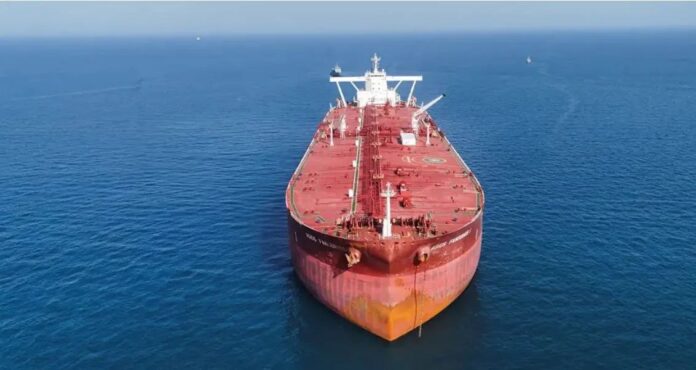
Kenya’s critical petroleum supply chains, anchored by the Government-to-Government (G-to-G) importation framework, face unprecedented disruption risks following a sharp escalation of geopolitical hostilities in the Middle East. The mounting security crisis stems from confirmed attacks by Iran-backed Houthi rebels targeting two Saudi Arabian oil tankers within the strategic Red Sea corridor.
These aggressive strikes on commercial shipping have sent immediate shockwaves through international energy markets, compounding structural vulnerabilities already triggered by ongoing blockages in the critical Strait of Hormuz. As vital maritime transit routes encounter severe operational bottlenecks, the security and predictability of crude oil shipments managed through strategic partnerships with Saudi Aramco—the state-owned energy titan underpinning Kenya’s G-to-G arrangement—are facing extraordinary pressure.
The crisis deepened significantly when Houthi military spokesperson Yahya Saree announced that the faction had successfully targeted two Saudi petroleum carriers, identified as the Encelia and the Layla. According to insurgent leadership, the vessels were struck using a coordinated barrage of ballistic missiles, cruise missiles, and unmanned aerial drones under the pretext of violating a self-declared naval blockade affecting Saudi shipping lanes.
Independent verification came via the United Kingdom Maritime Trade Operations (UKMTO), which monitors regional maritime security. The agency reported receiving urgent distress communications confirming that a commercial tanker had sustained a direct hit from an unidentified projectile, triggering an onboard fire. Saudi authorities subsequently verified that the Encelia suffered material damage during the assault, though all crew members were confirmed safe.
The developments draw sharp focus to the vulnerability of the Bab al-Mandeb Strait, an indispensable global maritime chokepoint connecting the Red Sea to the Gulf of Aden and linking the Indian Ocean to the Suez Canal. Spanning a mere 29 kilometers at its narrowest point, the corridor managed approximately 4.1 billion barrels of crude and refined petroleum products in 2024 alone, representing roughly 5% of global petroleum traffic.
With the Strait of Hormuz effectively paralyzed by widening conflicts involving the United States, Israel, and Iran, alternative export arteries like the Red Sea are vital for global energy distribution. However, the Houthi military campaign threatens to sever these remaining pathways, forcing a profound re-evaluation of maritime risk among international carriers and energy importers.
For Nairobi, any prolonged disruption to Saudi petroleum exports introduces severe macroeconomic vulnerabilities. Under the bilateral G-to-G framework, Kenya depends heavily on regular, predictable fuel consignments from Saudi Arabia to maintain domestic pump price stability and mitigate foreign exchange pressures.
The immediate fallout has rapidly rippled through global commodities exchanges. Benchmark Brent crude futures surged past $95 (approximately Sh12,284) per barrel, logging a sharp five-session winning streak as traders aggressively price in the compounding threats of constrained global hydrocarbon supply. For an oil-importing economy like Kenya, elevated crude pricing threatens to ignite domestic inflationary pressures, escalating transport overheads and inflating the cost of essential goods and manufactured products.
The gravity of the maritime security breakdown has drawn unequivocal condemnation from continental leadership. The African Union Commission (AU) issued a strongly worded rebuke against the Houthi attacks on commercial tankers, warning that the violence poses an existential threat to regional trade routes and the broader economic stability of African nations.
African Union Commission Chairperson Mahmoud Ali Youssouf expressed unreserved solidarity with the Kingdom of Saudi Arabia, reaffirming the pan-African bloc’s staunch support for the country’s sovereignty, security, and territorial integrity. Chairperson Mahmoud emphasized that the safety of Red Sea shipping lanes holds profound strategic value for the African continent.
“The security of maritime routes in the Red Sea is of vital strategic importance to Africa,” Chairperson Mahmoud stated, cautioning that disruptions directly undermine regional connectivity, global supply chains, and the economic interests of numerous African states dependent on unimpeded access to these essential sea lanes.
The African Union has urgently demanded an immediate halt to hostilities targeting commercial navigation, calling on all regional actors to uphold international law and protect the freedom of maritime transit.