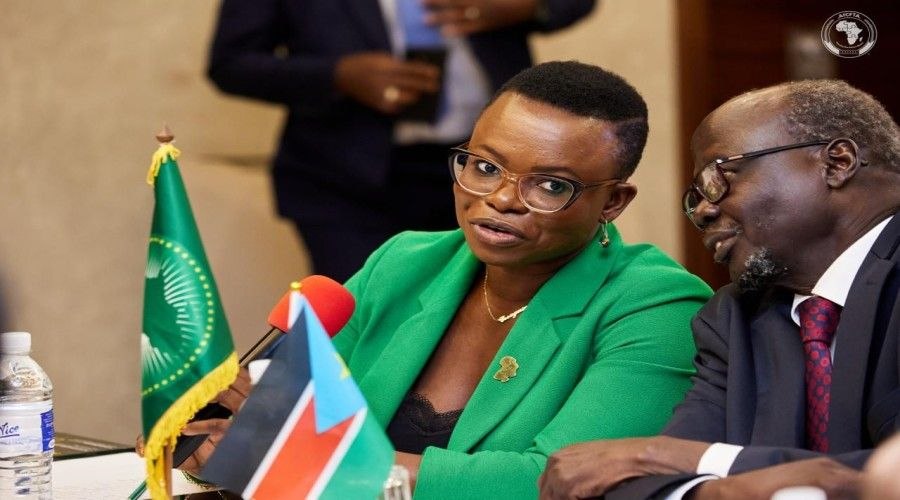

The Organization of African, Caribbean and Pacific States (OACPS) announced during its 121st Ministerial Council meeting in Brussels that it has officially relieved Sudan of its entire debt to the organization, totaling one million dollars. The decision, formalized during the July 15–16, 2026, summit, was presented by the Sudanese Ministry of Finance as a milestone of international solidarity.
Sudanese Finance Minister Dr. Jibril Ibrahim, who led the delegation to Brussels, expressed gratitude to member states for this gesture, citing the “exceptional circumstances” facing Sudan’s economy due to the ongoing conflict with the Rapid Support Forces (RSF). The ministry framed the relief as a reflection of the collective spirit and cooperation inherent to the OACPS, a 79-nation bloc dedicated to sustainable development and poverty reduction.
While the Sudanese government has lauded the debt forgiveness, economic analysts have tempered expectations regarding its impact on the country’s broader fiscal health. Dr. Haitham Mohamed Fathi, a prominent economist, noted that while any debt relief is notable, the $1 million figure is largely symbolic when juxtaposed against Sudan’s staggering external debt, which currently exceeds $66 billion—composed of approximately $17 billion in principal and $49 billion in accumulated interest.
“This initiative cannot provide substantive benefits in the absence of political, economic, and security stability,” Fathi explained. He pointed out that structural debt relief typically follows rigorous processes like the IMF-World Bank Heavily Indebted Poor Countries (HIPC) initiative, which remains complicated by the current state of armed conflict within the country. According to Fathi, the primary value of the OACPS move lies in its timing: it offers a degree of international recognition during a period when Sudan’s access to global financial institutions has significantly declined and debt restructuring efforts have largely faltered.
Economic analyst Walid Dalil agrees that the relief is less about the balance sheet and more about the diplomatic narrative. He suggests that the Sudanese government is utilizing multilateral forums like the OACPS to maintain an “official discourse of achievement” and demonstrate that the country remains an active participant in international frameworks despite the war.
Beyond the debt issue, Minister Ibrahim utilized the sidelines of the summit to engage in high-level meetings with representatives from Ethiopia, Somalia, and The Gambia. These interactions, according to analysts, were aimed at fostering broader regional coordination and technical cooperation. The OACPS, which acts primarily as a political and economic negotiating bloc linked to the European Union through the Samoa Partnership Agreement, does not function as a traditional donor agency. Therefore, the debt forgiveness is viewed by experts as a diplomatic affirmation of Sudan’s membership rather than an intervention capable of altering the country’s severe macroeconomic contraction.