As FAO coordinates the implementation of the International Year of the Woman Farmer 2026, gender team leader Tacko Ndiaye discusses why investing in Africa’s women farmers is essential for food security, economic growth and creating more resilient agrifood systems
Africa Renewal: What role do women farmers play in ensuring food security in Africa?
Ndiaye: We know that women are at the heart of Africa’s agrifood systems. Across the continent, women play a central role in agrifood systems through their labour, expertise and care, supporting households, communities and local markets.
Women make up almost half of the agrifood workforce—49 per cent—and contribute at every stage of the value chain, from production and processing to distribution and trade, according to FAO’s recent report, The Status of Women in Agrifood Systems in Sub-Saharan Africa.
Also, women are custodians of culture and keepers of traditional knowledge passed down through generations about seed preservation and protecting biodiversity, as well as maintaining the social bonds that underpin the agrifood sector.
At the same time, Sub-Saharan Africa continues to face multiple food insecurity challenges. To give you an example, in 2024, about 64 per cent of the population in Sub-Saharan Africa experienced moderate or severe food insecurity, according to FAO data. We also know that more than 30% of women aged 15 to 49 years are experiencing anemia in the region.
If Africa is to address its food security challenges, empowering women farmers must be a priority.
Q: What are the most pressing challenges women farmers in Africa face today?
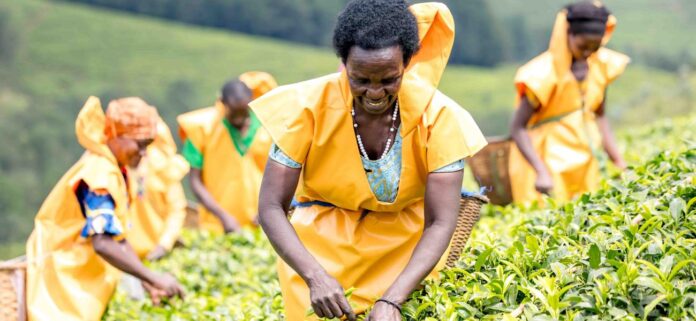
Ndiaye: In Africa, as you know, women till the land. Every time you see a publication on agriculture and food systems in Africa, you are more likely to see a photo of a woman farmer on the front page.
Yet despite their central role, women continue to face structural inequalities that limit their productivity, resilience and economic opportunities.
One of the most significant barriers women face is unequal access to and control over land. In 28 of the 32 Sub-Saharan African countries we studied, men are more likely than women to own or control agricultural land. In more than 40 per cent of those countries, the gender gap in ownership or secure rights over agricultural land is particularly pronounced.
We also know that even where there is law to protect land rights, such legal protections are either weak or insufficient. In half of the countries we studied, legislation does not adequately protect women’s land rights.
Land ownership is also closely linked to access to finance because land is often used as collateral. Yet only 49 per cent of women in the region have a financial account, compared with 61 per cent of men.
Women also face barriers in accessing agricultural inputs, extension services, markets and technology.
Digital exclusion is another challenge. Digital platforms have become essential for marketing products, accessing information and acquiring new skills. Yet women are 29 per cent less likely than men to use mobile internet. An estimated 205 million women in Sub-Saharan Africa still lack access to digital tools.
In addition, despite their substantial contributions to agrifood systems, women often work under poorer conditions than men. They are disproportionately represented in precarious, informal, labour-intensive, lower-skilled and underpaid jobs. This is reflected in the fact that nearly 90% of women in the region work in the informal sector.
Discriminatory social norms, gender-based violence, restrictions on women’s leadership and participation, and the heavy burden of unpaid care work further limit their opportunities.
There are many challenges that need to be addressed if we are to build agrifood systems that are more inclusive, resilient and efficient.
Q: Do you see a youth, particularly young women, showing interest in agriculture?
Ndiaye: Young people in Africa, as elsewhere, are attracted to innovation and opportunities that are dynamic and engaging. The challenge is how to make agriculture more appealing and more relevant to their aspirations.
Young women face particular constraints. They often struggle to access land because of inheritance rules and social norms. But they also face additional gender-related barriers.
Many young Africans still view agriculture through a traditional lens. The question is: How do we make agriculture “cool”?
How do we harness the energy, creativity and entrepreneurial spirit of young people? How do we attract young people? New technologies, digital tools, climate-smart agriculture and innovation can help transform perceptions and create new opportunities.
I recently spoke with a woman leader whose community combines agriculture with ecotourism. Women focus on agricultural production, while young people are engaged in ecotourism activities. This approach not only creates livelihoods but also encourages biodiversity conservation and the protection of agrifood heritage. Such innovations can help attract young people to the sector.
Young women continue to face challenges related to land, finance, knowledge and decision-making. There is significant room to reform customs, laws and practices that disadvantage them.
We need to create more opportunities for young people in agrifood systems—not just jobs, but decent jobs with fair wages, better working conditions and opportunities for leadership. Young people must also have a stronger voice in agrifood policymaking and transformation processes.
Q: FAO launched the International Year of the Woman Farmer (IYWF) 2026. What is this initiative about and what are its objectives?
Ndiaye: The International Year of the Woman Farmer 2026 was proclaimed by the United Nations General Assembly, which requested FAO, in collaboration with IFAD and WFP, to lead the global observance. More than 120 countries co-sponsored the resolution.
As FAO, we host the Secretariat and coordinate the global effort. The Year responds to a recognition that is both overdue and historic: women are essential to agrifood systems. They grow, process, distribute and trade food; they contribute to household food security and nutrition; and they perform vital care work that sustains rural communities.
Simply put, agrifood systems would not function without women.
Yet women’s contributions are still too often made without secure rights to land and natural resources, without fair access to finance, markets, services and technologies, and without equal voice in decision-making.
The International Year is therefore both an opportunity and a call to action: to recognize and celebrate women farmers, while addressing the barriers that limit their potential.
Its objectives are structured around six priorities: increasing public awareness of women’s roles; strengthening attention to land tenure and women’s land rights; improving access to finance, insurance and markets; expanding access to advisory services, education and technologies; promoting gender-responsive policies and investments; and creating synergies across international initiatives so that progress continues beyond 2026.
Ultimately, by advancing gender equality and creating the conditions for women engaged across agrifood value chains to thrive, the International Year contributes to building fairer, more inclusive and sustainable agrifood systems for all.
Q: Beyond policy and advocacy, can you share examples of practical initiatives FAO is implementing to fight hunger and improve food security?
Ndiaye: FAO is supporting a number of practical community-based initiatives that are helping people grow more good, improve their incomes and build resilience to climate and economic shocks,
One of the most successful is the ‘Farmer Field Schools’ (FFS) programme, where farmers learn by doing. They equip farmers with practical skills to increase productivity, solve local challenges and adapt to changing conditions. Between 2024 and 2025, around 29,000 farmer field school were operating in 86 countries. The schools also encourages the active participation of women, youth and marginalised groups. FAO developed the Guidelines for Gender Integration in Farmer Field Schools: Towards Gender-Transformative Programmes, and is currently developing complementary training materials to help practitioners integrate gender-responsive and gender-transformative approaches throughout the FFS cycle.
Another example is the ‘Dimitra Clubs.’ These are community-led groups where women, men and youth come together to discuss shared challenges, identify practical solutions and take collective action to improve their communities, livelihoods and well-being. By May 2026, there were more than 11,000 active Dimitra Clubs across 20 countries, bringing together over 330,000 members. Beyond improving livelihoods and food security, these clubs are helping transform social norms and strengthening women’s voices and leadership.
Then there is the Joint Programme on Accelerating Progress towards the Economic Empowerment of Rural Women (JP RWEE). Implemented by FAO, IFAD, WFP and UN Women, the programme is helping rural women access finance, and training on agriculture, entrepreneurship leadership, nutrition and climate resilience.
The first phase (2014–2021), implemented in seven countries including Ethiopia, Liberia, Niger and Rwanda, reached more than 80,000 rural women and benefited over 400,000 households. Women participants recorded an average 82 per cent increase in production, generated more than $3.6 million in sales, mobilised $1.9 million through savings and loan schemes, and over 40,000 women received agricultural training.
In Ethiopia, for example, the programme helped open access to finance through women’s savings and loans cooperatives, which in turn unlocked access to quality seeds, water pumps, pipes and equipment, and small ruminants for breeding and fattening, alongside a dedicated farmer training centre.
The programme is currently in its second phase (2022–2027), operating in Nepal, Niger, Tanzania, Tunisia and the Pacific Islands, with a stronger focus on climate resilience.