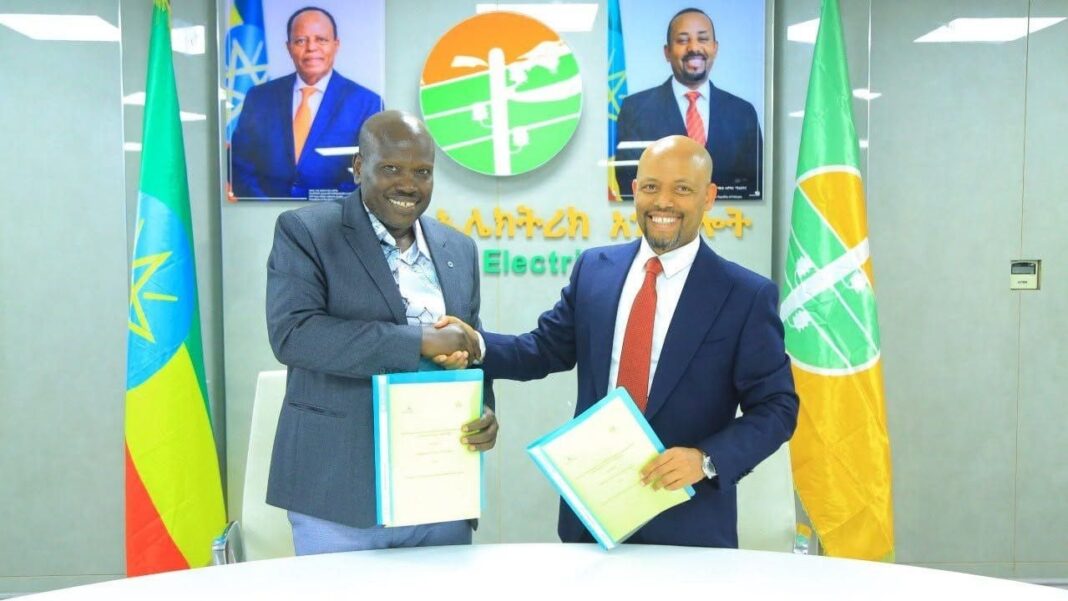
Ethiopia has officially assumed the rotating chairmanship of the Eastern Africa Power Pool (EAPP) Council of Ministers. The ceremonial handover, marking a significant transition in leadership, took place during the conclusion of the 22nd Extraordinary Session of the Ministerial Council, hosted in Addis Ababa. As Ethiopia takes the leadership mantle from Egypt, the 13-nation bloc finds itself at a defining juncture, accelerating its efforts to operationalize a unified, competitive regional power market that promises to transform the energy landscape of East Africa.
While the two-day summit successfully concluded with robust commitments to cross-border grid synchronization and the expansion of sustainable renewable energy, the sessions also brought to the fore the complex diplomatic negotiations between Cairo and Addis Ababa. At the heart of these discussions is the finalization of the power pool’s institutional framework, particularly concerning the permanent hosting rights of the EAPP’s Regional Electricity Market Operator (REMO) headquarters.
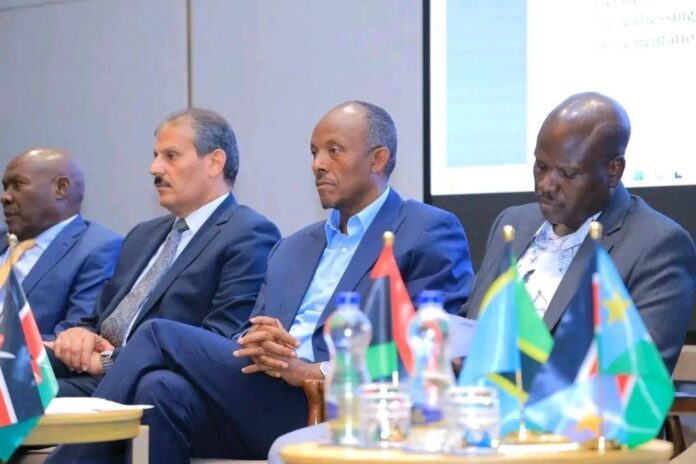
The 22nd Ministerial Council meeting, preceded by the 37th EAPP Steering Committee session, convened a high-level delegation of energy ministers, utility heads, and international development stakeholders. The assembly was tasked with finalizing critical operational, legal, and constitutional frameworks. The primary mandate centered on the complex institutional mechanics required to transition Eastern Africa from a fragmented landscape of bilateral electricity agreements into a fully integrated, competitive energy marketplace.
Core strategic pillars discussed during the summit included the rigorous evaluation of technical guidelines for grid synchronization to prevent regional outages, the formal amendment of the Inter-Governmental Memorandum of Understanding (IGMOU) to establish common trading rules, and the optimization of the region’s vast clean energy potential, anchored by Ethiopia’s hydropower and Kenya’s geothermal resources.
The geopolitical and economic significance of the EAPP has grown substantially, bolstered by major international financiers. Notably, the World Bank has recently approved a $1.6 billion financing package for the Regional Energy Transmission, Trade & Decarbonization program (RETRADE-EA).
This ambitious initiative is designed to launch the EAPP’s “Day-Ahead Market,” an automated trading platform intended to displace expensive, carbon-intensive thermal generation with more affordable, cleaner renewable energy sources.
Despite the alignment on economic incentives, the summit required delicate diplomatic maneuvering regarding the governance structure of this future energy market. Addressing the press following the summit’s conclusion, Ethiopia’s Minister of Water and Energy, Dr. Eng. Habtamu Itefa, acknowledged that the selection of the host country for the regional market center remained a subject of intensive deliberation.
The friction stems from decisions made during the 21st Ministerial Council meeting in Cairo, where Egypt was initially designated as the host for the Regional Electricity Market Operator. However, given that the EAPP’s General Secretariat is permanently based in Addis Ababa, and the Independent Regulatory Board (IRB) is hosted by Uganda, the decentralization of the market’s core operator has necessitated prolonged negotiations regarding oversight, legal clarity, and structural balance.
Dr. Habtamu emphasized that extensive bilateral discussions were held to reconcile these differing perspectives. He underscored that refining the overarching legal frameworks is paramount to ensuring that institutional differences do not undermine the cohesion of the member states. Establishing a unified, consensus-based approach remains a critical prerequisite for the long-term sustainability and credibility of the regional power pool.
As Ethiopia embarks on its year-long tenure as chair, the nation is positioned to leverage its significant energy surpluses to drive regional economic integration. With existing high-voltage transmission lines—most notably the landmark 500kV Ethiopia-Kenya interconnection—already operational, the framework for expansion is robust. Dr. Habtamu reaffirmed that Ethiopia is committed to working closely with all 13 member states to accelerate infrastructure connectivity and enforce regulatory harmonization.
By focusing on collective security, cost reduction, and grid stability, the EAPP is poised to significantly increase electricity access across the region. This leadership transition signals a cooperative push toward a unified grid, though the ultimate success of the EAPP will depend on how effectively the member states codify their common rulebook and finalize the institutional architecture of their market operators.