Yaounde, Cameroon
The head of the World Trade Organization has warned that the post‑war global economic order has “irrevocably changed”, urging governments to confront a fractured trade landscape rather than hope for a return to the past.
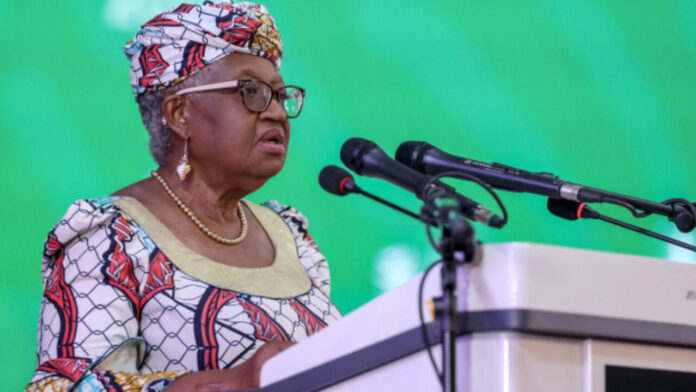
Opening the 14th WTO ministerial conference in Yaounde, Cameroon, Director‑General Ngozi Okonjo‑Iweala told trade ministers that the multilateral system built after 1945 is under its heaviest strain in decades and must be fundamentally reformed.
“The world order and multilateral system we used to know has irrevocably changed. We will not get it back… We must look to the future,” she said, describing the current period as the “worst disruptions in the past 80 years” for global trade.
Okonjo‑Iweala said the conflict in the Middle East has destabilised trade in energy, fertiliser and food, compounding earlier shocks from the war in Ukraine and wider geopolitical tensions. At the same time, new waves of tariffs by the United States and retaliatory measures elsewhere are reshaping trade flows and fuelling fears of fragmentation.
While around 72% of global trade still takes place under WTO rules, she noted, uncertainty around key routes and rising protectionism is weighing on investment and growth. One bright spot she highlighted is rapidly growing trade in artificial‑intelligence‑related goods and services, which continues to expand even as traditional trade slows.
The Director‑General laid out a blunt diagnosis of the WTO’s internal problems, starting with the paralysis of its dispute settlement system, which has left members without a fully functioning mechanism to enforce rules.
She also criticised weak transparency around government support to industry. Only 64 members have submitted their subsidy notifications for 2025, meaning 102 have not reported as required.
“Lack of transparency leads to lack of trust, and that breeds suspicions of unfairness and anti‑competitive behaviours,” she warned. This opacity, she said, is feeding a “vicious cycle” of mistrust that makes it harder for the 166‑member body to agree new rules or complete long‑running negotiations.
Trade ministers meeting in Yaounde will spend four days trying to revive an institution weakened by stalled talks, unilateral trade actions and growing skepticism about globalisation. Okonjo‑Iweala said it was symbolically important that the WTO’s top meeting is taking place in Africa at a time when conflicts in the Middle East, Sudan, Ukraine and elsewhere are reshaping trade and development prospects.
“National governments and international institutions alike have been struggling to navigate rising geopolitical tensions, intensifying climate pressures, and rapid technological change,” she said, adding that these shocks have been accompanied by “an increasingly loud questioning of multilateralism”.
She argued that the upheavals are not isolated crises but part of a broader challenge to the international order created after World War II to avoid a repeat of earlier catastrophes.
Despite the grim assessment, Okonjo‑Iweala urged members to use the Yaounde conference to chart a realistic path forward, focusing on areas where cooperation is still possible – from rebuilding the dispute system to improving transparency and updating rules for a more digital, climate‑constrained world.
“It feels appropriate that at the moment when the world is in turmoil… we have gathered in Africa to discuss the road ahead for the global trading system,” she said, calling on governments to accept that the old order will not return and to negotiate reforms that reflect today’s political and economic realities.