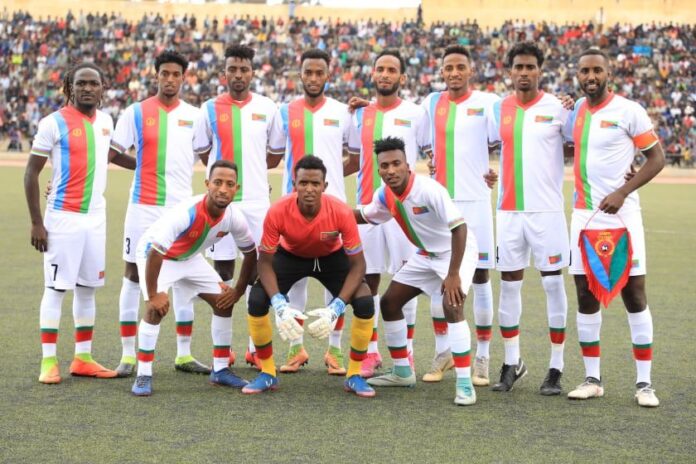
The Eritrean national football team, popularly known as the “Red Sea Camels,” has finally returned to the continental stage after 18 years of self-imposed isolation. On Wednesday, Eritrea faced Eswatini in the first qualifier for the 2027 Africa Cup of Nations (AFCON) at the 20,000-seat Stade d’Honneur in Meknes, Morocco.
Although the match was forced to be held in Morocco because stadiums in Asmara do not meet international standards, this comeback is considered a major historical milestone for the country’s sports. Since 2008, it is widely believed that Eritrea withdrew from nine consecutive AFCON qualifying cycles primarily because players sought political asylum while traveling abroad for competitions.
United Nations estimates suggest that over 80 players and coaches have absconded and remained abroad during trips over the past years. While the government had restricted the team from traveling to curb these repeated defections, it has now been announced that the decision to return to competition followed “constructive discussions” with sports officials.
To ensure the success of this comeback, the Eritrean National Football Federation has heavily incorporated members of the Eritrean diaspora living abroad. The squad, led by Egyptian coach Hesham Yakan, includes strong players such as Siem Eyob-Abraha of England’s Sheffield United and Ali Sulieman, who plays in the Egyptian league.
Including a large number of diaspora-based players is seen as a strategy to not only boost the team’s strength but also to minimize the risk of defections by reducing the number of home-based players who need to travel. Although the team’s return has sparked great excitement, their long period of inactivity has caused them to be omitted from the FIFA World Rankings. Their opponent, Eswatini, while having never qualified for an AFCON tournament, possesses better match experience and readiness, having recently participated in World Cup qualifiers.
Consequently, the Red Sea Camels face a significant challenge in filling this experience gap to advance to the group stages. Experts note that Eritrea’s return to the field holds great meaning for the rest of Africa, as it allows all 54 CAF member nations to participate in the qualifiers for the first time in history.